



2022 PACIFIC REVIEW: By David Robie
The Pacific year started with a ferocious eruption and global tsunami in Tonga, but by the year’s end several political upheavals had also shaken the region with a vengeance.
A razor’s edge election in Fiji blew away a long entrenched authoritarian regime with a breath of fresh air for the Pacific, two bitterly fought polls in Papua New Guinea and Vanuatu left their mark, and growing geopolitical rivalry with the US and Australia contesting China’s security encroachment in the Solomon Islands continues to spark convulsions for years to come.
It was ironical that the two major political players in Fiji were both former coup leaders and ex-military chiefs — the 1987 double culprit Sitiveni Rabuka, a retired major-general who is credited with introducing the “coup culture” to Fiji, and Voreqe Bainimarama, a former rear admiral who staged the “coup to end all coups” in 2006.
- READ MORE: Fiji general election of 2022: Slow march out of authoritarianism — Sanjay Ramesh
- Other 2022 “the year that was” reports
It had been clear for some time that the 68-year-old Bainimarama’s star was waning in spite of repressive and punitive measures that had been gradually tightened to shore up control since an unconvincing return to democracy in 2014.
And pundits had been predicting that the 74-year-old Rabuka, a former prime minister in the 1990s, and his People’s Alliance-led coalition would win. However, after a week-long stand-off and uncertainty, Rabuka’s three-party coalition emerged victorious and Rabuka was elected PM by a single vote majority.
In Samoa the previous year, the change had been possibly even more dramatic when a former deputy prime minister in the ruling Human Rights Protection Party (HRPP), Fiamē Naomi Mata’afa, led her newly formed Fa’atuatua I le Atua Samoa ua Tasi (FAST) party to power to become the country’s first woman prime minister.
Overcoming a hung Parliament, Mata’afa ousted the incumbent Tuila’epa Sa’ilele Malielegaoi, who had been prime minister for 23 years and his party had been in power for four decades. But he refused to leave office, creating a constitutional crisis.
At one stage this desperate and humiliating cling to power by the incumbent looked set to be repeated in Fiji.
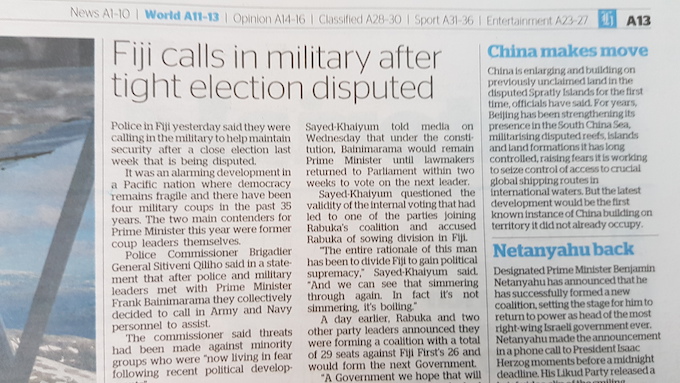
Yet this remarkable changing of the guard in Fiji got little press in New Zealand newspapers. The New Zealand Herald, for example, buried what could could have been an ominous news agency report on the military callout in Fiji in the middle-of the-paper world news section.
Fiji
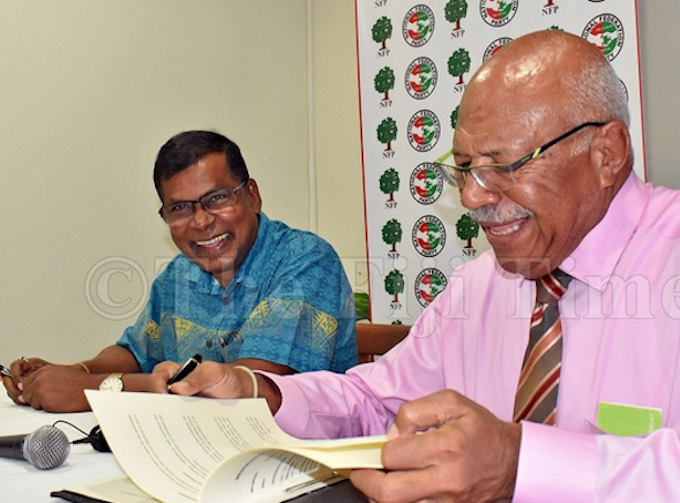
Although Bainimarama at first refused to concede defeat after being in power for 16 years, half of them as a military dictator, the kingmaker opposition party Sodelpa sided — twice — with the People’s Alliance (21 seats) and National Federation Party (5 seats) coalition.
Sodelpa’s critical three seats gave the 29-seat coalition a slender cushion over the 26 seats of Bainimarama’s FijiFirst party which had failed to win a majority for the first time since 2014 in the expanded 55-seat Parliament.
But in the secret ballot, one reneged giving Rabuka a razor’s edge single vote majority.
The ousted Attorney-General and Justice Minister Aiyaz Sayed-Khaiyum – popularly branded as the “Minister of Everything” with portfolios and extraordinary power in the hands of one man – is arguably the most hated person in Fiji.
Sayed-Khaiyum’s cynical “divisive” misrepresentation of Rabuka and the alliance in his last desperate attempt to cling to power led to a complaint being filed with Fiji police, accusing him of “inciting communal antagonism”.
He reportedly left Fiji for Australia on Boxing Day and the police issued a border alert for him while the Home Affairs Minister, Pio Tikoduadua, asked Police Commissioner Sitiveni Qiliho, a former military brigadier-general to resign over allegations of bias and lack of confidence. He refused so the new government will have to use the formal legal steps to remove him.
Just days earlier, Fiji lawyer Imrana Jalal, a human rights activist and a former Human Rights Commission member, had warned the people of Fiji in a social media post not to be tempted into “victimisation or targeted prosecutions” without genuine evidence as a result of independent investigations.
“If we do otherwise, then we are no better than the corrupt regime [that has been] in power for the last 16 years,” she added.
“We need to start off the right way or we are tainted from the beginning.”
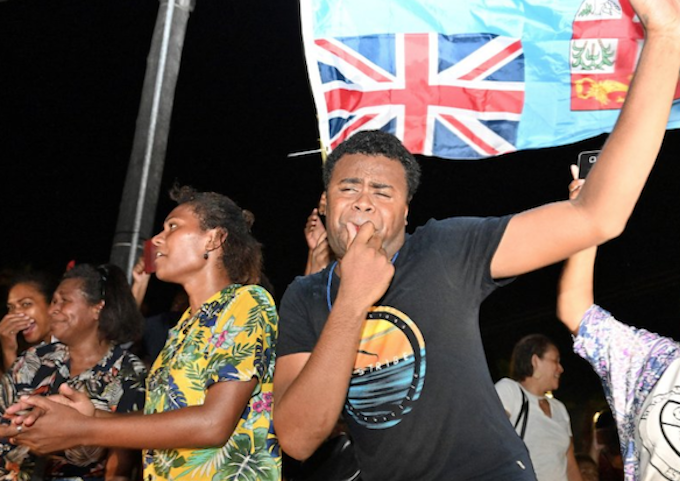
However, the change of government unleashed demonstrations of support for the new leadership and fuelled hope for more people-responsive policies, democracy and transparency.
Writing in The Sydney Morning Herald, academic Dr Sanjay Ramesh commented in an incisive analysis of Fiji politics: “With … Rabuka back at the helm, there is hope that the indigenous iTaukei population’s concerns on land and resources, including rampant poverty and unemployment, in their community will be finally addressed.”
He was also critical of the failure of the Mission Observer Group (MoG) under the co-chair of Australia to “see fundamental problems” with the electoral system and process which came close to derailing the alliance success.
“While the MoG was enjoying Fijian hospitality, opposition candidates were being threatened, intimidated, and harassed by FFP [FijiFirst Party] thugs. The counting of the votes was marred by a ‘glitch’ on 14 December 2022 . . . leaving many opposition parties questioning the integrity of the vote counting process.”
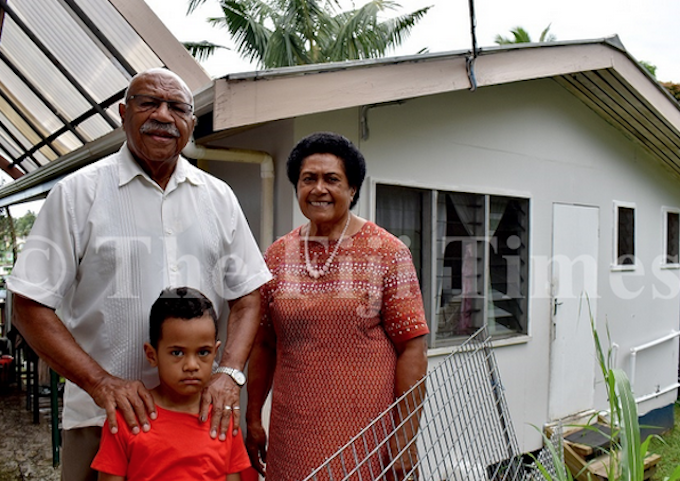
Rabuka promised a “better and united Fiji” in his inaugural address to the nation via government social media platforms.
“Our country is experiencing a great and joyful awakening,” he said. “It gladdens my heart to be a part of it. And I am reminded of the heavy responsibilities I now bear.”
The coalition wasted no time in embarking on its initial 100-day programme and signalled the fresh new ‘open” approach by announcing that Professor Pal Ahluwalia, the Samoa-based vice-chancellor of the regional University of the South Pacific — deported unjustifiably by the Bainimarama government — and the widow of banned late leading Fiji academic Dr Brij Lal were both free to return.
Paul Barker, director of the Institute of National Affairs, discussing why the 2022 PNG elections were so bad. Video: ABC News
Papua New Guinea
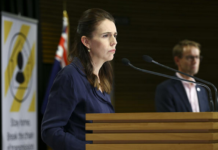
Earlier in the year, in August, Prime Minister James Marape was reelected as the country’s leader after what has been branded by many critics as the “worst ever” general election — it was marred by greater than ever violence, corruption and fraud.
As the incumbent, Marape gained the vote of 97 MPs — mostly from his ruling Pangu Pati that achieved the second-best election result ever of a PNG political party — in the expanded 118-seat Parliament. With an emasculated opposition, nobody voted against him and his predecessor, Peter O’Neill, walked out of the assembly in disgust
Papua New Guinea has a remarkable number of parties elected to Parliament — 23, not the most the assembly has had — and 17 of them backed Pangu’s Marape to continue as prime minister. Only two women were elected, including Governor Rufina Peter of Central Province.
In an analysis after the dust had settled from the election, a team of commentators at the Australian National University’s Development Policy Centre concluded that the “electoral role was clearly out of date, there were bouts of violence, ballot boxes were stolen, and more than one key deadline was missed”.
However, while acknowledging the shortcomings, the analysts said that the actual results should not be “neglected”. Stressing how the PNG electoral system favours incumbents — the last four prime ministers have been reelected — they argued for change to the “incumbency bias”.
“If you can’t remove a PM through the electoral system, MPs will try all the harder to do so through a mid-term vote of no confidence,” they wrote.
“How to change this isn’t clear (Marape in his inaugural speech mooted a change to a presidential system), but something needs to be done — as it does about the meagre political representation of women.”
Vanuatu
In Vanuatu in November, a surprise snap election ended the Vanua’aku Pati’s Bob Loughman prime ministership. Parliament was dissolved on the eve of a no-confidence vote called by opposition leader Ralph Regenvanu.
With no clear majority from any of the contesting parties, Loughman’s former deputy, lawyer and an ex-Attorney-General, Ishmael Kalsakau, leader of the Union of Moderate Parties, emerged as the compromise leader and was elected unopposed by the 52-seat Parliament.
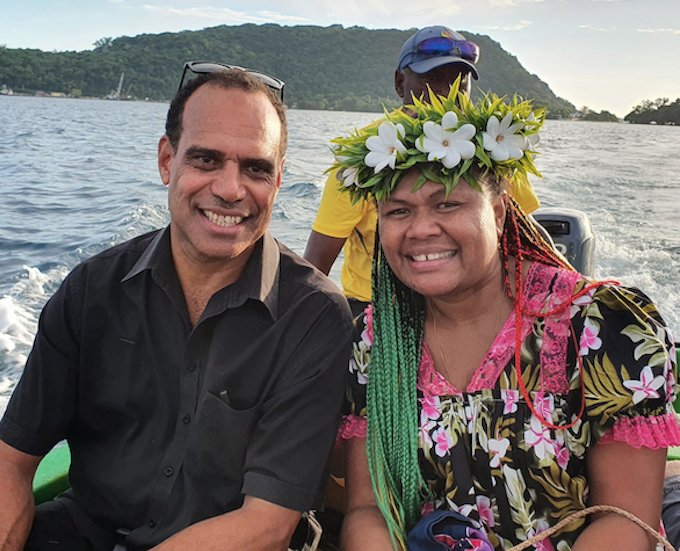
A feature was the voting for Gloria Julia King, the first woman MP to be elected to Vanuatu’s Parliament in a decade. She received a “rapturous applause” when she stepped up to take the first oath of office.
RNZ Pacific staff journalist Lydia Lewis and Port Vila correspondent Hilaire Bule highlighted the huge challenges faced by polling officials and support staff in remote parts of Vanuatu, including the exploits of soldier Samuel Bani who “risked his life” wading through chest-high water carrying ballot boxes.
Tongan volcano-tsunami disaster
Tonga’s violent Hunga Ha’apai-Hunga Tonga volcano eruption on January 15 was the largest recorded globally since the eruption of Krakatoa in 1883. It triggered tsunami waves of up to 15m, blanketed ash over 5 sq km — killing at least six people and injuring 19 — and sparked a massive multinational aid relief programme.
The crisis was complicated because much of the communication with island residents was crippled for a long time.
As Dale Dominey-Howes stressed in The Conversation, “in our modern, highly-connected world, more than 95 percent of global data transfer occurs along fibre-optic cables that criss-cross through the world’s oceans.
“Breakage or interruption to this critical infrastructure can have catastrophic local, regional and even global consequences.”
“This is exactly what has happened in Tonga following the volcano-tsunami disaster. But this isn’t the first time a natural disaster has cut off critical submarine cables, and it won’t be the last.”
Covid-19 in Pacific
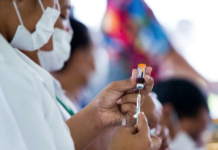
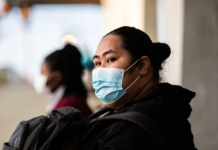
While the impact of the global covid-19 pandemic receded in the Pacific during the year, new research from the University of the South Pacific provided insight into the impact on women working from home. While some women found the challenge enjoyable, others “felt isolated, had overwhelming mental challenges and some experienced domestic violence”.
Rosalie Fatiaki, chair of USP’s staff union women’s wing, commented on the 14-nation research findings.
“Women with young children had a lot to juggle, and those who rely on the internet for work had particular frustrations — some had to wait until after midnight to get a strong enough signal,” she said.
Around 30 percent of respondents reported having developed covid-19 during the Work From Home periods, and 57 percent had lost a family member or close friend to covid-19 as well as co-morbidities.
She also noted the impact of the “shadow pandemic” of domestic abuse. Only two USP’s 14 campuses in 12 Pacific countries avoided any covid-19 closures between 2020 and 2022.
COP27 climate progress
The results for the Pacific at the COP27 climate action deliberations at the Egyptian resort town of Sharm el-Sheikh were disappointing to say the least.
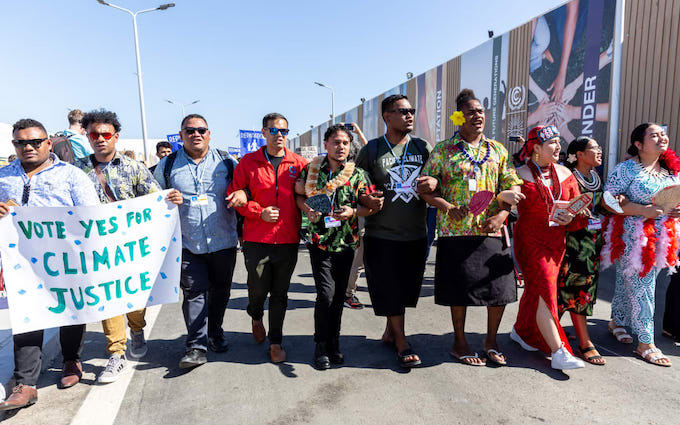
For more than three decades since Vanuatu had suggested the idea, developing nations have fought to establish an international fund to pay for the “loss and damage” they suffer as a result of climate change. Thanks partly to Pacific persistence, a breakthrough finally came — after the conference was abruptly extended by a day to thrash things out.
However, although this was clearly a historic moment, much of the critical details have yet to be finalised.
Professor Steven Ratuva, director of Canterbury University’s Macmillan Brown Pacific Studies Centre, says the increased frequency of natural disasters and land erosion, and rising ocean temperatures, means referring to “climate change” is outdated. It should be called “climate crisis”.
“Of course climate changes, it’s naturally induced seen through weather, but the situation now shows it’s not just changing, but we’re reaching a level of a crisis — the increasing number of category five cyclones, the droughts, the erosion, heating of the ocean, the coral reefs dying in the Pacific, and the impact on people’s lives,” he said.
“All these things are happening at a very fast pace.”
Geopolitical rivalry and West Papua
The year saw intensifying rivalry between China and the US over the Pacific with ongoing regional fears about perceived ambitions of a possible Chinese base in the Solomon Islands — denied by Honiara — but the competition has fuelled a stronger interest from Washington in the Pacific.
The Biden administration released its Indo-Pacific Strategy in February, which broadly outlines policy priorities based on a “free and open” Pacific region. It cites China, covid-19 and climate change — “crisis”, rather — as core challenges for Washington.
Infrastructure is expected to be a key area of rivalry in future. Contrasting strongly with China, US policy is likely to support “soft areas” in the Pacific, such as women’s empowerment, anti-corruption, promotion of media freedom, civil society engagement and development.
The political and media scaremongering about China has prompted independent analysts such as the Development Policy Centre’s Terence Wood and Transform Aqorau to call for a “rethink” about Solomon Islands and Pacific security. Aqorau said Honiara’s leaked security agreement with China had “exacerbated existing unease” about China”.
The Pacific Catalyst founding director also noted that the “increasing engagement” with China had been defended by Honiara as an attempt by the government to diversify its engagement on security, adding that “ it is unlikely that China will build a naval base in Solomon Islands”.
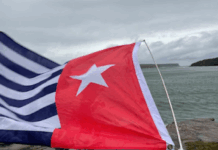
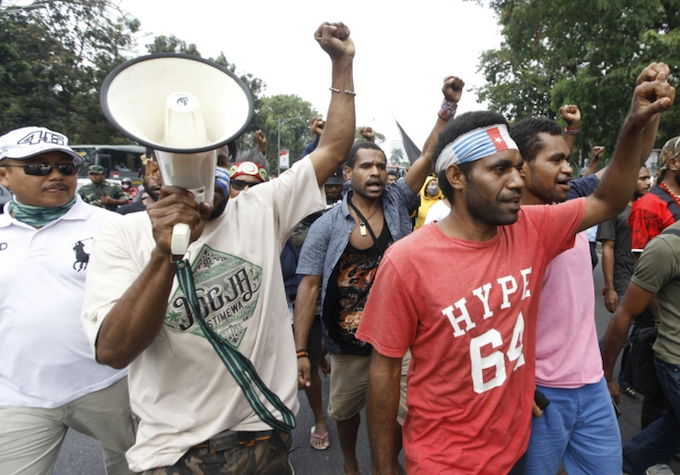
However, the elephant in the room in geopolitical terms is really Indonesia and its brutal intransigency over its colonised Melanesian provinces — now expanded from two to three in a blatant militarist divide and rule ploy — and its refusal to constructively engage with Papuans or the Pacific over self-determination.
“2022 was a difficult year for West Papua. We lost great fighters and leaders like Filep Karma, Jonah Wenda, and Jacob Prai. Sixty-one years since the fraudulent Act of No Choice, our people continue to suffer under Indonesian’s colonial occupation,” reflected exiled West Papuan leader Benny Wenda in a Christmas message.
“Indonesia continues to kill West Papuans with impunity, as shown by the recent acquittal of the only suspect tried for the “Bloody Paniai’” massacre of 2014.
“Every corner of our country is now scarred by Indonesian militarisation . . . We continue to demand that Indonesia withdraw their military from West Papua in order to allow civilians to peacefully return to their homes.”