



By Christina Persico of RNZ Pacific
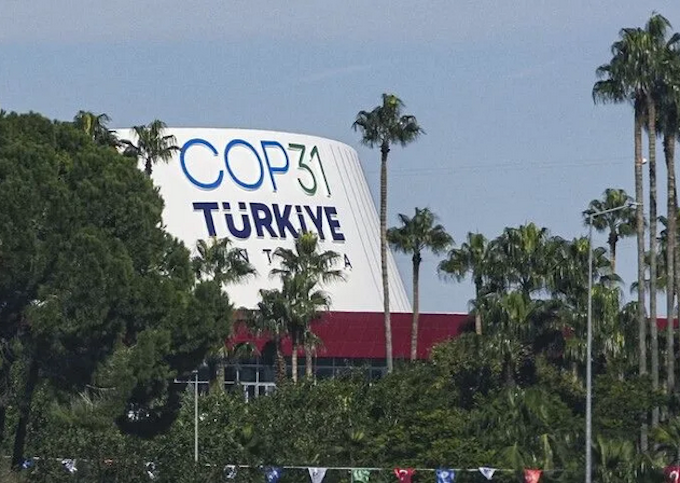
Countries that need climate finance the most are getting it the least, the United Nations’ COP31 climate summit head of negotiations says, as the annual global climate talks begin in Türkiye.
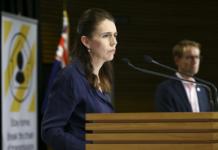
Australia’s Minister for Climate Change and Energy Chris Bowen, who is serving as COP31 President of Negotiations in Antalya as part of the deal for Türkiye to host the meeting, said he has heard that finance needs to be unlocked.
“Too many countries with credible energy transition and adaptation plans can’t access the finance at the speed, scale and terms required to put those plans into action,” he told delegates on the opening day.
“The countries that need climate finance the most are getting it the least.”
Bowen said the messages that came out of pre-cops in Tuvalu and Fiji were clear.
“Keep 1.5 degrees within reach. Speed up climate action; make finance easier to access, and deliver on our commitments. Strengthen the resilience of our communities and our economies and our ocean. And ensure that no country faces the impacts of climate change alone.”
The World Meteorological Organisation’s (WMO) State of the Climate Update for COP31 has forecast that 2026 will be among the four warmest years on record.
Unusually powerful El Niño
The WMO said that 2027 would provide no let-up, as an unusually powerful El Niño will continue into next year, pushing temperatures higher.
WMO Secretary-General Celeste Saulo said that, from January to September, the global average temperature was about 1.47 degrees Celsius above pre-industrial levels.
“When we take into account the strong El Niño, temperatures are likely to rise farther for 2026 as a whole.”
Saulo said it was known that El Niño was likely to have its greatest impact on global temperatures the year after its development.
Pacific weighs in
Papua New Guinea’s Ruel Yamuna was appointed as the Pacific Envoy for Access to Climate Finance for COP31, under the Australia-Pacific partnership.
Yamuna said the Pacific and other Small Island Developing States (SIDS) faced about half a trillion dollars in climate damages — but received just over $2 billion a year to adapt.
“Let that sink in — small island developing states, on the absolute frontlines of the climate crisis, receiving 0.2 per cent of the total global climate finance that’s pledged.
“In reality we actually need, to survive, six times that amount.”
He said some of that financing was debt, and developing countries struggled to service that debt on top of competing priorities.
Pacific activist Fili Fepulea’i-Tapua’i, 23, is part of a Pacific network advocating for the region to be a focus, and said New Zealand was part of that.
“We’re practically, when it comes to the climate context, again climate overshoot, the fact that our biodiversity is highly endemic — what happens to the Pacific happens to us [New Zealand] too, eventually, ” she said.
Meaningful climate financing
She said she’ll be pushing for meaningful climate financing for the Pacific islands.
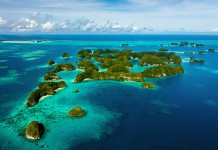
The Pacific’s Envoy for the Ocean, Fijian MP Inia Seruiratu, said COP31 presented a critical opportunity to elevate ocean action and mobilise support for ocean-based climate solutions.
Seruiratu stressed the ocean’s central importance to Pacific people.
“It sustains our communities, connects our nations, guides our traditions, and holds generations of knowledge.
“The ocean is also the planet’s largest carbon sink and one of our greatest allies in addressing climate change.”
This comes as communities in Fiji are being advised to ration and store water, and to expect drought conditions to worsen over the summer.
Fijian government public notices say to start preparing and conserving water now, especially if one relies on rainwater.
They also say to report drying or failed water sources as early as possible to local authorities.
As of Saturday, the Water Authority of Fiji has placed strict night-time water restrictions on households in the greater Suva area, as the Tamavua Water Treatment Plant has lost more than 15 percent of its raw water inflow.
This story was first published on