

COMMENTARY: By Laurens Ikinia in Jakarta
Indonesia wants to be recognised as part of the Melanesian family. Yet 12 Indigenous West Papuan representatives travelling to Vanuatu for a reconciliation dialogue found themselves prevented from leaving their own country.
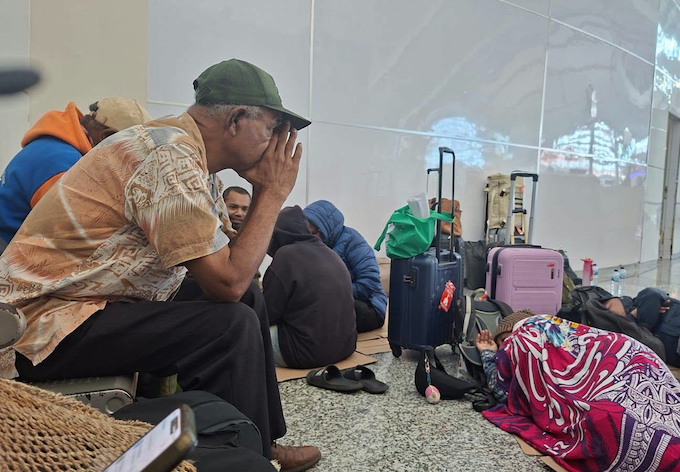
For nearly three days, Bali’s I Gusti Ngurah Rai International Airport became the centre of a controversy involving national security, human rights and Indonesia’s diplomatic credibility in the Pacific.
A special adviser to Indonesia’s Human Rights Minister announced yesterday that President Prabowo Subianto had personally instructed the relevant authorities to allow all 12 delegates to continue their journey to Vanuatu.
- READ MORE: West Papuan liberation delegation leader tells of Bali airport detention
- Pacific churches condemn Indonesian detention of Papuan peace group
- ULMWP delegation held at Bali’s Ngurah Rai Airport immigration office
- Other West Papua reports
While the presidential intervention offered a welcome resolution, the incident exposes a deeper paradox: how can Indonesia embrace its Melanesian identity internationally while restricting Indigenous Melanesians from participating in regional dialogue?
For Jakarta, the controversy is more than an immigration matter. It is a test of its credibility within the Melanesian Spearhead Group (MSG) and its commitment to peace in the Pacific.
Pacific churches challenge Jakarta
In a strongly worded statement released on Saturday, the Suva-based Pacific Conference of Churches (PCC) condemned the detention of 12 West Papuan representatives travelling to Port Vila, Vanuatu.
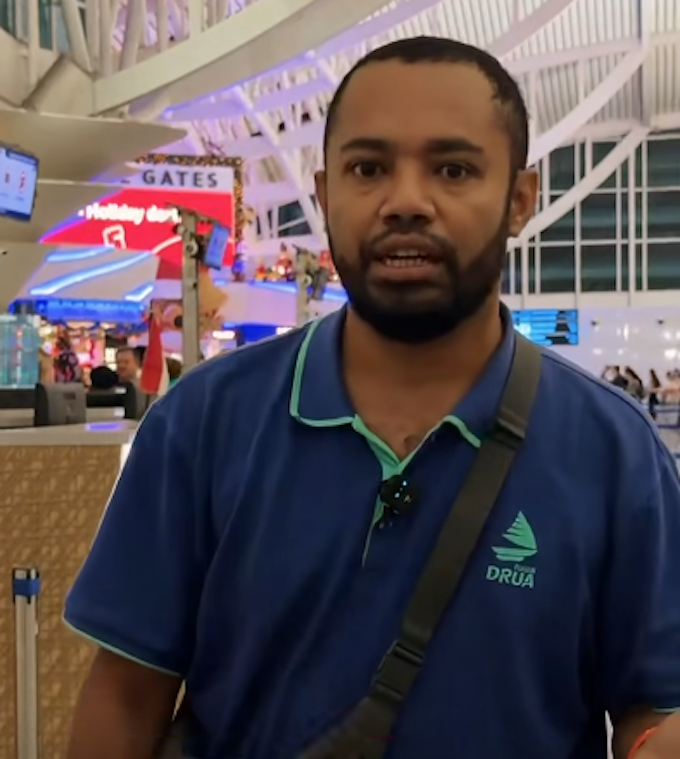
The delegation, led by United Liberation Movement for West Papua (ULMWP) executive secretary Markus Haluk, was scheduled to participate in a reconciliation and reunification dialogue facilitated by the PCC and its partners.
According to the PCC, the delegates had received an official invitation from the Vanuatu government, obtained valid visas, secured return tickets and completed airline check-in procedures. Nevertheless, their passports were reportedly withheld at Bali Airport, preventing them from boarding their scheduled flight.
PCC general secretary Reverend James Bhagwan questioned the consistency of Indonesia’s commitment to Melanesian solidarity.
“Indonesia cannot claim its Melanesian identity as a basis for its associate membership of the Melanesian Spearhead Group (MSG) while simultaneously denying the dignity, rights and freedoms of the Indigenous Melanesian people of West Papua,” Reverend Bhagwan said.
The regional church body called for a review of Indonesia’s associate membership, including possible suspension or revocation, while reiterating its support for full MSG membership for the ULMWP.
What initially appeared to be a domestic immigration matter had consequently developed into a regional diplomatic controversy.
Jakarta’s security concerns
Indonesia’s Coordinating Minister for Political and Security Affairs, retired general Dudung Abdurachman, today presented the government’s national security justification.
According to reports by CNN Indonesia, Dudung said the government had obtained two documents containing different descriptions of the proposed gathering. One referred to climate change in Melanesia, while the other identified the meeting as the ULMWP Reconciliation and Reunification Dialogue.
Dudung also highlighted the inclusion of Sebby Sambom and Terryanus Satto on the invitation list, describing them as figures associated with armed groups in Papua.
He referred to a video statement by Haluk which, according to the minister, indicated that the dialogue was intended to consolidate civilian political movements and armed groups under the ULMWP in pursuit of Papuan independence.
“I wish to emphasise that democratic rights are not absolute,” Dudung said (translated from Indonesian).
The minister argued that Indonesia’s constitution and international human rights instruments permitted certain restrictions on individual freedoms in the interests of national security and public order.
Jakarta’s security concerns deserve consideration. Every sovereign state has a legitimate responsibility to protect its territorial integrity and investigate credible threats.
However, identifying a potential security threat is one thing; establishing the legal authority to restrict an individual’s freedom of movement is another.
Article 12 of the International Covenant on Civil and Political Rights (ICCPR), which Indonesia has ratified, protects the right of individuals to leave any country, including their own.
Although this right may be restricted under certain circumstances, such restrictions must be prescribed by law, necessary and proportionate.
National security and human rights should not be treated as competing obligations. Both are fundamental responsibilities of a democratic government.
Prabowo opens the door
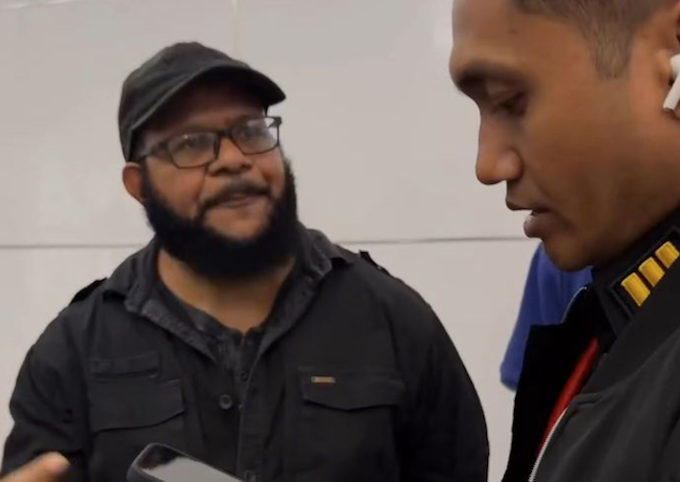
A significant development emerged today when representatives of the Ministry of Human Rights, immigration authorities, airport management and Jetstar appeared alongside the Papuan delegation at Ngurah Rai International Airport.
A special adviser to Human Rights Minister Natalius Pigai, responsible for digital transformation and media communications, announced that the matter had received President Prabowo’s personal attention.
“President Prabowo Subianto has instructed that all 12 of our brothers and sisters be allowed to continue their journey to Vanuatu,” the adviser said (translated from Indonesian).
The announcement followed intensive coordination between the Ministry of Human Rights, immigration authorities and relevant government institutions in Jakarta.
The adviser also clarified that six members of the delegation had not been placed under a formal travel ban, commonly referred to in Indonesia as pencekalan. Instead, their departures had been denied or postponed.
The administrative distinction is important. However, regardless of the terminology used, the practical consequence remained the same: the delegates were unable to leave Indonesia as originally scheduled.
A Jetstar representative announced that 10 delegates were scheduled to depart on the evening of November 29 and arrive in Vanuatu at 11.25 am on November 30. The remaining two were provisionally scheduled to travel on December 2, although efforts were continuing to enable all 12 to travel together.
The press conference concluded with immigration officials symbolically returning the passports to the delegation.
Prabowo’s intervention deserves recognition. His decision may help prevent further diplomatic escalation and demonstrates a willingness to resolve a sensitive issue through constructive engagement.
Nevertheless, an important institutional question remains: why did a matter involving 12 travellers require the personal intervention of Indonesia’s head of state?
One government, different explanations
Before Dudung presented his security justification, two prominent Indigenous Papuan figures within Indonesia’s political establishment had questioned the circumstances surrounding the incident.
Human Rights Minister Natalius Pigai suggested that the obstruction might have resulted from administrative errors or technical problems rather than a ministerial instruction.
“There was no court decision and no instruction from superiors at ministerial level,” Pigai said in a statement on X on November 28.
Tidak ada pencekalan tatapi kesalahan petugas imigrasi di Bali. Tidak ada keputusan pengadilan dan tidak ada perintah atasan dalam hal ini tingkat menteri tetapi kesalahan staf dan pejabat lapangan kami yakni petugas imigrasi di Bali atau kesahan teknis lainnya perlu ditelusuri. Tolong semua orang menahan diri. Terima kasih
— NataliusPigai (@NataliusPigai2) November 28, 2026
Meanwhile, Yan Permenas Mandenas, a Gerindra Party lawmaker and member of Commission XIII of Indonesia’s House of Representatives, raised concerns about the institutional authority behind the restrictions.
Mandenas said his communication with senior immigration authorities had revealed no official order concerning the reported travel ban. He suspected intervention by another government institution and called for accountability.
These statements, alongside Dudung’s subsequent explanation and the Ministry of Human Rights’ clarification, reveal different institutional accounts of the same incident.
The Coordinating Ministry for Political and Security Affairs emphasised potential threats to national sovereignty. The Ministry of Human Rights focused on resolving the restrictions, while Mandenas questioned the authority behind the original decision.
These differing accounts do not necessarily establish a conflict within Prabowo’s administration. However, they raise legitimate questions about institutional coordination, transparency and accountability.
Who authorised the initial restrictions? What legal provisions were invoked? Were the affected individuals adequately informed of the reasons for the decision?
The presidential intervention may have resolved the immediate problem, but these questions remain relevant.
An Advent message of hope
Perhaps the most compelling moment during Sunday’s press conference came not from government officials, but from Markus Haluk himself.
Rather than using the occasion to condemn the Indonesian authorities, Haluk expressed gratitude to immigration officials, airport authorities, airline representatives, the Indonesian government and supporters in Papua and overseas.
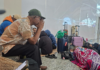
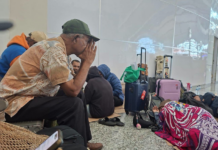
He explained that members of the delegation had spent nearly three days at the airport, with some praying and fasting while awaiting certainty about their departure.
“As people of faith, we believe that God has a purpose in everything we have experienced,” Haluk said (translated from Indonesian).
November 29 marked the first Sunday of Advent in the Catholic calendar. Reflecting on the lighting of the first Advent candle, Haluk spoke of hope and the determination to continue moving forward.
His remarks offered a striking contrast to the security-oriented rhetoric surrounding the delegation’s intended journey.
While Jakarta had expressed concerns about political consolidation and national security, Haluk’s public response emphasised gratitude, faith and peace.
His remarks do not resolve the fundamental political differences between Jakarta and the ULMWP. However, they demonstrate that opportunities for constructive communication can exist even amid deep political disagreements.
Such opportunities should not be overlooked.
Indonesia’s Melanesian paradox
Indonesia secured associate membership of the MSG in 2015, the same year the ULMWP obtained observer status.
Since then, Jakarta has consistently promoted its Melanesian population as an important foundation for its diplomatic engagement with Pacific island countries.
The Bali incident, however, exposes a contradiction between Indonesia’s international projection of Melanesian identity and its domestic approach towards Indigenous Papuan political movements.
From Jakarta’s perspective, the Papua issue concerns sovereignty, territorial integrity and national security. For Pacific churches and Papuan representatives, it concerns human dignity, political participation and the right to dialogue.
These perspectives are fundamentally different, but they need not make peaceful engagement impossible.
Vanuatu, a sovereign country and full member of the MSG, has historically maintained a strong interest in the West Papua issue.
Preventing an invited Papuan delegation from attending a reconciliation dialogue in Vanuatu risks reinforcing perceptions that Indonesia’s domestic policies are inconsistent with the principles of Melanesian solidarity.
The PCC had already called in April 2024 for Indonesia’s suspension or removal from the MSG if Jakarta continued to obstruct the long-awaited United Nations human rights visit to West Papua.
Its latest statement also referred to discussions among MSG leaders in Koror, Palau, concerning Indonesia’s status ahead of the 2027 MSG Leaders’ Summit.
Although Prabowo’s intervention may help contain the immediate diplomatic fallout, the broader concerns raised by Pacific churches remain.
The incident could strengthen demands for a formal review of Indonesia’s associate membership while providing additional diplomatic momentum for the ULMWP’s campaign for full membership.
Any decision concerning Indonesia’s membership, however, remains in the hands of MSG governments.
The greater risk for Jakarta may not be the immediate loss of its associate membership, but the gradual erosion of its credibility among Melanesian communities.
Diplomatic recognition can be negotiated. Trust, however, must be earned through consistent actions.
Beyond the Bali blockade
President Prabowo’s decision offers an opportunity to reconsider how Indonesia approaches the Papua issue, both domestically and internationally.
Rather than treating the intervention merely as the resolution of an airport controversy, Jakarta could use it as a starting point for strengthening institutional accountability and creating greater space for peaceful engagement.
Indonesia has invested considerable political and diplomatic capital in strengthening its relationships with Pacific island countries. That investment must be accompanied by domestic policies that reflect the values of dignity, mutual respect and solidarity promoted through its regional diplomacy.
Facilitating the long-awaited UN human rights visit to Papua would provide another opportunity to demonstrate that Indonesia takes regional concerns seriously.
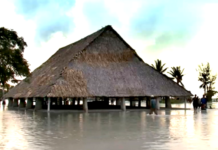
In a traditional Papuan honai, a communal house, reconciliation begins when people are allowed to enter, sit together and speak despite their differences.
People do not need to agree before entering the honai. They enter precisely because there are differences that need to be discussed.
Closing its door may prevent an uncomfortable conversation, but it does not resolve the underlying disagreement.
By instructing the authorities to allow the 12 Papuan delegates to continue their journey to Vanuatu, Prabowo has reopened a door that had been temporarily closed.
The greater challenge is whether Jakarta is prepared to keep that door open.
As Reverend Bhagwan reminded the region: “We cannot proclaim an Ocean of Peace while tolerating an ocean of injustice.”
Indonesia’s Melanesian identity should be more than a diplomatic instrument or a demographic argument for regional membership. It should also be reflected in how the country treats its Indigenous Melanesian citizens.
Ultimately, Indonesia’s credibility within the Melanesian family will depend not simply on how convincingly it speaks about Melanesian solidarity abroad, but on how consistently it practises that solidarity at home.
That is the Melanesian paradox Jakarta must confront.
Laurens Ikinia is a Papuan lecturer and researcher at the Institute of Pacific Studies at the Indonesian Christian University in Jakarta. He is an honorary member of the Asia Pacific Media Network (APMN) in Aotearoa New Zealand and contributes occasionally to Asia Pacific Report.