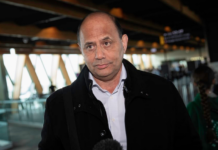



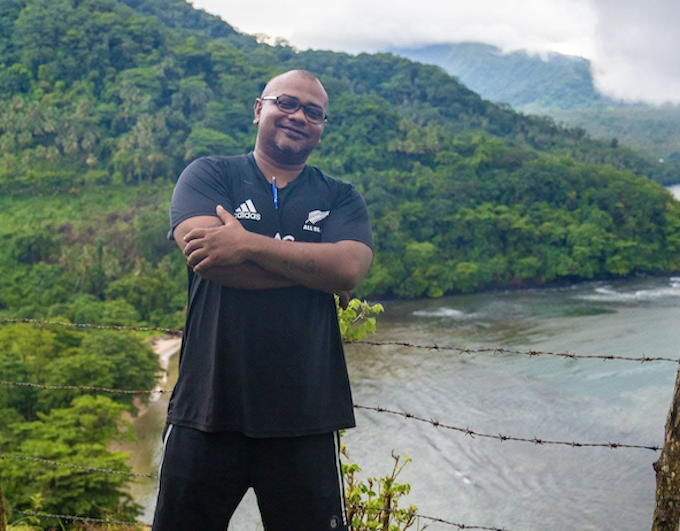
Exposing autocracy from military-ruled Fiji to democratic Samoa, journalist Shalveen Chand has faced cell blocks, state censorship and physical assaults for holding Pacific powers accountable. Now joining the Cook Islands News as senior journalist, Chand brings a relentless commitment to press freedom, warning that democracy collapses when watchdogs are silenced.
COMMENTARY: By Shalveen Chand
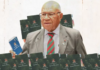
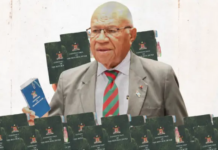
I have encountered two types of dictators in the Pacific. The first was in my home nation when a military leader overthrew the government at gunpoint and ruled with an iron fist, his rule spanning from 2006 to 2014.
The second is a democratically elected leader whose rule highlighted the blatant lack of accountability and transparency. His grab for power literally defines the phrase “absolute power absolutely corrupts”.
There is definitely a difference in how Fiji’s Voreqe Bainimarama and Samoa’s Laaulialemalietoa Leuatea Schmidt have come to be in power, but what makes them similar is the blatant disregard for accountability and transparency — the “my way or the highway” attitude — sacking of people who do not agree with their goals, disregard for the rule of law and, above all, media censorship and attacks on journalists.
- READ MORE: RSF calls on Samoan PM to lift ‘unacceptable’ ban on Samoa Observer
- Other Shalveen Chand media freedom reports
Bainimarama was clear and deliberate about restricting media freedom. He set up censors in newsrooms who would stop the publishing of articles that would be deemed anti-government and later enacted the draconian media law that governed media in Fiji.
That law, repealed in 2023 by the current Fijian government, led to the persecution of journalists and the self-censorship mentality that is still practised in some newsrooms in the country.
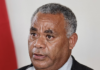
Laauli, on the other hand, made a promising start when he was elected prime minister in Samoa in September 2025. In his first press conference, he made a promise to be transparent and accountable. A promise that he never intended to keep, which has now resulted in the banning of Samoa’s only independent publication, Samoa Observer, from government events, government officials not being accountable to the media, bullying and assault on journalists, including on me in front of his house.
This intimidation was among the reasons I left Samoa and my job there to join Cook Islands News as a senior journalist.
Serious breaches
There have been serious breaches of due process, including in top-level government appointments. It is worrying when merit is no longer a requirement to hold a top civil service position. Nepotism is rife, and his own children are acting as if the nation were the family business.
This was seen a few weeks ago when Laauli’s son snatched a camera off a reporter and deleted photos, saying it was against the law to photograph his father. Last time it was checked, no such laws existed.
While Bainimarama used guns and the might of the military, Laauli uses a new tool: social media. Fake accounts carry out his propaganda and target journalists and their families with attacks. My toddler and wife have often been victims of these attacks, even though my spouse’s political allegiance is with Laauli.
Yes, she’s Samoan, and she occasionally reminds me of how “Sleeping with the Enemy” can be viewed in a whole new context. But I am thankful that despite being critical of the media, she has always stood up for me whenever I have been targeted, either physically or on social media.
People have approached and questioned me on why I was against their prime minister. It is hard to make some people understand that it was no personal attack on the leader but a journalistic attempt to keep him honest, accountable and transparent. Many times, these physical confrontations have been met with my personal bodyguard, my wife, willing to throw a few combinations like David Tua.
Similar attacks have been levelled against journalists who were part of the newsroom I managed in Samoa. Their families and children were targeted and sometimes maligned to their worst.
One of the things that sadden me the most is how the rule of law has been compromised in Samoa. Corruption was already rife; however, when you add in a leader who believes he is above the law, the rule of law starts becoming non-existent. The Australian Broadcasting Corporation has dubbed Laauli as the “Trump of the Pacific”, and his behaviour often mirrors that of the American president.
Judiciary independent
Thankfully, one of the arms of the Samoan government, the judiciary, remains uncorrupted and has stood as the final wall in the attack against the rule of law, media freedom and the rights of citizens.
However, the judiciary is powerless when the enforcement agency does not do its work. Such was the case when I was assaulted outside Laauli’s house by a relative of his. A police complaint filed on 14 November 2025, the day of the incident, has not moved forward because the police officers who witnessed the assault do not want to give a statement for fear of retribution or losing their jobs.
I clearly remember the attack. The demeanour of the prime minister’s relative and his henchman gave away what they were going to do next as they rushed outside to where I was standing on the roadside. I came to drop off a camera lens for my journalist, who was trying to get comments from Laauli. The newly elected Samoan leader had just spent several weeks in New Zealand on a medical trip without communicating with the people of Samoa after photoshopped images of him were published by the Samoan government.
The two men rushed towards me. Their body language and aggression had been something that I had experienced during Fiji media’s dark days when the nation was under the control of the military junta. The haunting assaults and bullying by the security forces, and then having to spend a few nights in a police cell for highlighting a miscarriage of justice, came rushing back.
I braced for impact and told myself not to retaliate. The relative of the prime minister shoved me twice, trying to force me into my car. This was followed by him pushing the car door at least three times in my face. While he carried on, his short and fat henchman, probably another relative of the prime minister, held me by the collar and threw a few slaps.
A police officer aided the two relatives as well, shoving me into the car while throwing punches to my abdomen. All this was witnessed by at least six other police officers, my young journalist and a senior travel writer from the British Broadcasting Corporation. The words of the journalists were not enough to lead to any formal charges — instead, the young journalist was charged with criminal trespass.
This was the start of Laauli’s restriction on free and independent media who were trying to hold him accountable and get him to talk. This has now led to the continued ban on Samoa Observer and attacks on its journalists.
Many hoodwinked
It was also surprising that there were people who still support the Samoan leader’s actions. Many are hoodwinked by the social media propaganda. This was reflected when Samoa slumped to 59 out of 180 in the Reporters Without Borders’ World Press Freedom Index.
There are still a lot of people who do not realise that freedom of the press is a right and that a government should not interfere with this freedom or censor media critical of state power. For years, freedom of the press has been an essential part of democracy. A democracy cannot exist when people’s voices are stifled.
A free press fights for the truth, whether it is Fiji, Samoa or the Cook Islands. A free press uncovers the truth. A free press holds power accountable.
Many entities can benefit from the truth staying hidden, including governments. One of the free press’ main missions is to serve as a watchdog on power. The press is the bridge between the people and powerful entities. If the press is not free but instead beholden to power, it simply serves as an extension of that power.
As I begin a new chapter with the Cook Islands News, I hope that the weight currently being accorded to media freedom and accountability in this nation only improves. This is one of the best ways a government can serve its people.
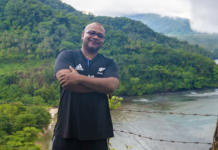
Shalveen Chand is a former editor of the Samoa Observer and now works for Cook Islands News as senior journalist. This article is republished from CIN with permission.