
By Teuila Fuatai of RNZ Pacific in Koror, Palau
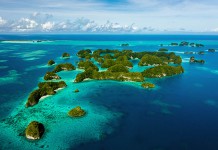
The 55th Pacific Islands Forum leaders meeting officially kicks off tonight in Koror, Palau.
The runway leading in is already proving eventful, with at least one partner withdrawing its leader last-minute.
For those who are not acclimatised, the mugginess of Koror’s 30 degree heat is stifling.
- READ MORE: Solomon Islands PM returns home before PIF meeting to face no-confidence motion
- Pacific Elders call for climate accountability, stronger regional unity
- Vanuatu journalist denied entry to Palau while traveling to cover Pacific leaders meeting
- Other PIF reports
After five minutes in the sun, you’re sweating and whatever you’re carrying feels a few kilos heavier. Finding relief, even if it’s momentary, quickly becomes a priority.
The fury at which geopolitics is wrapped into this year’s Pacific Islands Forum (PIF) leaders’ meeting is a lot like Koror’s heat — even though you can’t see it, it’s all-encompassing and impossible to avoid.
Already, questions have been raised over the last-minute withdrawal of Kiribati President Taaneti Maamau. Now, it is also uncertain whether Naoero (formerly Nauru) President David Adeang will be attending as planned.
Maamau’s late withdrawal, and the current lack of certainty around Naeoro’s President Adeang, goes to the heart of problems around unity and outside interference in the PIF.
Lack of agreement
At the end of the PIF foreign ministers’ meeting in Suva earlier this month, the lack of agreement from members over a statement condemning China’s missile test dominated headlines.
The dummy warhead landed in Pacific waters near Tuvalu last month.
Naoero and Kiribati, which have strong ties to Beijing, were understood to be the members which did not support a statement on it. Both those countries were also understood to be isolated from the wider collective for their stance in Suva.
The lack of agreement means the issue of a statement on the missile testing was deferred to Koror. In the last few weeks, officials across the region have been working on a statement that is due to be submitted and considered this week by leaders.
Despite that, four PIF states — Australia, New Zealand, Palau and Marshall Islands — decided to go their own way after the Suva meeting and sign a joint statement released by the US government criticising China for the missile testing.
Palau and Marshall Islands, alongside Tuvalu, are the three PIF states which have formal diplomatic ties with Taiwan.
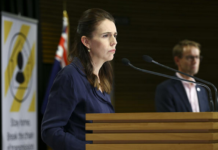
New Zealand Foreign Minister Winston Peters, who is representing his government in Koror before Prime Minister Christopher Luxon arrives, made his displeasure over the lack of a result in Suva clear at the time.
No reasons laid out
“They didn’t actually lay out any reasons, apart from their disagreement, and not wishing for us to make the clear statement such as ‘we are opposed to missiles being fired into the Pacific.
“That’s what the statement should have said, and we’re still waiting for that to get laid out.”
It seems that disharmony has rolled straight from Suva into the beautiful islands of Palau.
Maamau’s decision not to attend this week, and instead send David Teaabo, his Director of Foreign Service and the former ambassador to China, means any potential statement on missile testing will not have sign-off from Kiribati’s top representative or an elected official.
It also sends a clear message over Maamau’s current discontent with the PIF. And if Naeoro’s Adeang also withdraws, there will be concerns over unity and stability of the PIF — particularly as that will leave the week short two leaders from the Micronesia bloc.
Furthermore, alongside a potential missile statement, there are high hopes for leaders to agree on the specifics of the partnerships policy which was endorsed by leaders in Solomon Islands’ last year.
The policy means the PIF partners, currently 21 dialogue partners and a group of development partners, would be divided into tier one and tier two, with the top tier having greater access to member states.
Key dialogue partners
Unsurprisingly, the behemoths-in-the room on this agenda issue is where China and the US would sit. Both are dialogue partners under the current set-up and have high-level representation in Koror.
China has its Special Envoy for Pacific Island Countries Affairs, Qian Bo, on the ground, while Deputy Secretary of State Christopher Landau is leading the US delegation.
Taiwan, which is currently a PIF development partner, will also be jostling for a place in the tier system. It has sent its Foreign Minister Lin Chia-lung to Koror, along with a large delegation to Palau.
Notably, Fiji Prime Minister Sitiveni Rabuka has also withdrawn from his planned schedule in Koror last-minute due to urgent domestic issues, however he may still arrive later in the week for the leaders’ retreat.
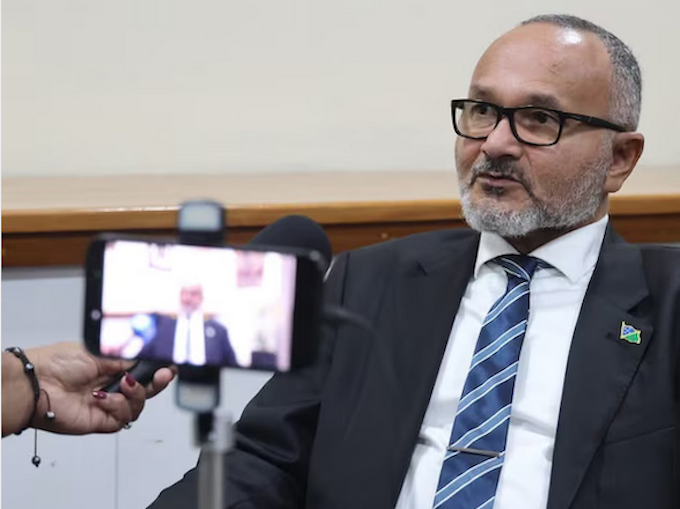
Early yesterday, Solomon Islands Prime Minister Matthew Wale also left Palau after less than 24 hours after a motion of no confidence was tabled back home against him. Wale is the current Chair of the Pacific Islands Forum, who was supposed to hand over the chairmanship to Palau President Surangel Whipps Jr in Palau.
Sāmoa, New Caledonia, and Vanuatu have also decided not to send leaders, however this was signalled in advance, and the states’ delegations are headed by deputy prime ministers or senior ministers.
With such significant issues due to be discussed this week, framed and threatened by the burgeoning geopolitical tension between the US and China, a lack of appropriate representation from PIF members does not bode well.
Genuine consensus and open debate among all members is critical in the current climate, particularly as outside interests continue to exert influence in pursuit of their own agendas.
This story was first published on