





By Kelvin Anthony of RNZ Pacific
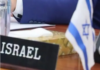
Israel’s inclusion into the Pacific region’s main political body has drawn sharply contrasting reactions across the region.
While the official diplomatic tone from Pacific leaders, including New Zealand, has been welcoming and focused on consensus, civil society groups have described the move as wrong and demanded a review.
Others, such as Kiwi media academic Professor David Robie, have called it “shameful”, while veteran Solomon Islands diplomat Collin Beck said it puts into question the “credibility” of the Pacific Islands Forum’s (PIF) partnership mechanism.
- READ MORE: Open letter: Mr Gavoka, don’t present your personal theology as the ‘voice of the Pacific’
- Shameful move by Pacific Islands Forum undermines decolonisation and justice
- Aisake Casimira: How Christian Zionism has become hitched to the chariot of empire
- An Ocean of Peace is not built on occupation
- Other Israel in the Pacific reports
Israel announced its acceptance into the Forum via a news release posted on X last Wednesday, which swiftly attracted a range of reactions — both for and against the move.
Another diplomatic achievement: Israel joins the Pacific Islands Forum (PIF) as a Forum Partner.
The Secretary General of the Pacific Islands Forum, Baron Divavesi Waqa, has informed me that Israel has been accepted as a Forum Partner, following a decision at the meeting of the Forum’s member state leaders in Palau.
This follows my visit to Fiji in June, where I met with the Secretary General and presented Israel’s request to join the Forum.
Strengthening ties with the Pacific Island nations is one of my objectives. Earlier this year, I opened Israel’s Embassy in Fiji, which also serves nine other Pacific Island nations, all friendly to Israel.
Under the current government, three of these countries, Papua New Guinea, Fiji and Nauru, have opened embassies in Jerusalem.As a Forum Partner, Israel will participate in a framework for cooperation in areas of mutual interest, based on regional priorities and Israel’s expertise in water management, desalination, agriculture, tackling climate change, innovation and sustainable development.
Israel and the Forum will also develop a joint action plan setting out practical areas of cooperation and a mechanism to monitor progress.
— Gideon Sa’ar | גדעון סער (@gidonsaar) October 20, 2026
The announcement coincided with Israel’s Agency for International Development Cooperation (MASHAV) head Eynat Shlein’s visit to the region.
Biblical ‘justification’
Fijian Deputy Prime Minister Viliame Gavoka offered a biblical justification for Israel’s inclusion, speaking for the “entire Pacific Islands”, while the Pacific Conference of Churches demanded the PIF review its decision.
The 18-member PIF has just over two dozen dialogue and development partners, which include countries such as the United States, China, the United Kingdom, France, Japan and Indonesia, that support the development priorities of the region.
Israel has been added to the list as a sectoral partner and will offer support in the areas of water management, desalination, agriculture and climate change adaptation.
“Strengthening ties with the Pacific Island nations is one of my objectives. Earlier this year, I opened Israel’s Embassy in Fiji, which also serves nine other Pacific Island nations, all friendly to Israel,” Israeli Foreign Minister Gideon Sa’ar said.
“Under the current government, three of these countries, Papua New Guinea, Fiji and Nauru [now Naoero], have opened embassies in Jerusalem.”
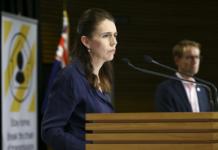
The PIF Secretariat, which is headed by former Nauru President Baron Waqa, has not publicly confirmed Israel’s status yet. However, New Zealand Foreign Minister Winston Peters said the decision by PIF leaders should be respected and described criticism of Israel’s inclusion as an “insult” to Pacific Island nations.
Collin Beck, who is a Solomon Islands career diplomat and senior government official, said in a comment on a Facebook post on RNZ: “Pacific support a rules-based international system, respect for international law.”
‘Peaceful countries’
“We must engage with all peaceful countries,” he wrote.
However, he added that the PIF’s “mechanism on partnership now lacks credibility”.
He said the review of how the PIF works with its partners “must come with criteria that [have] humanity at its centre, international law, respect for lives [which] will surely place the Pacific on the right side of history”.
He also noted that there should be respect for the Pacific Ocean of Peace Declaration adopted by Pacific leaders in September 2025.
Dr Robie, who has decades of experience researching and writing on the region, said the move undermined the Forum’s founding commitment in 1971 to regional decolonisation.
“In what is probably one of its most shameful acts ever, the Pacific Islands Forum has betrayed one of its founding principles in admitting Israel — already a global rogue pariah state — as a development partner in the middle of the genocide of an Indigenous people, the Palestinians,” he wrote as editor of Asia Pacific Report.
“As decisions of this nature are made by consensus, it means that all 18 member states of the region’s main political body — including Australia and New Zealand — have given their blessing.”
Voted against decolonisation
He pointed out that Israel, alongside the United States, had also voted against decolonisation at the UN Decolonisation Committee (C-24) meeting earlier this month.
“Six Pacific countries and territories — American Samoa, French Polynesia (Mā’ohi Nui), Guam (Guåhan), New Caledonia (Kanaky), Pitcairn and Tokelau — are still on the UN Decolonisation list,” he wrote.
He said that a “perception of arrogance and deceit” about Israel’s PIF partnership process had also angered many in the Pacific.
This story was first published on