




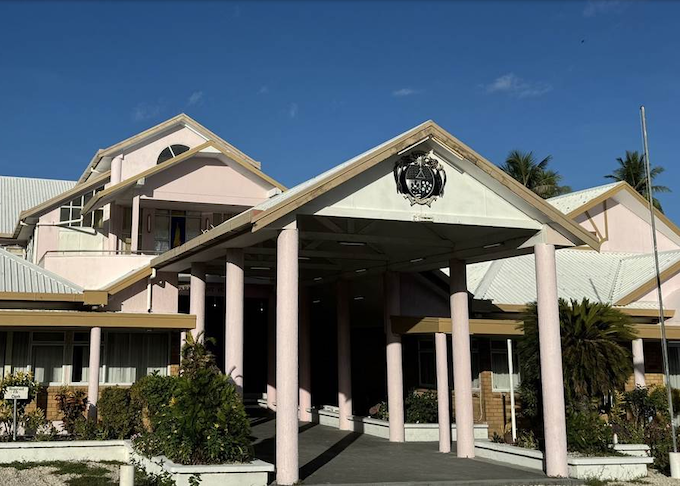
Naoero, formerly Nauru, no longer has an opposition after its handful of opposition members of Parliament joined President David Adeang’s administration to form a “united government”.
The Micronesian island nation, which is one of the world’s smallest republics with a population of around 12,000, made the announcement via a government statement on Tuesday, calling the move a “truly historic moment”.
President Adeang described that all 19 MPs coming together — the first time since independence in 1968 — to support one government as “a moment of unity, stability and shared purpose”.
Naoero does not have any political parties, and its MPs are elected as independent candidates to four-year terms from across eight multi-member constituencies. During the previous two parliaments (2019 and 2022), there were six opposition MPs.
Adeang, 56, was re-elected as president unopposed during the 25th Parliament in October 2025.
He is expected to run the island nation without formal parliamentary opposition until the next election, due in 2029.
The government since its inception had been willing to take different paths, explore new opportunities and lead with boldness, Adeang said.
“Our future decisions must continue to strengthen essential services, protect our national resources and create a sustainable future that does not leave the next generation carrying the burdens of today,” he said.
Earlier this year, Adeang’s administration changed the country’s name without holding a referendum — as was initially expected under the country’s parliamentary procedures — as a sign of “national pride and patriotism”.
In September, Adeang introduced the name ‘Naoero’ to world leaders at the UN General Assembly in New York, saying that the traditional name carried the “memory of our ancestors, our language, and our identity”.
This story was first published on