


Asia Pacific Report
A new human rights report has rated civic space in Indonesia under President Prabowo Subianto rated as “obstructed”.
Human rights groups have documented the criminalisation, harassment and attacks on activists and others for their activism, reports Civicus Monitor.
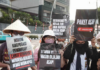
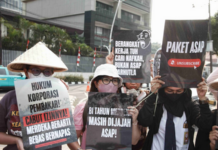
Journalists have been targeted for their reporting and there has been a brutal crackdown on protests, with arbitrary arrests, excessive force and ill-treatment by the security forces with impunity.
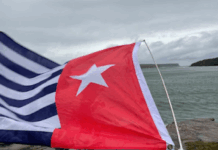
Authorities have also criminalised West Papuan activists for their peaceful expression and suppressed demonstrations in the Melanesian region.
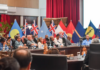
On September 28, Indonesia rejected allegations of systematic human rights violations in Papua during its right of reply at the 81st session of the UN General Assembly.
The response followed statements by representatives of the Solomon Islands and Vanuatu calling for greater international attention to the situation and independent verification of reported abuses, including through a visit by the UN High Commissioner for Human Rights.
Indonesia claimed that credible allegations were addressed through national institutions and legal mechanisms, including the National Commission on Human Rights (Komnas HAM).
Military legal ruling
A significant legal development occurred on October 15 in dealing with violations by the military against civilians.
Indonesia’s Constitutional Court ruled that the Military Judiciary Law must be amended within two years to bring it into conformity with constitutional guarantees of judicial independence and equality before the law.
The ruling requires Parliament and the government to clarify the division of jurisdiction between military and civilian courts, including the treatment of ordinary criminal offences allegedly committed by military personnel.
Human rights groups highlighted the potential importance of the ruling for victims seeking accountability for alleged abuses by military personnel in Papua.
On October 20, Civicus published a report marking two years since President Prabowo Subianto came to power. It highlighted the regression of civic space, in particular the attacks, harassment, prosecutions and surveillance targeting human rights defenders, journalists and critics, as well as the crackdown on protests.
On the same day, Amnesty International Indonesia gave the government a “failing grade” on human rights. It said the government had not made progress in addressing serious past human rights violations.
Shrinking civil space
It also raised concerns on the shrinking civil space, the expanding military role in civil affairs, and several economic policies impacting community rights.
The Committee to Protect Journalists and Civicus also urged the government to end practices that undermine press freedom and take concrete action in protecting journalists, ending impunity, and fostering the conditions necessary for independent journalism.
In recent months, there have been allegations of censorship around the forest fires and Greenpeace activists briefly detained. A student activist was jailed, while an individual was criminalised for providing community internet access.
The Advocacy Team for Democracy (TAUD) released their findings around the August 2026 anti-corruption protests while the crackdown on peaceful protests in Papua persisted. A student leader was assaulted, Papua activists targeted and reduced sentences for an attack on an activist raises’ accountability concerns.
Sejumlah pengguna medsos baru-baru ini mengeluhkan adanya pembatasan unggahan konten terkait karhutla di Kalimantan. Hal itu menandai dua tahun pemerintahan Prabowo-Gibran yang disebut masih diselimuti praktik pengekangan kebebasan berpendapat https://t.co/TYEk3PgeVF
— BBC News Indonesia (@BBCIndonesia) October 19, 2026
Censorship of critical social media posts on the forest fires
In October 2026, social media users, civil society organisations and public officials reported that posts discussing forest fires and the resulting haze, including criticism of the government’s response, had been removed, restricted or made less visible on platforms such as TikTok and Instagram.
On October 15, the Nalar Rawat Institute published posts highlighting the health impact of wildfires and severe air pollution, using satellite imagery and pollution data.
TikTok subsequently removed its video, citing violations of community guidelines, while Instagram suspended the organisation’s account. Although access to the Instagram account was restored following an appeal, TikTok rejected the appeal against the video’s removal.
International Animal Rescue Indonesia (YIARI) also reported that Instagram had labelled a post about the impact of wildfires on wildlife as “sensitive content”, blurred the images and muted its audio.
On October 20, TikTok removed a video by Siak district chief Afni Zulkifli showing tree-planting activities on burned land in Riau; the video was restored following an appeal later that day.
The reported restrictions prompted concerns about possible censorship and their implications for freedom of expression and access to information during Indonesia’s ongoing wildfire and haze crisis.
Digital rights organisation SAFEnet called for greater protection of online freedom of expression, while raising concerns that existing regulations could encourage platforms to restrict content excessively.
Communication and Digital Affairs Minister Meutya Hafid denied that the ministry had requested the removal or restriction of content about wildfires.
Dua tahun pemerintahan Prabowo-Gibran, bencana makin parah, biaya hidup makin mahal.
Dari banjir, karhutla, sampai cuaca ekstrem, krisis iklim makin terasa di kehidupan sehari-hari. Tapi, apa kerja pemerintah? https://t.co/o2kk4pTdmF
— Greenpeace Indonesia (@GreenpeaceID) October 20, 2026
Detention of Greenpeace activists
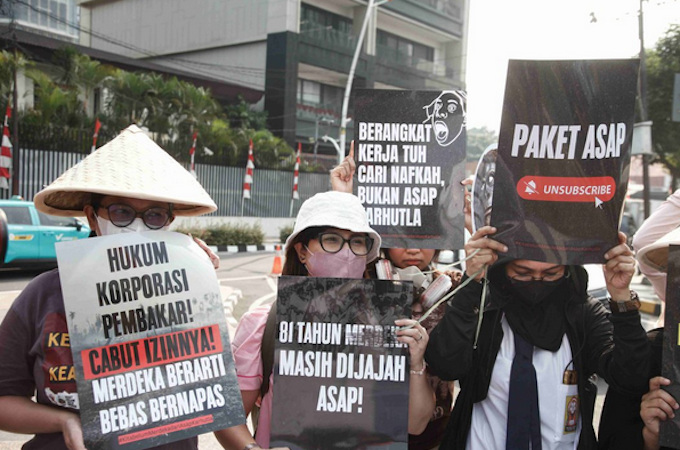
Six Greenpeace Indonesia activists and five others were taken into custody by police on October 21 after unfurling banners at a monument at the Hotel Indonesia roundabout in Jakarta. The banners criticised the government’s handling of forest fires and the haze crisis.
The unfurled banners read: “Address the Climate Crisis, Lower Living Costs” and “Disasters Are Getting Worse, Life Is Getting Harder. What Is the Government Doing?” to express their demand for action on the climate crisis.
The banners only remained up for two hours before police asked them to take them down.
Daniel Winarta, a representative from the Advocacy Team for Democracy (TAUD) at the Jakarta Legal Aid Institute (LBH), said that the detention lacked a clear legal basis.
Chairperson of the National Commission on Human Rights (Komnas HAM) Anis Hidayah also called for the immediate release of the activists.
However, the police media outlet later denied an arrest, claiming the activists were brought to police headquarters solely for medical treatment after “feeling weak and dizzy” from descending the monument, and were released the same night.