


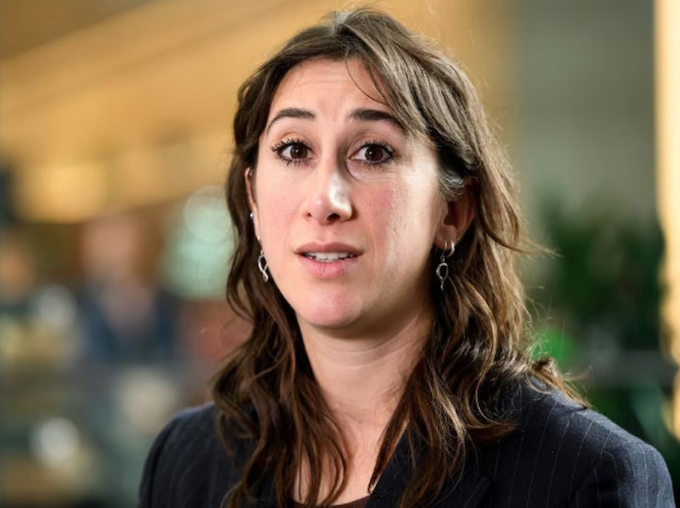
Executive director of the Jewish Council of Australia, Sarah Schwartz, has told the Bondi Royal Commission of sustained abuse by pro-Israel activists. Michael West Media reports.
SPECIAL REPORT: By Stephanie Tran
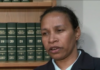
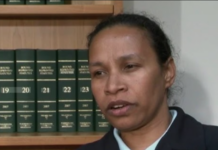
Giving evidence before Australia’s Royal Commission into Antisemitism and Social Cohesion, Sarah Schwartz, a human rights lawyer, said attacks from pro-Israel groups sought to delegitimise Jewish people who criticise Israel.
“They rest on the idea that Jewish identity is inherently tied to Israel, and therefore Jewish people who don’t support Israel or who criticise Israel are not really Jewish and are traitors,” she told the commission last Thursday.
Schwartz said she had been referred to as a “self-hating Jew”, “Hitler’s Jew”, “kapo” and “Judenrat”, and had been depicted using Holocaust imagery, including “on a train to concentration camps” and with the yellow Star of David imposed on Jews under Nazi rule.
- READ MORE: ‘Unconstitutional’ – NSW court strikes down Minns’ draconian anti-protest laws
- Other Bondi Commission reports
Holocaust weaponised
She said the atrocities of the Holocaust were a motivation for her Palestine solidarity work and the weaponisation by pro-Israel accounts of Holocaust imagery was “incredibly disturbing”.
“I was taught that never again meant never again for anyone, and that’s why I do the work that I do,” Schwartz said.
“To have the symbols of the Holocaust and Nazi imagery and Jewish persecution used against me has been incredibly disturbing and distressing, and I think it
sends a chilling message to other Jewish people when they want to speak out.
Schwartz said the stereotype that all Jewish people are politically aligned with Israel “causes immense harm”.
“I speak … almost every day to Jewish people who contact me and who are terrified of speaking out, because they know that if they speak their political convictions, they face the risk of a similar sort of abuse and vilification and targeting that I have experienced.”
Murdoch media coverage fuelled abuse
Schwartz told the commission that reporting by The Australian undermined her safety and ultimately led her to abandon a police application intended to protect her from ongoing harassment.
She recounted an incident in March 2025 after police applied for a personal safety intervention order (PSIO) on her behalf against lawyer Zara Cooper, who targeted Schwartz on Instagram under the pseudonym “@clammy_fraud”.
Schwartz said she first learned of the application through a journalist from The Australian, who contacted her to say the newspaper was preparing a story.
“I informed him I hadn’t been informed of the nature of the PSIO,” she said.
“When I asked him if he could provide me with a copy, he said he couldn’t provide me with a copy … because I didn’t know its contents, I also couldn’t really respond to a lot of it, because it was a police application.”

Schwartz said the following day’s front-page article ($) incorrectly suggested she, rather than police, had initiated the proceedings in an attempt to suppress free speech.
Free speech for me, not for thee
She told the commission that The Australian subsequently published further articles about the case, including reproducing images and slurs that formed part of the material relied upon by police in seeking the intervention order.
“What was most distressing to me is The Australian chose to republish some of the offensive imagery that was the basis on which police applied for the PSIO,” she said.
“[The Australian] republished content that took my image and placed it on a train to concentration camps, content calling me a kapo and other various slurs.”
Schwartz said the coverage convinced her that pursuing legal protection would expose her to further public attention and place her at greater risk.
“It became very clear to me after that coverage that this was becoming a media circus,” she said.
“Having reported these matters to police … was actually something that was
going to make me less safe because of the media coverage.
She subsequently told police she no longer wished to proceed with the intervention order, and the application was withdrawn. She has since been reluctant to report further incidents because she fears doing so would attract similar publicity.
“It’s become very clear to me that, because of the media interest in me as a person, but particularly because of News Corp’s targeting of me, it’s not going to be safe for me to engage in reporting,” she said.
She also expressed concern that republishing the abusive material normalised antisemitic attacks against Jewish critics of Israel.
“I think that media reporting really normalises the use of these terms against other Jewish people … people see that coverage and think that it is legitimate to call a Jewish person Nazi-aligned or to place our face on a train to concentration camps.”
Being pro-Palestine is not antisemitism
Schwartz dispelled suggestions that pro-Palestinian activism is a significant driver of antisemitism, stating that, despite attempts to portray Palestine solidarity spaces as hostile to Jews, that had not reflected her own experience.
“I know that there is a lot of public discourse … that suggests that human rights spaces and Palestine solidarity spaces, in particular, are spaces that might be hostile to Jewish people,” she said.
That hasn’t been my experience at all.
Instead, Schwartz said she had received “many messages of support and clear condemnations of antisemitism” from Muslim colleagues following the Bondi terror attack on 14 December 2025.
Government response
Schwartz criticised the government’s responses to antisemitism, which have disproportionately focused on the Palestine solidarity movement, including the banning of protest slogans.
“I think that government responses, which locate the source of antisemitism within the Palestine solidarity movement, suggest for Jewish people who are also part of that movement that either we’re not really Jewish or that we are somehow against Jewish people in our own communities.”
Asked what measures would most effectively combat antisemitism, Schwartz said governments should prioritise addressing far-right extremism and
avoid conflating antisemitism with the Palestine solidarity movement.
“It’s really important for us to take the threat of far-right extremism really seriously … we know that it’s rising and it’s becoming more mainstream,” she said.
“It is critically important that governments and institutions don’t adopt policies in response to antisemitism that engage in that form of conflation itself that suggests that antisemitism is coming from the Palestine solidarity movement.”
She also called for progressive Jewish organisations to be included in policymaking on antisemitism.
“It’s really important that organisations such as the Jewish Council and other progressive Jewish organisations actually have a seat at the table” she said.
“It shows the broader community that
the Jewish community, like every community, has a diversity of opinions.