



ANALYSIS: By Grant Duncan
New Zealand First leader Winston Peters — a veteran of 18 general elections — has called this long and sometimes fractious campaign “the worst of my career, easily”. But whether you agree with him or not, tomorrow night still promises exciting live entertainment.
Will Prime Minister Christopher Luxon and his three-party coalition be removed from office after just one term? Will they be replaced by a left-wing coalition led by Labour’s Chris Hipkins — the same man who lost to Luxon in 2023?
Will the Opportunity Party make it over the 5 percent threshold for seats in Parliament, potentially holding the balance of power?
- READ MORE: Election Policy Tracker: your guide to what the parties are promising during the 2026 election campaign
- Other NZ election reports

More technically, will the various campaigns to have voters split their two available votes (one for their electorate candidate, one for their preferred party) have a bearing on the result?
Normally in New Zealand’s mixed member proportional (MMP) system, the election numbers that really count are the party-vote percentages. This time, however, individual electorates will matter more than usual.
With polls promising a very tight race, here are some numbers and possible scenarios to track on the night.
Overhangs on the left or right
A parliamentary overhang happens when a party wins more local electorate seats than it would have been awarded in proportion with its percentage of the party vote.
The overhang seats are added (above Parliament’s normal 120) to accommodate those extra winners of single-member districts. Overhangs of one to three seats have occurred before.
But this election campaign has seen organised efforts on both the left and right to deliberately use the overhang rule to increase the number of seats their respective sides can win.
Te Pāti Māori is ignoring the party vote entirely and asking supporters to deliver wins in the Māori electorates but give their party vote to Labour or the Greens (which would increase the overall party vote on the left).
Winning three to five Māori electorates would greatly outweigh Te Pāti Māori’s party vote entitlement, which could go below 1 percent. The number of overhang seats produced on the left will be a major talking point on the night.
A counter-strategy on the right (not officially endorsed by the National Party) assumes National can win more electorates than its party vote (possibly below 30 percent) would warrant.
The campaign is asking right-wing voters to keep the left-wing parties out of office by party-voting ACT or New Zealand First, and giving electorate votes to the National candidates. By some calculations, if that works, it significantly increases the odds of a right-coalition victory.
Tactical voting and skewed results
It’s impossible to predict how many voters will heed the calls for tactical vote splitting. In the 2023 election, 35.51 percent of voters split their votes, compared to 27.33 percent in 2020. National voters were the least likely to do so.
Nonetheless, the overall impact of these opposing strategies to maximise the overhang could increase the size of the next Parliament and alter the balance of power.
On the night, watch the numbers of electorate seats won by National and Te Pāti Māori.
In 2023, National won 44 electorates and 38.1 percent of the party vote. Five MPs from the party list then made up its proportional share of seats. If National’s party vote falls to around 30% this time, we’d normally expect its number of electorate seats to fall, too — maybe below 30.
But if ACT and New Zealand First voters do split their votes, National could win more local electorate seats than the party vote would normally deliver overall.
If National wins 29 percent of the party vote, for example, that would normally entitle it to 35 seats. Predictions are hazardous, but National could conservatively win 39 or more electorates.
One peculiar outcome could be that Labour gets a higher party vote than National, but National wins more seats than Labour. That’s the kind of disproportionate outcome that brought the old first-past-the-post system into disrepute after the 1978 and 1981 elections.
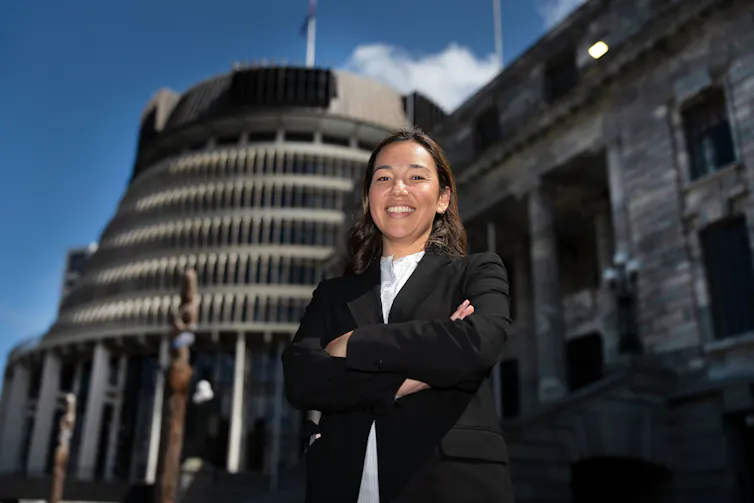
Opportunity and uncertaintyThe next number to watch is the Opportunity Party’s party-vote percentage. Polls indicate it will make it over the 5 percent threshold for seats in Parliament for the first time.
That’s no guarantee — polls are often wrong. But if it does, Opportunity could hold the balance of power after the election. The party’s stated inability to work with New Zealand First (especially after the Michael Laws fiasco) could significantly affect coalition negotiations.
The combined party votes of National and Labour will be another key factor. Since the MMP system began in 1996, that number hasn’t gone below 62 percent. The lowest was 62.03 percent in 1996, and the highest was 81.3 percent in 2017.
Going by opinion polls, that sum may go below 60 percent this time — the flip side being that smaller parties stand to gain.
In 2023, the Greens won 11.6 percent of the party vote, ACT 8.6 percent and NZ First 6.1 percent. If the polls are more or less correct, all three will get a boost. This, too, could be aided by tactical vote splitting.
Be ready to wait for a result
And we mustn’t forget election-night numbers are only provisional. There are still special votes to count, and there were over 600,000 of those in 2023.
In recent elections, the Greens and Labour have picked up one or two seats between election night and the final count, at the expense of National.
And electorate cliffhangers can be important, too, including maybe one or two Māori seats. Small shifts in seat numbers over the following three weeks could affect prospects for government formation.
The final tally takes three weeks, with coalition negotiations between the parties potentially taking several more. The race isn’t truly won until the governor general swears in a new administration — maybe by Christmas, maybe later.
Although the party that wins the largest percentage of the party vote is normally in pole position to form the next government, that doesn’t necessarily mean they’ll succeed in doing so.
As I write, no one even knows exactly how many seats there will be in Parliament — but everything will depend on which workable coalition holds a majority of them.
The leader of the party that comes second may not concede defeat on the night. There may still be everything to play for.
Dr Grant Duncan is a research associate, Public Policy Institute, University of Auckland, Waipapa Taumata Rau. This article was first published by The Conversation and is republished under Creative Commons.