


By Johnny Blades of RNZ Pacific
After an historic day in which the result of Bougainville’s independence referendum was finally tabled in Papua New Guinea’s national Parliament, an eventual decision on the matter is at least months away.
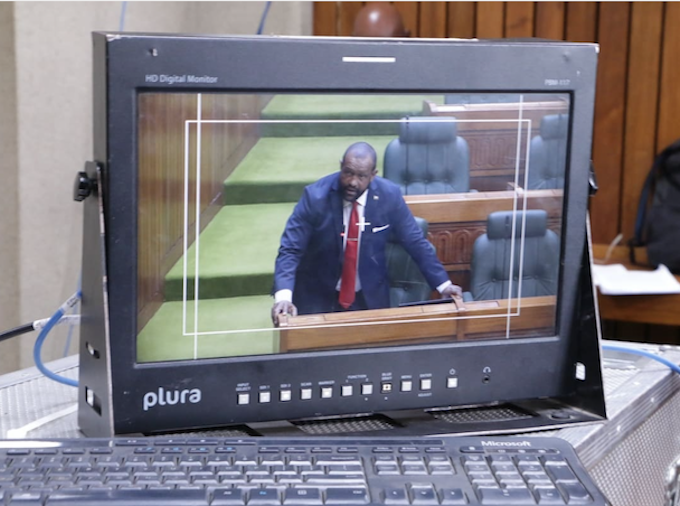
The Parliament adjourned after debate on Thursday on the tabling of the Bougainville referendum result from 2019 in which 97.7 percent of Bougainvilleans voted for independence
PNG’s members of Parliament will have the final say on whether to ratify the result, although it is not clear when that vote will be taken.
- READ MORE: Long time coming: After decades of struggle, is Bougainville on the brink of statehood?
- Other Bougainville independence reports
A delegation from the Autonomous Bougainville Government (ABG) sat patiently in the gallery and watched on as MPs offered different takes on what everyone agreed was a difficult decision for them to have to make.
As the Joint Consultation Report and the Melanesian Framework documents were also newly tabled, PNG’s opposition leader James Nomane pointed out that the MPs could hardly be expected to make informed decisions when they had only just received these documents.
“I ask that the government be very, very clear about when this vote will take place, and make all effort to inform all leaders of the House about: yes, what happens; no, what happens?” Nomane said.
PNG’s Prime Minister James Marape said his government had a plan for the way forward for either outcome of the vote, affirmative and negative.
Setting the vote date
After the adjournment, he issued a statement saying the PNG and Bougainville governments would meet in October to set the date for the Parliament vote on the referendum.
Earlier, he told MPs to go away and digest the report documents before deciding how to vote, and to ponder the Bougainville viewpoint, while also urging Bougainvilleans to consider the perspective of PNG.
“This is not simply a constitutional or political issue. It concerns the lives, hopes and futures of our people, especially those people whose lives have been shaped by the Bougainville crisis and the Bougainville peace process,” Marape said.
Minister for Bougainville Affairs Manasseh Makiba, who tabled the referendum result and relevant consultation documents, noted that the Melanesian Framework provided for a structured pathway and orderly transition for Bougainville to assume greater powers, in the event of an affirmative vote by Parliament.
“At the heart of the framework is concept of a transitional phase that is being termed as self-government,” he said.
“Under the Melanesian Framework, an affirmative decision by the national Parliament would not result in the immediate independence of Bougainville.”
Makiba acknowledged that in the consultations, the national government and the ABG had been unable to reach consensus on the pathway in the event that the parliament does not accept the results.
But he said PNG’s government still believed a constructive pathway forward was possible.
“The first element of the pathway would be the completion of the drawdown and effective exercise of all remaining autonomous powers available to Bougainville under Part 14 of the national constitution.”
‘The real seed’
Meanwhile, a senior MP who oversaw national consultations over Bougainville, described arguments that giving Bougainville independence undermined PNG’s sovereignty as reductive.
Dr Allan Marat, the chairman of the Bipartisan Parliamentary Committee on Bougainville Matters, said the referendum issue attracted considerable debate on the issue of PNG sovereignty.
“This in turn has attracted considerable debate, and especially on the sovereignty issue of Papua New Guinea, that if we vote in favour of the 97.7 percent and grant Bougainville independence, then some of the other provinces might want to leave Papua New Guinea as well,” Dr Marat said.
“I want to express my personal belief … that this fear is an uninformed knee-jerk reaction and lacks human understanding.”
He said it was more useful to bear in mind the development of a particular political mindset of the Bougainville people, “developed from the Paleolithic period during the last Ice Age period, the early European explorers, the missionaries, the colonial period leading up to independence and on to the 10 years of armed conflict, and eventually the peace process and the referendum until today”.
“This human history and facts among the Bougainvilleans were the basis of their reasonings, giving rise to, ‘the real seed’, of discontentment in the minds of Bougainvilleans.
“This exploded into the armed conflict resulting in thousands of deaths, culminating in the conducting of the referendum and achievement of the referendum results.”
This story was first published on