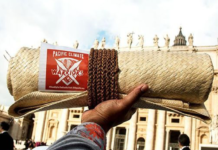



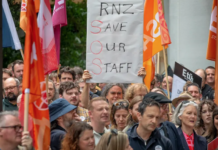
Thousands of protesters have taken to the streets of Manila this week to denounce US President Donald Trump’s visit to the Philippines as they condemn Washington’s military presence in the country and the US-backed initiative Pax Silica that they fear could displace Indigenous communities and farmers. Vivien Beduya reports on a Filipina’s time with one Aeta community and what the land means to them.
SPECIAL REPORT: By Vivien Beduya
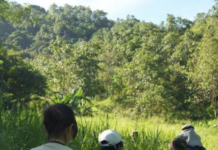
Seated in the bleachers of New Clark City Athletics Stadium, an Aeta chief pointed *Maria towards the mountains in the distance.
“That’s where I used to ride on horses with my cousin, and [we] would race [to see] who would get first to the top…
“We can’t do that now because it would be trespassing. We don’t own that land [anymore],” Maria recalls him saying.
- READ MORE: Trump announces ‘biggest trade deal’ between Philippines, US
- Cebu Pax Silica protest dispersal prompts calls for probe into alleged Filipino police brutality
- Pax Silica: BCDA’s claims and the counterarguments
Maria says it was heartbreaking to think that for generations before, they could roam freely on their ancestral lands.
The stadium sits inside New Clark City in Tarlac, two hours north of Manila. It is a 9450-hectare city the government is building on a former US military base.
Nearly all of New Clark City falls within the Aeta’s 17,000-hectare ancestral land claim. About 1620 hectares within New Clark City have been earmarked for a US-backed technology hub under Pax Silica.
Now, concerns are growing that this will push out the Aeta from their ancestral lands for good.
How Pax Silica will impact on the Philippines
Pax Silica is a US-led coalition that aims to secure the supply chains behind artificial intelligence and critical technology, including critical minerals, semiconductors and energy.
The US State Department launched it in December 2025, and by October 2026 it had 26 signatory countries. It is widely seen as an effort to reduce the US and its allies’ dependence on China.
The Philippines joined in April 2026, and the Bases Conversion and Development Authority (BCDA) projects the hub could bring P180 billion (about NZ$5.2 billion) in revenue a year and up to 190,000 direct jobs should it become fully operational, about a decade from now.
The project is led by the BCDA, the state agency developing New Clark City. Officials say the plan is to process Philippine minerals, such as nickel and copper, into high-tech components locally, instead of shipping the raw ore overseas.
In November, officials said the Pax Silica hub would not include data centres, a shift from July, when the BCDA said AI data centres were possible, but not a priority because they created few jobs.
The BCDA says there will be no mining on the site, although critics argue the processing plants will drive even more mining and extraction of natural resources in the Philippines.
US President Donald Trump arrived in Manila yesterday for the ASEAN Summit, and many expect the two governments to sign the Pax Silica framework during his visit.
US ambassador Lee Lipton said no announcement was ever planned, and the Department of Trade and Industry now expects a signing by the end of the year.
A history of displacement
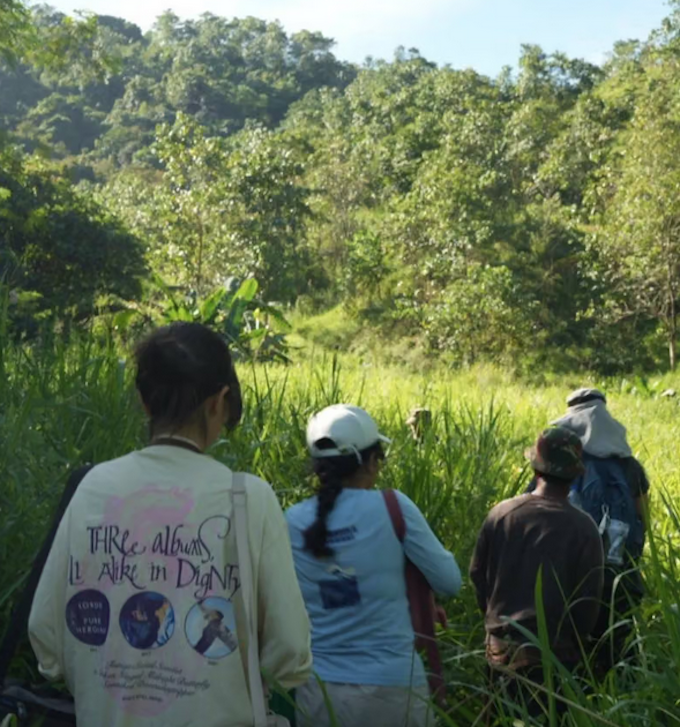
Maria, a member of Anakbayan Aotearoa, travelled to Tarlac in 2025 with a Filipino youth solidarity tour from Aotearoa. That was before Pax Silica was announced, but during the building of New Clark City.
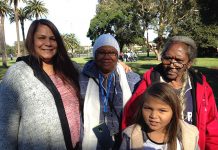
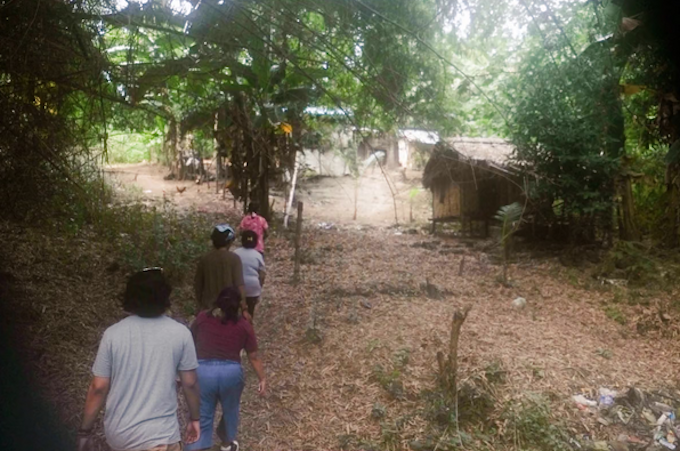
For three days and two nights, they stayed with an Aeta community and were hosted by the tribe’s nominal chief, whom they called Tatay (“father” in Tagalog).
“We ate and slept like them, following their daily routines as much as we could,” she says.
The families told the visitors a long history of displacement — including being pushed out during colonial rule, the development of US military bases in the Second World War, the 1991 Mount Pinatubo eruption and being red-tagged under martial law because they lived in the mountains.
More recently, she says, families had been evicted or bought out as the BCDA turned the former US military base into a city.
Many now work for that city, Maria says. Some tend its gardens, work as security guards, and Tatay’s wife and her cousins mow the grass at a nearby golf course.
“This golf course nearby was mostly owned by Koreans, which is really ironic. They lived in this land for generations, and now they have to work [on their land] that is owned by people overseas,” Maria says.
Losing access to ancestral land
The tribe calls the land lupang ninuno, or ancestral land in Tagalog. Maria went to school in the Philippines and remembers being taught the Aeta were nomadic.
“I learned during this trip that they actually aren’t,” she says.
“This vast cluster of land was where their families, their tribes, lived for generations.
“They had to settle in concrete huts and [mga] bahay kubo because of land deeds… [Before] they would just roam this vast clutter of land and mountains.
“They would get their food from there, their camote, leaves and their medicine. They would fish from the streams nearby.”
With New Clark City now built across the land Aeta claim as ancestral, Maria says even the simplest of those resources now takes a real effort to reach.
One evening, the group needed bamboo to cook dinner in. Maria says the bamboo used to grow close by, but the nearest patch the family could still access was about three hours away.
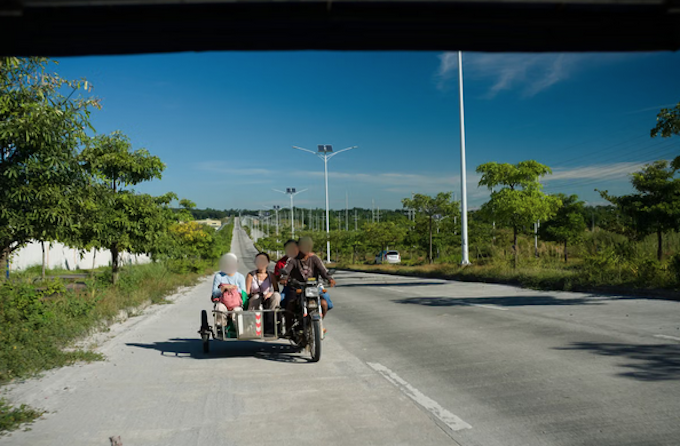
It involved a two-hour return tricycle ride and a 30-minute hike through tall, sharp grass up a steep slope.
She says her group, who were raised in the comforts of Aotearoa, rolled down their sleeves to protect themselves against cuts and ant bites.
But Tatay and his cousin did not bother. “They manoeuvred with no effort at all, which really shows how connected they are to the land.”
Whose land, and how many people?
Outgoing BCDA president Joshua Bingcang maintains the site is public land titled to the BCDA, with no ancestral domain title. In July, the BCDA also said that no one will be displaced.
In a December 2025 statement to Al Jazeera, the BCDA said it “upholds the welfare and rights of Indigenous peoples”, and that New Clark City “does not encroach on any recognised ancestral domains.”
The Aeta of Sitio Sapang Kawayan, a separate community from the one Maria stayed with, hold no title, but their chieftain, Petronila Capiz-Muñoz, says the community has been applying for one since 1984.
Maria rejects the government’s position. “There’s people, there’s the communities, and it’s not just the community I visited,” she said.
“That land is the source of their food, their medicine, that’s their livelihood. That’s their ancestral ties and that’s their culture.”
She fears that families forced out will drift to Manila, as some Aeta already have, and be pushed into poverty.
Official counts of who lives on the site have varied. Bingcang told the Senate in August that 14 to 30 households occupied the site. At the same hearing, the National Commission on Indigenous Peoples (NCIP) estimated 75 households and Capiz-Muñoz said about 1000 Indigenous people fear displacement.
In October, the BCDA said it planned to build about 50 housing units for relocated residents, on a 10-hectare site outside the hub.
A joint BCDA and NCIP census from August has not been released.
Impact on farmers and workers
Farmers are also at risk. Citing reports, Senator Imee Marcos says 92 farmers cultivate land on the site and strongly urged the government to prioritise farmers and indigenous peoples.
Eugene Velasco, BAYAN Aotearoa chairperson, an alliance that includes Anakbayan, also doubts the BCDA’s claim that no one will be displaced.
“Will we really believe that this is abandoned land, especially in a country where farmers don’t own their land?” (Maniniwala po ba talaga tayo na iyun ay abandonadong ektarya ng lupa, lalo na sa bansang walang sariling lupa ang mga magsasaka?)
The government pitches the hub as a jobs engine, and government agencies describe it as an advanced manufacturing complex focused on wafer fabrication, chip design and critical minerals processing.
Velasco is also sceptical of the promised jobs, arguing the Philippines lacks the technological capacity to build microchips, so the work left for Filipinos will be assembly and testing, the lowest-value end of the supply chain.
“What they really need is the cheap and docile labour of Filipino workers,” Velasco says.
Velasco sees a link between the Aeta and young Filipinos in Aotearoa, saying the 1.5- and second-generation Filipinos are reviving baybayin and regional languages to reconnect with their Filipino identity.
The Aeta and the farmers are fighting to keep more than their language, Velasco says. “They just want to live in peace, on their own land.” (Gusto lang po talaga nilang mabuhay sa kapayapaan, sa sarili nilang lupa.)
What can’t be taken away
Back at the stadium bleachers, the Filipino youth delegates also sat with the families from the Aeta community.
Maria says they told stories of how their neighbours have been bought out by the government and relocated.
She says Tatay, who she thinks is in his 60s or 70s, also talked about how hard it had been for him to keep fighting to stay connected to his ancestral land.
When one of the community’s long-time supporters asked him what help he wanted from them, she says Tatay asked for education.
“They can take the money that they give you. They can take the land,” Maria recalled him saying.
“But they can’t take away your education, your understanding of your rights and how you can fight for yourself in this world.”
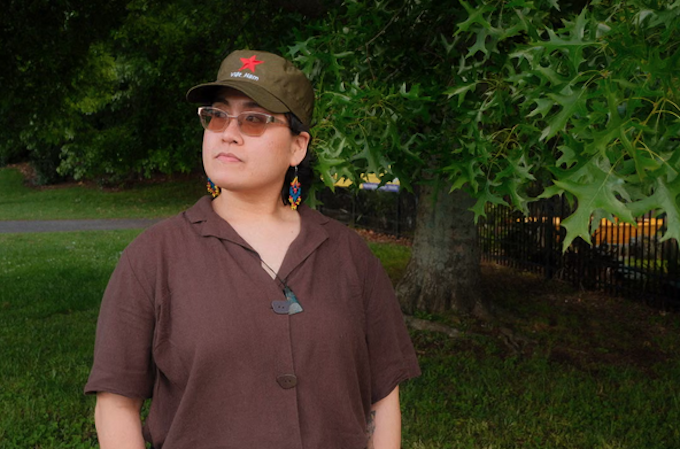
*Maria is a pseudonym, used for her safety. For the same reason, she has chosen not to name the Aeta community she stayed with.
- Bisaya Banter contacted the BCDA for comment on 15 November. This story will be updated if a response is received.
Vivien Beduya is a Filipina journalist living in Aotearoa New Zealand. Her article was first published on her Bisaya Banter, a podcast-turned-community media platform for the young Filipinos in Aotearoa, and draws on interviews conducted in New Zealand and on reporting by Philippine and international media. It is republished by Asia Pacific Report with the author’s permission.
An explainer documentary by independent filmmaker Carlos Vines