


COMMENTARY: By Lim Tean
Ten nights of bombing. Zero endgame. And now a second chokepoint just slammed shut.
This is what happens when you resume a war without a strategy.
Tuesday brought the clearest proof yet that what we are watching in the Gulf is not a series of isolated flare-ups, but a coordinated strategic encirclement — one I have been calling the “security belt” thesis since Iran’s Quds Force commander first used that exact phrase in June.
- READ MORE: Iran attacks Bahrain, Kuwait, Jordan; says 2 tankers in Hormuz ablaze
- Lim Tean: You cannot bomb a strait open – Hormuz, Chabahar and the coming battle for Bab el-Mandeb
- Other War on Iran reports
What happened today?
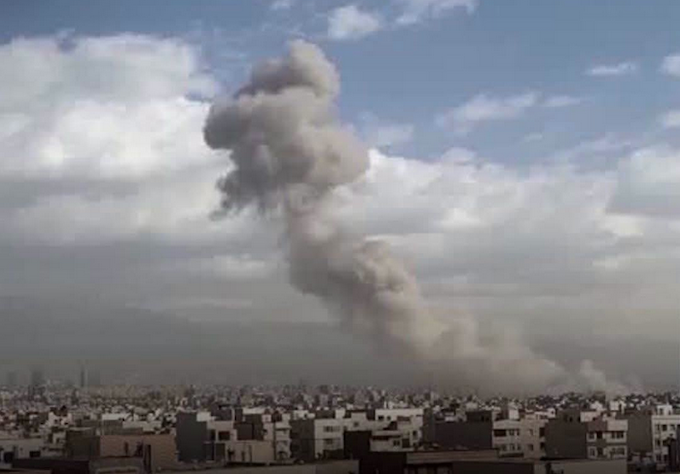
Iran’s Revolutionary Guard Corps struck US radar and air-defence installations across the Gulf, claiming the destruction of a missile-defence radar and an F-15 sheltered in Jordan, and hitting Amazon’s data infrastructure in Bahrain.
Senior Hamas official Khaled Meshaal has congratulated Khalil al-Hayya on being named as the head of Hamas’s political bureau.
🔴 LIVE updates ⤵️https://t.co/LRy6Ugekjx
— Al Jazeera English (@AJEnglish) July 21, 2026
This is now the 10th consecutive night of US strikes on Iran, launched at the direction of President Donald Trump, with CENTCOM confirming further attacks on Iranian air defence, radar, missile and drone sites.
But the more consequential news is at sea. Iran’s Revolutionary Guard Navy intercepted and stopped two tankers in the Strait of Hormuz it labelled “non-compliant” — language that should alarm every shipowner and P&I underwriter reading this.
Iran is no longer simply harassing traffic through Hormuz. It is asserting a compliance and inspection regime over the strait — a direct challenge to the transit passage rights guaranteed under UNCLOS.
Hormuz is now estimated at roughly 89 percent interdiction under Iranian naval enforcement.
And now, the second door has closed
Yemen’s Houthis announced on Monday a full maritime blockade of Saudi Arabia through the Bab al-Mandeb Strait — the 29km chokepoint linking the Red Sea to the Gulf of Aden, carrying roughly 12 percent of global trade and a quarter of the world’s container traffic.
The Houthis frame it as retaliation for the Saudi blockade of Yemen and a strike on Sanaa airport. But the timing is what matters strategically: Saudi Arabia had spent the last four months rerouting the bulk of its crude exports westward through the East-West pipeline to Red Sea terminals — precisely because Hormuz was already closed.
That escape valve is now being shut too.
For the first time in this conflict, Saudi Arabia sits trapped between two blocked corridors. Brent crude has surged roughly 30 percent off its July lows, trading near US$88 a barrel.
The Legitimacy Principle at work
This is the Dual Hegemony thesis made visible: Iran holding the eastern gate at Hormuz, its aligned Houthi forces holding the western gate at Bab al-Mandeb — two actors, one strategic architecture, squeezing the Arabian Peninsula from both flanks regardless of how tightly Tehran and Sanaa formally coordinate operations.
Whether or not the two theatres are directly commanded in tandem, the effect is the same: nearly a quarter of the world’s oil and gas supply now sits hostage to a war that shows no sign of a negotiated off-ramp.
For the war-risk and P&I markets, the signal is unmistakable. This is no longer a single-chokepoint risk to be hedged and rerouted around. It is a dual-corridor structural crisis, and premiums, routing, and insurer exposure will need to be repriced accordingly.
The question now is not whether the world absorbs a Hormuz shock. It is whether it can absorb both at once.
Washington’s self-inflicted trap
But there is a second story here, and it is arguably the more damning one: what this does to Trump’s position.
Trump did not have to resume this war. A Memorandum of Understanding was on the table only weeks ago — his own administration’s negotiated off-ramp. It collapsed because Iran acted to defend the one asset that actually matters to it, control of Hormuz, and Trump’s team, led by Vance’s negotiators, signed language loose enough for Tehran to exploit.
Trump himself complained this week that Iran “always breaks” agreements — an extraordinary line from a president whose own record of walking out on international agreements is well known. He chose escalation. Nobody forced his hand.
⚡BREAKING:
🇺🇸🇮🇷 President Trump says Iran always breaks agreements, so the U.S. will strike them hard. pic.twitter.com/waWiTxZW08
— Litest (@Litest) July 13, 2026
Ten consecutive nights of strikes later, American service members have already been killed in Iraq and Jordan, and reporting from inside Washington describes an administration that still cannot articulate what victory looks like.
Trump told Americans in a primetime address that the US is “winning big” without once explaining what winning means or how the war ends. There is no regime-change theory of the case. There is no ceasefire architecture on the table. There is only the tempo of the bombing.
Now Washington’s strategic dilemma has just deepened, whether or not that was the intent. Every American strike that fails to reopen Hormuz makes the war look more like a stalemate Trump cannot afford politically. Every escalation invites further retaliation against the very Gulf infrastructure and shipping lanes the US campaign is supposedly designed to protect.
And a US president who staked his credibility on ending wars quickly now finds himself presiding over a widening one, with rising body counts, a global oil market absorbing repeated shocks, and no visible theory of how any of this concludes.
This is the cost of resuming a war without first answering the most basic question any commander is supposed to answer: what does the end state look like?
Months ago, Trump promised this war would last “four to five weeks at most.” It has now dragged on far longer, and the strategic picture is worse, not better, than when he started.
That is not an accident of geography. That is the price of impulse dressed up as resolve.
Lim Tean is a Singaporean lawyer, politician and commentator. He is the founder of the political party People’s Voice and a co-founder of the political alliance People’s Alliance for Reform. He also hosts Lim’s Substack.