

COMMENTARY: By Kalafi Moala
The importance of media freedom is recognised each year globally on May 3. This year the Pacific Island country of Tonga commemorated World Press Freedom Day just a week after one of the most frightening threats to that freedom which took place at a media outlet.
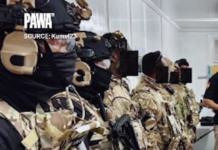
A hooded man brandishing a pistol threatened a female journalist at the newsroom of Kele’a Voice, an FM radio station in Nuku’alofa. The radio station had broadcast a news story about a Tongan deportee serving a life sentence in Tonga for the importation of two kilograms of methamphetamine.
The convicted man was a member of an Australian motorcycle gang known as the Comancheros. He was planning to set up a chapter in Tonga, according to an ABC Foreign Correspondent documentary that included an interview with the man in prison.
- READ MORE: Tongan police investigate journalist threatened at gunpoint after gang-related report
- Other Pacific media freedom reports
The threatened journalist was warned never to broadcast any more stories on the Comancheros and drug trafficking.
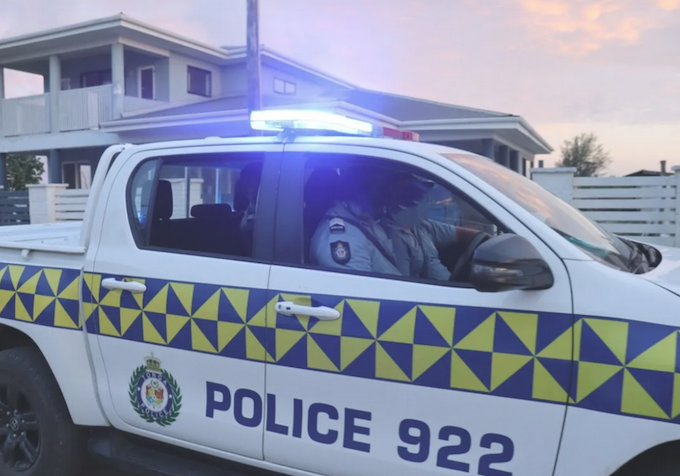
The police are still investigating and looking for the man. The incident is to my knowledge the first armed threat ever carried out against any media in Tonga.
The manager of Kele’a Voice, Teisa Cokanasiga, said the incident was a huge threat to their freedom to report the news, and that it was the media’s role to report on stories of public interest.
Veteran journalist Katalina Tohi, president of the Media Association of Tonga (MAT), spoke out strongly: “A climate of fear and intimidation targeting media personnel undermines democratic principles and silences the very voices that hold power to account.”
‘Attack on right to know’
She said that an “attack on the press is an attack on our nation’s right to know”.
“The Media Association of Tonga is appalled by this brazen act of intimidation. Journalists must be able to carry out their work without the threat of violence or death.”
Tohi is also a board member of the Pacific Islands News Association (PINA); her condemnation of the Tonga incident is representative not only of MAT’s views, but also those of PINA as the premier news association of the Pacific.
Threats against press freedom are unfortunately ongoing in the Pacific. The incident in Tonga demonstrates that the enemies of press freedom can come from anywhere — not always the government or those in power, but anyone averse to truth and transparency.
Whether it is in Fiji, Samoa, Papua New Guinea, Solomon Islands, Vanuatu, French Polynesia or anywhere else in the Pacific, media freedom must be protected, advocated for and exercised to the fullest. Only then can we in the Pacific be assured of the proper exercise of democratic governance, the rule of law, transparency and commitment to truth as foundational pillars of society.
In Tonga, freedom of speech is a fundamental value inscribed in its 150-year-old Constitution. Clause 7 of the Tonga Constitution states:
“It shall be lawful for all people to speak write and print their opinions and no law shall ever be enacted to restrict this liberty.
“There shall be freedom of speech and of the press for ever but nothing in this clause shall be held to outweigh the law of slander or the laws for the protection of the King and the Royal Family.”
Social media issue
In an age when the communication industry has exploded, bringing with it misinformation and disinformation, the dominance of social media platforms has raised an important issue for our profession.
We need to redefine our freedom on the basis of truth, and not just because we have a voice. With the availability of technology such as AI, media freedom may be threatened not so much by forces from outside as from within the industry itself.
Never before has there been a greater emphasis on fact-checking, reflecting a decline in trust and reliability of content. Traditional editing has always included fact-checking, but it has become far more important amid today’s flood of misinformation, AI-generated inaccuracies and manipulated images.
Truth must be the foundation upon which media freedom is built. We are free to speak the truth — we are not free to misinform, deceive or propagate falsehood. There is a huge difference between the freedom to speak truth and the freedom to speak lies.
Freedom of speech is the tool for holding power to account on the basis of truth. And truth matters not only to those who speak but to those who listen; audiences influenced by misinformation train their ears to follow narratives that may be false.
In a world of too many confusing voices, what matters is not simply having a voice but having one that speaks truth — and we cannot be silent about the truth. We must speak, write, print and show, for truth matters.
‘Built on truth’
American civil rights essayist Maya Angelou rightly said: “Our lives begin to end the day we become silent about things that matter”. Nothing important is built on silence. If it matters, it must be built on truth. And truth is dependent on a free and fearless media to be its voice.
Finally, I wish to point out a Biblical truth, spoken by Jesus himself: “You shall know the truth, and the truth shall set you free.” (John 8.32)
Here we see a connection between knowledge, truth and freedom — the freedom that is such a vital part of our Pacific cultures and existence.
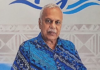
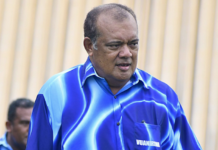
Kalafi Moala established Tonga’s first independent newspaper and currently manages the online platform Talanoa ‘o Tonga. He was elected president of the Pacific Islands News Association (PINA) in September 2024. This article was first published by DevPolicy Blog and is republished under a Creative Commons licence.
- Pacific Media Watch reports: Tonga dropped five places to 51st out of 180 countries surveyed in the 2026 World Press Freedom Index.