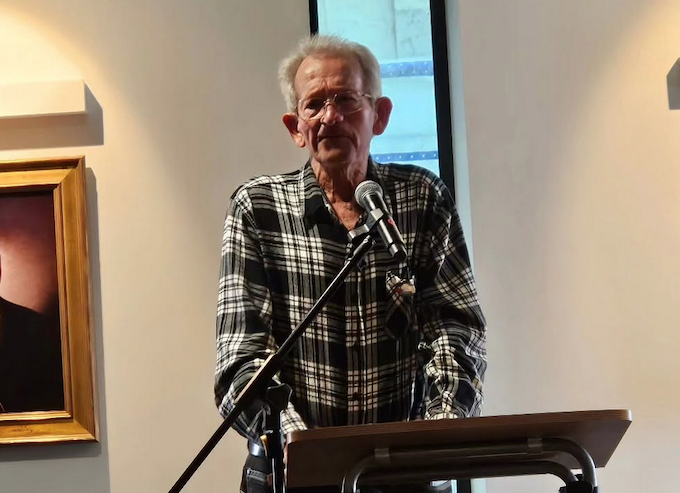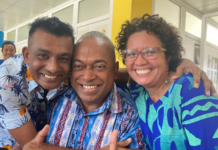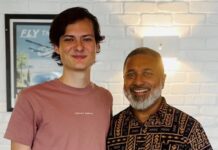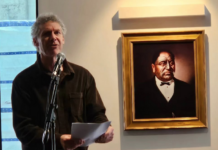



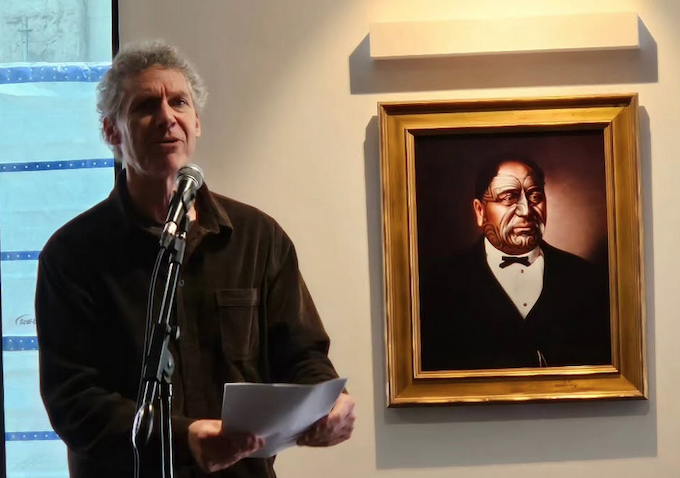
This book launch speech today for Ponsonby People’s Union: At the Frontline of Community Activism in the 1970s, by Roger Fowler, whānau and fellow activists, at the Whare Wānanga, Tāmaki Pātaka Kōrero — Auckland Central Library.
COMMENTARY: By Nick Bollinger
I have to confess to a degree of imposter syndrome.
I was the wrong age and in the wrong place to be any part of this visionary organisation.
When the small group first gathered in the 1970s to plan what would be the foundations of the Ponsonby People’s Union (PPU), I would have been 12 or 13 and just starting secondary school at Onslow College in Johnsonville, near Wellington.
- READ MORE: From Resistance to the Ponsonby People’s Union, a courageous tale of struggle for justice — David Robie
- Honouring the people’s fight against hardship, repression and racism — Tony Fala
- Other Ponsonby People’s Union reports
But even then, it would have been hard not to notice that there were things going on, out in the world beyond our school walls, that were challenging the way society was being run; that sought fairness and justice and peace.
For the past five or six years New Zealand had been involved in a war, waged by America against the Vietnamese, and it didn’t take much to see that this was completely wrong. There were marches through town on Friday nights, organised by people just a few years older than me; some who our government were trying to force into military training, perhaps even to fight in this unjust war.
And these were some of the first activities that me and my Onslow friends would join in on, that could be seen as part of the challenge to the powers that governed our society.
There were other things happening too that I wanted to be part of. Some were , like the movement against nuclear weapons or apartheid in South Africa. And there were others that just looked like more fun than the mainstream version of life in New Zealand that was being offered – rock concerts and festivals, communes, sex, drugs and rock’n’roll.
Hope, ideas, action
It was a time of hope, ideas, and action.
It was, however loosely, like a movement.
It looked to me like an attempt to change the world.
And in many ways I think it did.
Sometimes that things that changed would change back again, as the forces of the establishment regrouped. Some things may have had destructive side-effects that no one really questioned enough at the time.
But there were also lives that were meaningfully improved, perhaps even saved, because of the ideals and the efforts of people who, in different ways, made up this movement.
It would take me a good few decades to get around to it, but a few years ago I set out to write a history of all of this, which I loosely term” (because that is how other historians around the world had defined it — and versions of this movement did take place all over the world.)
Just too young
As I had been just too young to really be more than an observer, I wanted to fill in some gaps in my experience. I wanted to know more about the people who had driven the movement in this country, where their ideas had come from, how they had developed them and put them into action and, ultimately, what had happened as a result.
I began interviewing people who had been involved – whether it had been in the protest activities, or the early bookshops, or the music festivals.
And I would always ask these people who they thought I should talk to; who else had been involved and might have valuable stories to share?
A name that would come up with amazing frequency was that of Roger Fowler.
Now as I’ve said in the introduction to this book, Roger would no doubt have been embarrassed to find his name in the first sentence because – as I discovered when I met him – his ethos was always one of co-operation, the power of people working together to achieve a common goal rather that the celebration of the individual.
As I worked on my project I began to see that sometimes a shared energy and sense of purpose can help unite a group of likeminded people who might not otherwise have found a focus for their own energies.
And I’m sure that for many people that is what Roger provided, and that was one of his great gifts.
Roger was involved in many, many causes and projects, both before and after the PPU, but it’s the PPU that we’re celebrating here today and it is a great example of something he achieved and how it was achieved.
Jumping Sundays
When I completed my book about the counterculture in Aotearoa, I named it after something else Roger was involved with, something perhaps more frivolous but which seemed to me to be a symbol of those times: I called it Jumping Sundays, which was the name by which people referred to the Sunday afternoon people’s festivals that took place in Albert Park, and where Roger would often perform with his band, the Frank E. Evans Memorial Lunchtime Entertainment Band.
In Jumping Sundays, I attempted, perhaps over-ambitiously, to look at all the aspects of this movement and show some of the connections and even contradictions between its different facets. So there’s a chapter on the Vietnam War but also one on communes; a chapter about alternative media – the underground newspapers and the Resistance Bookshop (something else Roger was involved with) – but there are also chapters on drugs and sex and rock’n’roll.
To fit it all in, I had to compress an awful lot of information. I believe that in the index to Jumping Sundays there are four entries for the People’s Union, but really it adds up to just a couple of pages in which I couldn’t do much more than outline how this organisation came about, who was involved and a few of the things that they did.
So I’m very glad that this new book has been put together from the memories and stories and writings and photographs of the people who were actually there. It’s like zooming in on those few paragraphs I wrote and expanding it to show us all the detail and colour that I could only hint at.
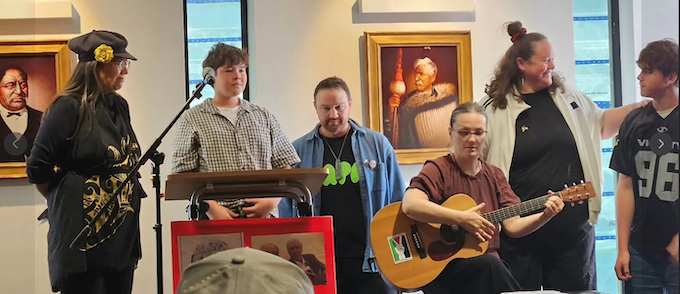
I’m hoping other people today will talk about some of the specific things the Ponsonby People’s Union achieved – whether it was providing cheap food for hungry families or staging occupations of substandard housing when landlords needed an extra nudge; the bus visits to prisons, or the way they worked with other groups like the Polynesian Panthers to fight racism on this city’s streets.
But the final thing I’d like to say is that, looking back on the counterculture era, in all its different dimensions, which ranged from the revolutionary to the ridiculous, the PPU for Survival and Freedom stands out as perhaps the most practical, principled, and inspiring example of countercultural ideals put into action.
This book is a reminder of what is possible. I believe that back then they used to call it “survival pending revolution”.
And we’ve never needed that more than now.
Nick Bollinger is a Wellington-based writer, historian, broadcaster and critic. He was a music columnist for The Listener for more than 20 years, has written for Mojo and been the voice of Radio New Zealand’s music review programme The Sampler.
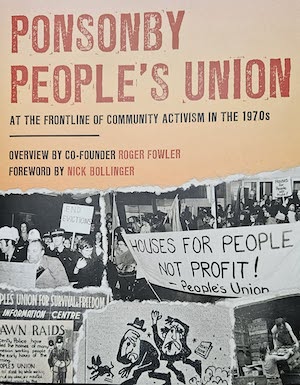
Ponsonby People’s Union: At the Frontline of Community Activism in the 1970s, overview by Roger Fowler, and contributors (Steele Roberts), 2026, 102 pages.