


COMMENTARY: By Jale Moala
Words matter in politics. They matter even more when a country is debating the document that will determine how it is governed.
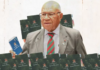
That is why remarks by Justice Minister and Acting Attorney-General Siromi Turaga about Fiji’s constitutional review deserve some thought.
Speaking about the journey that has brought the government to this point, Turaga repeatedly invoked God.
- READ MORE: Sweeping changes to Fiji’s governance recommended by Constitution Commission
- Other Fiji constitution reports
“We got here through the miracle of God,” he said.
He spoke of people fasting and of prayer groups, including people who had travelled from Nadi and were praying at his office.
Then came perhaps the most striking part of his remarks when he recalled that the government had initially failed to secure the parliamentary numbers required for constitutional change and had then gone to the Supreme Court.
“We thought we didn’t have the numbers, but God worked in a different way,” he said.
‘We got the numbers’
He then referred to what happened to FijiFirst: “They were deregistered . . . we got the numbers.”
Nothing unusual about a Christian politician expressing his faith. Fiji is a deeply religious country, and Christians are entitled to pray. So are Hindus and Muslims.
While those holding public office do not surrender their religious beliefs when they walk through the doors of Parliament or a government office, there is a difference between seeking God’s guidance and appearing to attribute a political outcome to divine intervention.
FijiFirst was deregistered on July 1, 2024, by the Registrar of Political Parties after failing to make required amendments to its party constitution within the prescribed period. That was an administrative and legal process.
Yet Turaga’s description places that development within a striking sequence:
- The government did not have the numbers;
- People prayed;
- “God worked in a different way”;
- FijiFirst was deregistered; and
- The government got the numbers.
Again, language matters when it comes from someone exercising considerable political and legal authority, and especially now, as Fiji considers fundamental changes to its supreme law.
A Christian should be able to support or oppose the proposed Constitution. So should a Hindu. So should a Muslim. So should someone who follows another faith or professes no religion at all.
Faith and political validation
And this is where Turaga’s words raise a difficult question: when does personal faith become political validation?
If a political leader suggests that God intervened to produce the parliamentary circumstances necessary to advance constitutional change, what message does that send to those who disagree with the changes?
And whose God was Turaga talking about? Whose faith?
When a cabinet minister speaks of God intervening in a political process, Christians may understand those words through their own faith. Yet Fiji’s Constitution does not belong to Christians alone. It belongs to the Hindu family in Labasa, the Muslim family in Ba, the Christian family in Lau and the citizen who believes in no God at all.
The legitimacy of a Constitution governing a democratic, multifaith nation must come from something shared by all its citizens — their consent to the system that governs them.
Again, words matter, especially at a time like this. Therefore, those entrusted with political power should choose their words carefully.
Jale Moala, one of Fiji’s most experienced and talented journalists, has been editor of The Fiji Times, Fiji Daily Post, Islands Business, Pacific Islands Monthly, night editor of The National daily newspaper in Port Moresby, Papua New Guinea, and a senior journalist on several New Zealand news media. This commentary is republished from his Facebook page with permission.