




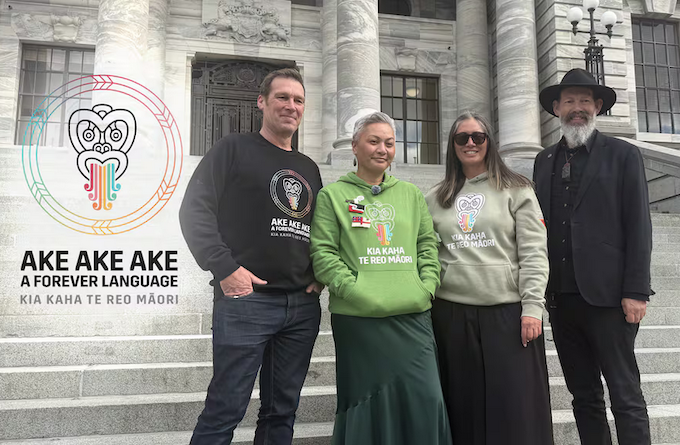
Te Wiki o te Reo Māori has begun with an election promise from the Green Party to invest an additional $200 million in the language over four years.
Of that, $30 million annually would go towards te reo Māori education and professional development for teachers, while $20 million would be shared between Te Taura Whiri i te Reo Māori and Te Mātāwai.
Green Party co-leader Marama Davidson said sustained investment was needed for te reo Māori to flourish in homes, schools and communities.
“Te reo Māori is a taonga. The Green Party will proudly fund te reo Māori initiatives to thrive for generations to come,” she said.
“Te Wiki o Te Reo Māori is a time to celebrate our reo, acknowledge the generations of people who got our reo to where it is now, and advocate for the future of our reo.”
The Greens said the teacher-training funding would be used to develop programmes with schools and communities, following the end of Te Ahu o te Reo Māori.
That programme provided free te reo Māori learning to the education workforce and received $108 million between 2021 and 2024 as part of a wider $120 million package of language initiatives. Its funding was redirected by the coalition government in 2024.
16,000 participants
An independent evaluation found Te Ahu o te Reo Māori improved participants’ language capability, confidence and use of te reo in education settings. More than 16,000 people participated in the programme.
The government has since launched Te Ataarangi, a digital te reo Māori professional-development programme intended to reach 50,000 teachers. Education Minister Erica Stanford said in February that the programme would provide practical, self-paced language support from Term 2 this year.
Davidson accused the government of failing to adequately fund community language revitalisation and waging a “culture war” against the use of te reo Māori.
“Our reo must be treasured, and the Green Party will make sure that it is,” she said.
Māori Development Minister Tama Potaka dismissed the Greens’ announcement as “an election promise to spend more money”.
“Our government’s focus is on achieving results, more people speaking te reo Māori, more often and in more places,” he said.
Potaka said Te Taura Whiri, Te Mātāwai, Te Puni Kōkiri and Manatū Taonga were funded to undertake their existing roles and work programmes, but the government had no additional funding to announce.
Government ‘strategic reset’
He also confirmed the refreshed Maihi Karauna, the Crown’s Māori language revitalisation strategy, was a “strategic reset” rather than a new Budget initiative.
Potaka said the strategy retained the Crown’s long-term reo Māori goals to 2040 and would be followed by a coordinated action plan intended to make better use of existing investment.
He rejected Davidson’s allegation that the government had waged a “culture war” against te reo Māori, pointing to its investment in Māori media and kapa haka.
“We can have a legitimate debate about how public money is best invested without questioning anyone’s commitment to te reo Māori,” Potaka said.
“What matters is whether that investment produces lasting growth in the number of people learning, speaking and using the language.”
Education Minister Erica Stanford has also been asked for comment.
Republished from Te Ao Māori News