


COMMENTARY: By Jeremy Rose
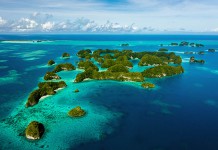
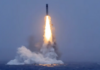
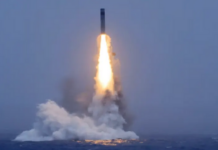
On March 5 of this year, the United States launched a Minuteman III intercontinental ballistic missile from the Vandenberg Space Force Base, California. Travelling at speeds of more than 24,000 km/h, it landed near the Kwajalein Atoll in the Marshall Islands, 6700 kilometres away, 24 minutes later.
Minuteman III missiles can deliver up to three separate nuclear warheads, each more than 20 times as powerful as the bomb dropped on Hiroshima.
On March 3, 2025, the Marshall Islands formally announced its intention to join the South Pacific Nuclear Free Zone by signing the Treaty of Rarotonga.
- READ MORE: NZ accuses China of going against peace and stability of Pacific
- RIMPAC 2026: Part 1 – World’s biggest naval games a dress rehearsal for the coming ‘war on China’
- Other RIMPAC reports
Searches of The New Zealand Herald and Stuff websites for stories about the missile test, and the signing of the treaty come up empty.
And yet, on Tuesday, both The Herald and The Post led with news that China had test-fired a nuclear-capable ballistic missile in the Pacific. Neither report made any mention of the at least 15 ballistic missile tests fired into the Pacific by the US since 2021.
How many missiles has the US fired into the Pacific — did Australia protest those?
🚀 Here are the dates that the US test fired nuclear-capable ICBM missiles 7,000kms into the mid-Pacific:
•2026: March 5, June tbc.
•2025: February 19, May 21, November 4.
•2024: June 4,… pic.twitter.com/v6nxkRGA9U— Peter Cronau (@PeterCronau) July 7, 2026
“The Pacific Islands Forum leaders have made clear that they want the Pacific to be an ocean of peace. We believe this test is inconsistent with that objective,” Wong said.
Wong isn’t wrong.
Kiribati criticised US test
In 2024 Kiribati publicly criticised an earlier test of a Minuteman III missile that also landed in the Ronald Reagan Space and Missile Test Range located near the Kwajalein Atoll. As the name suggests, the tests are a regular occurrence.
A statement from the President’s Office, reported by RNZ, said Kiribati objected equally to China and the US using the South Pacific for test-firing nuclear-capable missiles.
“Kiribati continues to advocate for the cessation of weapons testing in the Pacific Ocean and urges global cooperation to ensure the peace, security, and stability of our shared environment. We remain committed to protecting the peaceful future of the Pacific and safeguarding the well-being of future generations.”
It is a thought — almost — echoed by Winston Peters in his response to the Chinese test: “This missile was fired into the South Pacific Nuclear Free Zone established by the Treaty of Rarotonga. China’s action goes against the object and intent of that Treaty.”
You will search long and hard to find any similar criticism of the US missile tests by Ministers Peters and Wong. That is despite the people of the Marshall Islands themselves and the leaders of neighbouring countries making it clear any testing of ballistic missiles in the Pacific goes against the spirit of the Treaty of Rarotonga.
The Chinese missile test is widely being reported as a response to Australia and Fiji’s signing of the Ocean of Peace Alliance the previous day.
Without confirmation from China, it is impossible to know for certain, but it seems likely that the alliance — which New Zealand Prime Minister Christopher Luxon has expressed interest in signing up to — is seen as a ratcheting up of military tensions in the South Pacific.
When it comes to the “object and intent” of the Treaty of Rarotonga, mentioned by Peters, few if any of the signatories would have countenanced one of their members purchasing nuclear-powered submarines.
Australian nuclear submarines plan
But in 2023, Australia announced it was doing just that with the planned purchase of three nuclear submarines at an estimated cost of more than A$300 billion (about 15 times the combined GDP of the Forum countries excluding New Zealand and Australia).
Shortly after the announcement, then Solomon Islands Prime Minister Manasseh Damukana Sogavare told the UN General Assembly that his nation “would like to keep our region nuclear-free and put the region’s nuclear legacy behind us… We do not support any form of militarisation in our region that could threaten regional and international peace and stability.”
The legacy Sogavare mentions is nowhere felt more keenly than the Marshall Islands, where the US carried out 67 atmospheric nuclear tests between 1946 and 1956, resulting in sky-high rates of thyroid cancer.
The US has paid out just US$150 million in compensation despite the internationally mandated Marshall Islands Nuclear Claims Tribunal having awarded more than US$2 billion in personal injury and property claims.
A survey by the Asia New Zealand Foundation earlier this year found that just 23 percent of New Zealanders viewed China as a threat, compared to 35 percent who saw the US as one.
The US has more than 5000 nuclear warheads with 1700 actively deployed; China has 620 with 34 deployed.
China has a long-standing policy of no-first-use of nuclear weapons, while the US refuses to rule it out.
When our leaders claim to be supporting Pacific countries in their commitment to a nuclear-free Pacific by rightly criticising China’s missile tests while steadfastly refusing to criticise the US regular testing of intercontinental nuclear-capable ballistic missiles, they are indulging in hypersonic hypocrisy.
Jeremy Rose is a Wellington-based journalist and a contributor to Asia Pacific Report. This article was first published by his Substack Towards Democracy.