





ANALYSIS: Drop Site News
Since President Donald Trump’s self-congratulatory tour for “ending” the Israeli war on Gaza last October, followed by a UN Security Council endorsement of his Gaza plan, negotiations over Gaza’s future have been stuck in a diplomatic netherworld.
While Hamas handed over all of its captives and ceased its military operations, Israel has repeatedly violated the deal, killing more than 1000 Palestinians, restricting aid and movement, and expanding the areas it occupies in Gaza.
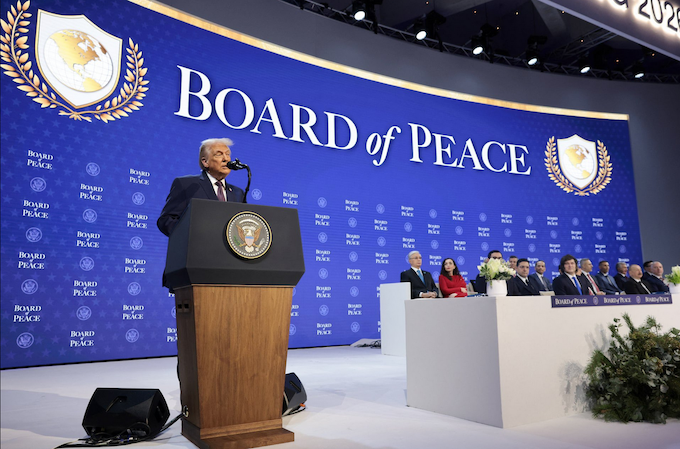
With media attention focused on Iran and Lebanon, Trump’s so-called “Board of Peace” continues pushing a 15-point “roadmap,” first presented in April, that appears aimed at transforming a limited ceasefire into a broader political settlement based on the disarming of the Palestinian resistance and the abandoning of the struggle for Palestinian national liberation.
- READ MORE: Internal documents show Trump’s ‘Board of Peace’ moving to crush Palestinian self-determination
- Trump’s Board of Peace plans to grant itself sweeping immunity, documents show
- Other Board of Peace reports
Drop Site News has obtained two documents from the recent round of negotiations over Gaza’s future:
- Palestinian negotiators’ amendments to the Board of Peace’s proposed roadmap, submitted on June 13; and
- Response delivered late last month by the Board’s “High Representative,” Nickolay Mladenov.
Jeremy Scahill and Jawa Ahmad have reported on the documents here and a summary from their X post is below:

Nickolay Mladenov, Bulgaria’s former defence and foreign minister, who served as a visiting fellow at a pro-Israel think tank founded by AIPAC veterans, has generally avoided identifying Israel when discussing ceasefire violations.
Although the October 2025 agreement obliges both Hamas and Israel to halt “all military operations,” and despite Israel’s daily violations in Gaza, Mladenov’s revised roadmap states that “Hamas and the Palestinian factions shall immediately cease all military activities.”
‘Not to assign blame’
A Board of Peace official defended the approach, telling Drop Site News that the body’s role was “not to assign blame” but to ensure commitments were implemented.
One senior Hamas official, however, told Drop Site that Mladenov’s roadmap sought to impose under the threat of renewed war, ongoing killings, and humanitarian catastrophe, “the surrender that Netanyahu failed to achieve through war”.
Hamas spokesperson Hazem Qassem added that while Palestinian amendments were welcomed by mediators from Qatar, Egypt, and Turkey, Mladenov “continues to approach the file from a perspective close to the Israeli position”.
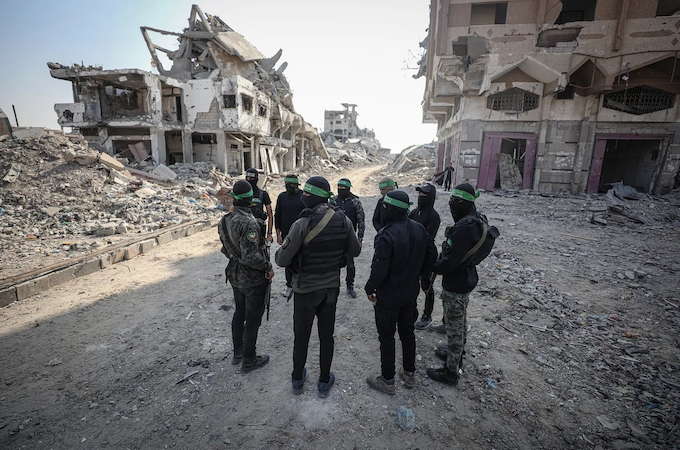
In their June 13 response, Hamas and other Palestinian factions proposed a gradual process for the registration and storage of heavy weapons to proceed in parallel with Israeli withdrawal from Gaza and be contingent on the implementation of key steps: the entry of the National Committee for Gaza Administration (NCAG), deployment of the International Stabilisation Force (ISF), and dismantling of Israel-backed armed militias in the Strip.
The Palestinian proposal is limited to “heavy weapons” and would be under the joint supervision of the NCAG and Palestinian factions.
In his response, however, Mladenov expanded the framework into a process to “store and decommission” weapons, broadening the scope beyond heavy weapons to include weapons depots, tunnels, military production facilities, and all weapons stored within them.
Crucially, his version adds a condition stating that once the process was complete, Palestinian resistance factions would no longer “hold, store, control or have access to any weapons”.
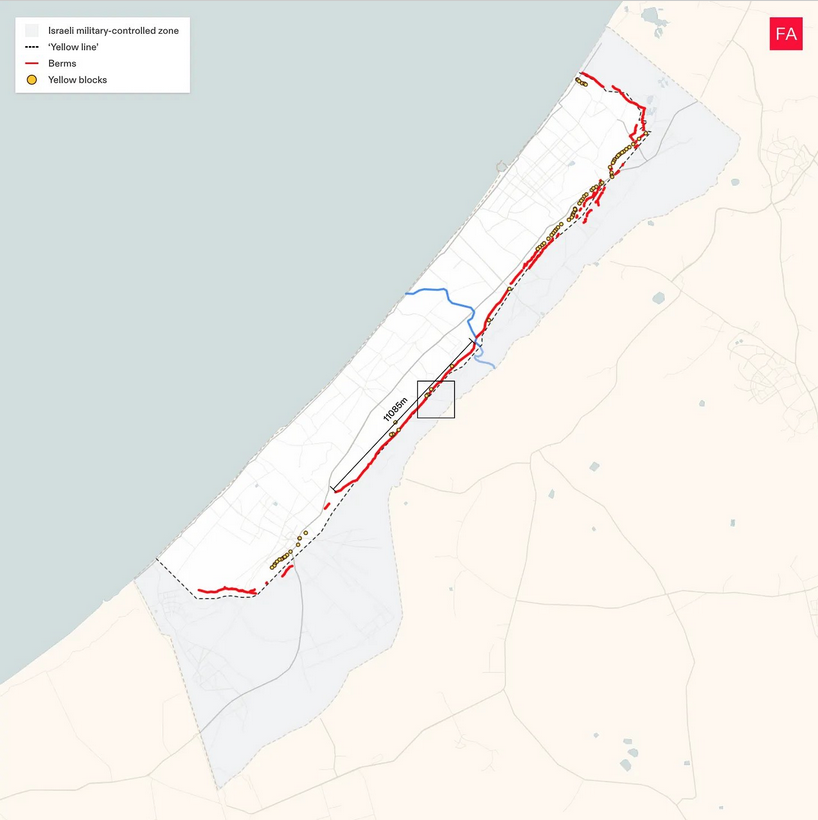
Buffer force separating Israelis
Hamas’s draft envisioned the ISF primarily as a buffer force separating Israeli troops from areas administered by the National Committee for Gaza Administration (NCAG), monitoring ceasefire compliance, and protecting the delivery of essential humanitarian supplies.
While Mladenov retained these functions, he also assigned the ISF a role in training Palestinian police and “support[ing] the decommissioning process.”
On withdrawal, Hamas proposed a phased Israeli pullout “until Israeli forces are outside the borders of the Gaza Strip”, with the ISF taking positions in vacated areas, and said weapons steps would proceed in parallel with verified withdrawal stages.
Mladenov’s response instead limited Israeli withdrawal to “Gaza’s perimeter” and made it conditional on “verified progress” in the weapons decommissioning process.
Hamas has formally agreed to relinquish governing authority in Gaza to the NCAG, a technocratic body composed of non-partisan Palestinian experts. However, Israel has continued to block the committee from entering Gaza and has demanded Hamas’s disarmament as a precondition.
In Mladenov’s revised document, the NCAG’s entry and assumption of duties are made conditional on Palestinian acceptance of the broader “roadmap” and completion of the second phase’s timeline and implementation mechanisms, particularly on disarmament.
Palestinian negotiators have emphasised that the NCAG should function as a transitional governing authority, stating that it would have “full independence” and be empowered to “fulfill all legal obligations and commitments arising from the current administration of the Gaza Strip”.
Reframed as ‘administration’
Mladenov’s draft removes that language, limiting the NCAG instead to financial liabilities incurred only on or after it assumes control, and reframing it as an administrative body under the Board of Peace.
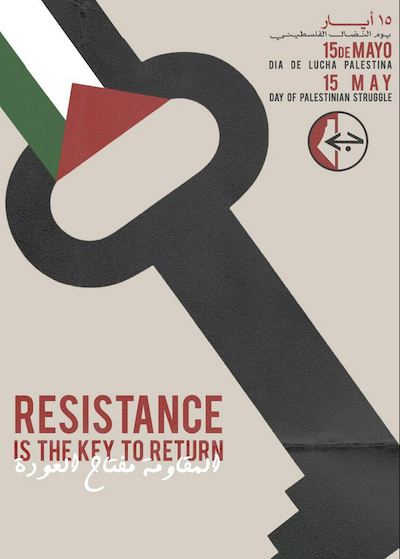
In their draft, Palestinian negotiators have argued that any resolution of the weapons issue must be embedded in a broader process guaranteeing the Palestinian people’s right to establish a state and exercise self-determination.
But the Board’s draft, by contrast, states only that disarmament “shall create conditions for a credible pathway.”
On governance, Palestinian negotiators have proposed reunifying Gaza and the West Bank, with the Board overseeing an orderly transfer of governance to the NCAG, which would ultimately hand power to the Palestinian Authority as part of a process “leading to the establishment of a Palestinian state.”
They also set a 2027 end date for the Board’s mandate.
Mladenov’s draft omits these elements entirely, makes no reference to the Palestinian Authority, and instead limits the arrangement to Hamas and other factions handing over authority to the NCAG.
Republished from the Drop Site News X feed.