



By Johnny Blades, RNZ Pacific journalist
For a country with a record of large deforestation projects, Indonesia’s current activities in the far southeastern corner of the republic, South Papua province, surpass all.
With 2.5 million hectares of land being cleared for sugarcane and rice production for food and biofuel projects, alongside large oil palm concessions, Indonesia’s government has created a hugely consequential project right on Papua New Guinea and Australia’s doorsteps.
It is transforming the shape of an otherwise forest and swamp-dominated region, as well as the environment, culture and health of local Papuan communities.
- READ MORE: West Papuan doco Pig Feast exposes oligarchs, food security crisis and ecocide under noses of military — David Robie
- New film on West Papua highlights ‘ecocide’
- Other West Papua environmental reports
New film on West Papua highlights ‘ecocide’. Video: RNZ
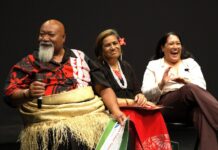
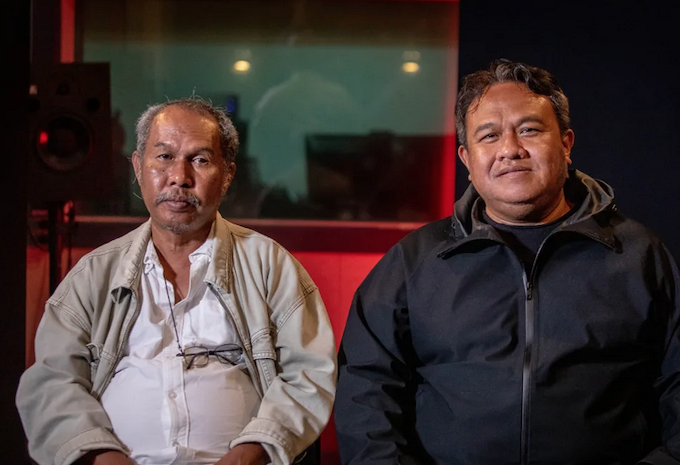
“The world should notice this. It’s not the Amazon, it’s just in our front door, in the Pacific here,” said Dandhy Dwi Laksono, director of Pesta Babi (Pig Feast): Colonialism in our Time, a new documentary film about the impacts of the deforestation in South Papua, the agri-business schemes behind it and the role Indonesia’s military plays in it all.
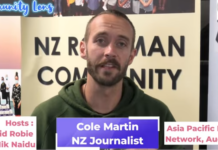
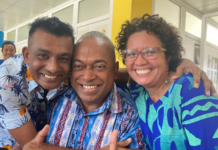
Laksono has been in New Zealand this week promoting the film with its producer, West Papuan journalist Victor Mambor, who said few people in other parts of the world know about what’s going on there.
“Maybe they only know [of] the conflict, military conflict, armed conflict in West Papua. But they never know the conflict like that,” he said.
The film sheds new light on the response by local Papuans in the wider Merauke region and its remote bush communities to an agri-business master plan attempted by several Indonesian presidents now.

Prabowo accelerated project
The current president, Prabowo Subianto, has accelerated the project and committed military support for it, saying the military is needed to secure the agri-business projects in Papua because of their scale and importance to Indonesia’s national food and energy security.
However, Mambor said the presence of Indonesian troops in Papua had long been problematic for Papuans, and was growing.
“This is the problem in West Papua. There will be more troops, and then of course because of more troops there will be more conflict. More troops, more conflict, more problem.”
Given the ongoing armed conflict between West Papuan independence fighters and Indonesia’s military in other parts of Papua region (known internationally as West Papua), this film offers a useful insight into a struggle that is less known, but no less concerning.
Papua has some of the world’s largest remaining tracts of native rainforest — and clearing this large region of forest and swamp systems is likely to add to carbon emissions, pollution haze and biodiversity loss.
According to the NGO Mighty Earth, estimates of the CO2 emissions from so much land clearance range from 315 million tonnes of CO2 equivalent (Indonesia’s first state-owned inspection, testing, certification, and consultancy company) to more than double that, according to a report by the Indonesian independent research institute.
This article is republished under a community partnership agreement with RNZ.