




By Christina Persico, RNZ Pacific bulletin editor
A woman whose great-grandparents — all eight of them — were Girmitiya labourers has put their stories into her debut novel.
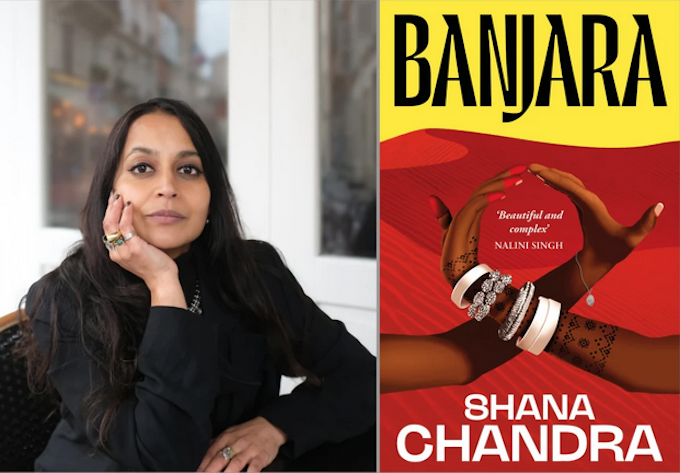
The result is Banjara, a novel partly based on what she found, which is told through the eyes of two women more than 100 years apart.
Author, Shana Chandra told RNZ Nine to Noon she knew her grandparents were Girmitiya, but nothing of their origin stories.
“I knew that they were part of this larger geopolitical movement under colonialism, but I didn’t have their personal stories,” she said.
“I didn’t know where they came from in India. I didn’t know what made them vulnerable to coercion. I didn’t even know their names. So really, writing the story was a way for me to write their origin story not only for me, but for them.”
Chandra said the former head of New Zealand’s Girmitiya Foundation told her that Indo-Fijians were prohibited from writing about indenture.
“It felt very important for me to write this origin story, because there was so much silence – I think, because there was so much shame over what happened.
‘Angry about the silence’
“And it was my way of saying to my ancestors, they no longer need to be silenced, and… thank you, in a way, because I used to be quite angry about the silence, but then I realized it was their gift to me, and their gift to all of us — they didn’t want us to be burdened with what they endured.”
Chandra said a lot of research went into the book, but historical records only tell so much.
“When I saw my great-grandmother’s immigration pass, she boarded the Hereford, which is actually the same boat that Avani, my character, boards in the book.
“She was only eight when she boarded, and she boarded the boat with her younger brother, her older sister and her father, and there was actually no record of her mother being on board. So because of the way indentureships were partitioned with men on one side and women and children on the other, I know that those women on board would have helped my great-grandmother and her siblings survive in a myriad of ways.
“One day, I just had this compulsion to wake up and say all of those women’s names because I knew that they would have helped them survive.”
There were shocking discoveries, too. One immigration pass was that of a 15-day-old baby who had died.
“And on the left-hand side, written in cursive writing by a colonial official, was that her mother had suffocated her. And though I know that could be true, there was something about that intuitively that just didn’t sit right in my body.”
Real oral histories
Chandra later came across a post from a site called Cutlass Magazine, featuring real oral histories.
“One about a woman who said that when her grandmother was indentured, the women on board had to hide the children because crew members would find them a nuisance and want to throw them overboard.
“And there was an actual story from an indentured man who kept on repeating the same story, how on his ship that had a particularly rough passage, the captain came, took a newborn baby and fed it to the sea as a sacrifice.
“Even just me writing the names of those women afterwards, just burst into tears… It was important to weave those other stories, those oral histories, into the book to show that other side of history.”
Chandra believes a lot of labourers were duped into signing the labour agreements, and many were promised a “paradisical island full of abundant opportunity”.
“But what they actually faced …was hard labour up to 14 hours a day or over six days a week. And a lot of them were subjected to brutal physical and sexual abuse.
“At one point, Fiji had the highest suicide rate in the world due to indenture.”
The ‘women’s gang’
Chandra said there was “amazing forms of resistance” from the women.
“There’s something known as the women’s gang.
“These women would form these gangs, and they would go to known abusers and use the only thing, only weapons they had, which was their bodies, and retaliate and beat their abusers. So my book really showcases that female solidarity.”
She said it was tough to navigate all the cultural practices and language of the time to be accurate. But what also became important was the “emotional truth”.
“That emotional honesty was almost just as important, because that’s what it’s really trying to capture, but I was lucky. When I was writing this novel, it did feel like something larger was guiding my hand. So I do partly dedicate this novel to my ancestors, who felt like they were conspiring with me from the heavens.
“I think what’s so amazing to me is that, and this is what I hoped the book would do — it would provide an emotional landscape for other Indo-Fijians to rebound off and to start talking about these stories.”
- Shana Chandra will be appearing as part of the Auckland Writers’ Festival next month.
This article is republished under a community partnership agreement with RNZ.