
ANALYSIS: By Ali Mirin
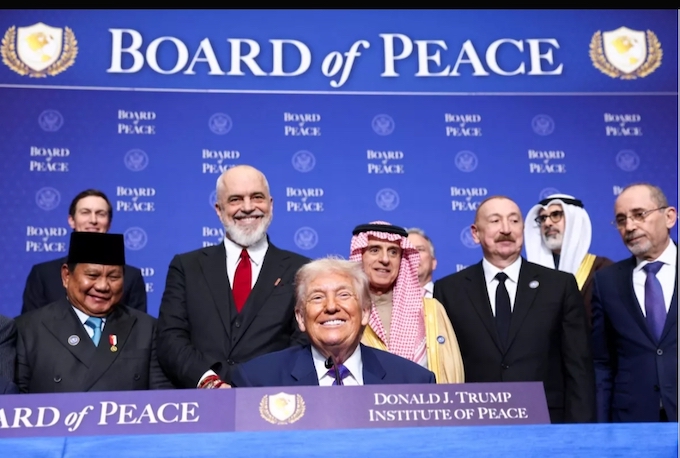
Indonesian President Prabowo Subianto has increasingly presented himself on the international stage as a mediator and promoter of peace.
Yet this global diplomatic posture raises a critical question: how credible is Indonesia’s claim to peace leadership while a prolonged humanitarian crisis continues in West Papua?
In late February 2026, Prabowo offered Indonesia’s services to mediate rising tensions involving the United States, Israel and Iran, even stating he was prepared to travel to Tehran if both parties agreed to dialogue.
- READ MORE: Indonesia suspends participation in Trump’s Board of Peace initiative
- Indonesian president’s US ties questioned amid public anger over Iran war
- Prabowo ready to to fly to Iran as a mediator
- Other West Papua reports
The message was reinforced when former Indonesian vice-president Jusuf Kalla met Iran’s ambassador, Mohammad Boroujerdi, on 3 March 2026 to reiterate Indonesia’s readiness to facilitate diplomatic engagement.
In response, Iran publicly welcomed the gesture but tempered expectations.
Iranian officials insisted that any meaningful mediation must include condemnation of US and Israeli military actions, warning that diplomatic initiatives without political clarity may have limited effectiveness.
The exchange highlighted both Indonesia’s aspiration to play a larger diplomatic role and the complexities of international conflict mediation.
Peacebroker limitations
However, Indonesia’s attempt to position itself as a global peace broker has already faced significant limitations. In 2023, Prabowo proposed a peace plan for the war between Russia and Ukraine.
The proposal, which included controversial suggestions such as a demilitarised zone and a referendum in disputed territories, was quickly rejected by Ukrainian officials. The response exposed the limited influence of Indonesia’s mediation efforts in conflicts far beyond Southeast Asia.
While presenting himself internationally as a peacemaker, critics argue that Prabowo has largely paid lip service to human rights at home, particularly regarding the unresolved crisis in West Papua.
Indonesian protesters denounce US link over Iran war Video: Al Jazeera
While Indonesia promotes its diplomatic role in international conflicts, violence and instability continue to affect civilians in West Papua.
On 11 February 2026, only weeks before Prabowo’s international mediation initiative gained attention, a small civilian aircraft operated by Smart Air came under gunfire shortly after landing at Korowai Batu airstrip in Boven Digoel, West Papua.
A spokesperson linked to the military wing of Free Papua Movement (TPNPB- OPM) later claimed responsibility for the attack, stating that the aircraft had allegedly been used to transport Indonesian security forces.
The roots of the crisis stretch back to the early 1960s, when Indonesia invaded and took control of the territory following the withdrawal of Dutch colonial administration.
Act of Free Choice controversy
The subsequent 1969 referendum, known as the Act of Free Choice, remains one of the most controversial political processes in modern Southeast Asian and South Pacific history.
Rather than a universal vote, approximately 1025 selected representatives voted under significant political and military pressure.
Many Papuans and international observers argue that the process failed to meet internationally recognized standards for self-determination. As a result, the legitimacy of the referendum continues to be contested, and its legacy remains a central grievance fueling decades of political resistance and armed conflict.
For many analysts and human rights advocates, the Papua conflict cannot simply be framed as a domestic security problem. Instead, it represents a protracted humanitarian and political crisis that has yet to find a comprehensive and inclusive resolution.
In this sense, the issue has become what some observers describe as a long-standing wound within the Indonesian state.
Such incidents highlight the tragic reality faced by ordinary Papuans, who often find themselves caught between military operations and Papuan resistance attacks.
Civilians bear the brunt of a conflict that has persisted for decades without meaningful political dialogue capable of addressing its underlying causes.
Rising internal displacement in West Papua
According to reports by human rights organisations and humanitarian groups, displacement in West Papua has increased significantly in recent years.
The number of internally displaced persons (IDPs) has risen dramatically, from roughly 55,000 at the end of 2023 to more than 103,000 by October 2025. Many displaced communities face severe shortages of food, healthcare, education, and basic security.
These figures reflect a broader systemic failure to protect civilians and provide sustainable solutions for affected communities. Despite decades of development initiatives and official rhetoric emphasising stability and prosperity in Papua, the lived reality for many residents remains defined by insecurity and displacement.
Prabowo’s own military history also continues to shape international perceptions of Indonesia’s human rights record. During the Indonesian occupation of East Timor between 1975 and 1999, Prabowo served as an officer in Indonesia’s elite special forces, Kopassus.
Human rights organisations have linked him to operations accused of abuses against civilians during that period.
Following the 1999 referendum that ultimately led to East Timor’s independence, the United Nations supported investigations into violence carried out by Indonesian-backed militias and security forces.
Although Prabowo was never tried or convicted by an international court, activists and some Timorese leaders have long argued that senior Indonesian officers should have faced deeper scrutiny.
Shaping of credibility
In international diplomacy, credibility is often shaped not only by external initiatives but also by a state’s domestic human rights record. When internal conflicts remain unresolved, claims to global moral leadership can face heightened scrutiny.
Prabowo was also involved in military operations in Papua during the 1990s. One of the most widely discussed incidents was the 1996 Mapenduma hostage crisis in the highlands of what is now Nduga Regency.
Human rights organisations have documented allegations of abuses committed by Indonesian security forces during that period.
Additional controversies have surrounded claims that aircraft bearing the emblem of the International Committee of the Red Cross were misused during operations. Such allegations, whether proven or not, continue to raise questions about adherence to international humanitarian law and contribute to lingering distrust among Papuan communities.
Taken together, these historical and contemporary dynamics create a sharp contrast between Indonesia’s global diplomatic ambitions and the unresolved realities within its own borders.
In international diplomacy, credibility is closely tied to domestic consistency.
It is difficult to advocate peace abroad while unresolved grievances and allegations of human rights violations persist at home.
For Indonesia, genuine leadership in global peacemaking would require more than diplomatic offers on the world stage. It would involve confronting the deeper structural issues underlying the conflict in West Papua.
Ensuring accountability
This would include ensuring accountability for past abuses, protecting civil liberties, and opening inclusive political dialogue that allows Papuans to meaningfully participate in shaping their own future.
Without such reforms, Indonesia’s peace diplomacy risks being perceived less as principled international engagement and more as a form of strategic public relations. The gap between Jakarta’s diplomatic rhetoric and the lived experiences of Papuan civilians remains stark.
Ultimately, Indonesia’s credibility as a global peacemaker will depend not only on its willingness to mediate conflicts abroad but also on its ability to address the long-standing humanitarian and political crisis within West Papua.
Until that gap is bridged, Indonesia’s aspirations for global diplomatic leadership will continue to face serious questions about legitimacy and moral authority.
The continued instability in West Papua also has broader regional implications for the Pacific, where several governments and civil society groups have increasingly raised concerns about the humanitarian situation faced by indigenous West Papuans.
Ali Mirin is a West Papuan from the Kimyal tribe in the highlands bordering the Star Mountains region of Papua New Guinea. He holds a Master of Arts in international relations from Flinders University in Adelaide, South Australia.