




POLITICAL BYTES: By Ian Powell
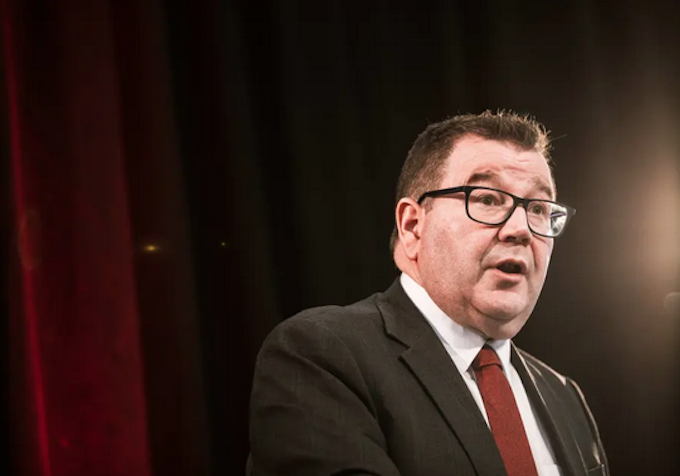
On June 6, I published a Political Bytes post criticising the mis-named “Free Speech Union” (FSU) for opposing the exercise of free speech, in the context of fulfilling his duty of care for student wellbeing, by Otago University vice-chancellor Grant Robertson when raising a personal concern: Opposing free speech in practice.
In my words:
“The self-styled Free Speech Union has complained to Otago University over its vice-chancellor Grant Robertson both expressing his personal views on a NZ First parliamentary bill seeking to define what is a woman and what is a man and for his assessment on the 2026 Budget as it impacted universities.”
- READ MORE: Martyn Bradbury says he faces prison over blog posts; Free Speech Union ‘not across’ it
- The Daily Blog: We have secretly been taken to court and I’m facing 6 months in prison: We can’t tell you who, how, why or what
- The Daily Blog: Why I am willing to go to prison tomorrow for Free Speech — Martyn Bradbury
I concluded the post as follows:
“Attacking Grant Robertson for exercising his duty of care for student wellbeing crassly exposes the cloak of hypocrisy that the Free Speech Union hides beneath.
“It would be the honest thing for the Free Speech Union to rename itself as the ‘Selective Free Speech Union’ or the ‘Free Speech for the Political Right Union’. Just saying!”
Sinister FSU attack on investigative journalist
As sceptical as I was about the credibility of the FSU’s claimed commitment to genuine free speech, I never expected nearly two months later its sinister attack on an investigative journalist for being investigative in her questions to Health Minister Simeon Brown.
The attack was reported (paywalled) by The Post deputy editor Luke Malpass (July 28): FSU attacks reporter for asking health minister questions.
The context was what I have previously described in my health systems blog Otaihanga Second Opinion (July 2) as a purging of the Medical Council leadership: Health minister purges Medical Council leadership.
At the heart of the issue
At the heart of the issue was the minister’s express ideological opposition to the council’s recognition of the importance of doctors understanding “cultural competence” or “safety” when caring for and treating patients.
But it went further. Brown is proposing a law change requiring the Medical Council and the other health regulatory authorities, such as the Nursing Council, to carry out government policies.
In other words, end the arms-length independent relationship between health practitioner regulatory authorities and government by enabling political interference in their work thereby undermining their prime statutory purpose of ensuring public safety.
Daring to ask questions
Luke Malpass reports that the day before publication of his article (Monday, July 27) The Post’s national affairs editor Andrea Vance emailed a series of questions to the Health Minister about his appointment of Dr Manoja Kalupahana to the Medical Council.
This had been announced on the Beehive website earlier that day (gazetted the previous Friday).
In his words:
“Before an answer was received and within three hours of the query going to the minister, the Free Speech Union issued a press release attacking Vance for even asking the questions.”
Vance’s questions were about the process of the appointment, rather than the suitability or political views, of Dr Manoja Kalupahana.
Again in his words:
“They focused on the appointment process: whether Brown was aware of her previous public profile before appointing her to the Medical Council; whether officials, Health New Zealand or the council were consulted; whether any concerns were raised about public confidence; and whether the minister had discussed the appointment with the Free Speech Union.”
These were all good questions by a quality investigative journalist. Consequently it was surprising that later the same day the FSU, to whom the minister’s office had promptly forwarded her questions, released a media statement stridently attacking her for her action.
Malpass described FSU’s attack as accusing Vance of an attempt to put Dr Kalupahana’s “lawful political views” on trial and warning against ideological tests for public appointments.
However, none of Vance’s questions involved Dr Kalupahana’s political views. They were about the appointment process, including a suspicion about FSU involvement.
For context, in 2023, Dr Kalupahana’s social media activity became the subject of a workplace complaint and media scrutiny.
A Stuff reporter had contacted her seeking comment about her online posts and their relevance to her role as a doctor. However, no story was published.
Nevertheless Malpass reports that the controversy “…became a cause célèbre for the FSU, which argued it showed health professionals could face consequences for expressing lawful opinions outside their clinical roles”.
Also published on July 28 was Andrea Vance’s own paywalled piece on the issue providing further context and background: Doctor at centre of ‘free speech’ row appointed to Medical Council.
Dr Kalupahana was, in fact, one of four new announced ministerial appointments to the council. As it turns out, she is a member of the FSU. Another doctor appointed to the council, Dr Roderick Mulgan, is on the FSU governing board and former president.
The fallout from the controversy over the Health Minister’s appointment process and FSU’s defence of it continued in Stuff (as the owner of The Post) later the same day with an article by senior political reporter Anneke Smith: Health minister accused of using ‘personal troll farm’ to attack reporter.
And there is more
The FSU got it badly wrong. Andrea Vance is not one for being intimidated into silence.
On July 29, she followed up with another paywalled article that revealed political intrigue (arguably scheming) into the escalating controversy: FSU lobbies health minister over regulating doctors.
In her words:
“A former chairperson of the Free Speech Union (FSU) — who lobbied Health Minister Simeon Brown over proposed changes to how doctors are regulated — has been appointed to the Medical Council.
“Roderick Mulgan, who remains a board member of the FSU, was one of four new members appointed to the council by Brown last week. That includes senior Auckland anaesthetist Manoja Kalupahana, whose anonymous social media activity became the focus of a high-profile FSU campaign. The others are Derek Sherwood and Andie Cook.
“The appointments come as Brown moves to give ministers greater powers over how doctors are regulated and the rules they must follow. He has also overhauled the Medical Council, declining to reappoint its chairperson and deputy in June.
“In May 2025, Mulgan and Kalupahana met with Brown in Auckland as part of an FSU delegation to discuss concerns about freedom of speech and conscience rights in healthcare, including cases involving doctors facing disciplinary action.
“A Health Ministry briefing prepared for the meeting identified Mulgan as FSU chairperson at the time. It recorded that the organisation wanted to discuss its correspondence with the Minister, the Government’s consultation on health workforce and patient prioritisation, and cases before the Health Practitioners Disciplinary Tribunal.
“The group argues health regulators have moved beyond their role by requiring practitioners to engage with particular views on issues such as Māori health inequities, colonisation and gender.
“The meeting was requested by the FSU and included then chief executive Jonathan Ayling, and liaison adviser Stephanie Martin.”
Spilling the ideological beans
Spilling the beans is an often used idiom for when secret information is released, usually inadvertently.
In a paywalled article published in NZ Doctor (July 28) health journalist Alan Perrott reports a possibly hyped FSU spilling its own ideological beans.
Perrott attributes this “bean-spilling” (my word, not his) to the above-mentioned Dr Mulgan (former FSU president and current board member) as follows:
“Stating that Māori are ‘disadvantaged because of systemic biases in the system’ represents a ‘well-known hard-left view’, says specialist GP and newly appointed Medical Council member Roderick Mulgan.
“Such a view holds ‘that there are nebulous biases in the world and in the health system that somehow or other undermine the welfare of Māori just because they are Māori,’ Dr Mulgan says.
“Dr Mulgan made the comments to The Platform host Sean Plunket on 25 March while discussing three draft consultation documents on cultural safety and competence and hauora Māori released by the Medical Council.
“Dr Mulgan, also a lawyer and international director of the Free Speech Union, is one of four new appointments confirmed yesterday by Health Minister Simeon Brown, six weeks after Mr Brown changed the authority’s leadership.
“On the consultation documents, Dr Mulgan says: ‘Whether or not these perspectives [as laid out in the documents] are valid or reasonable, it is highly contested.
“’So, there are plenty of people who will say yes they are, and there will be plenty of people saying no they’re not, and it is not for regulatory bodies to pick sides in a contested ideological debate and mandate that its members, by reason of being members, must support these perspectives.’ ”
Dr Mulgan is at the very least as ideological as those he criticises are. The fact that he used the hard rightwing The Platform to make his claims is indicative.
Linking colonialisation in different ways to Māori health inequities is not confined to a “hard-left” (whatever that means), well-known or otherwise.
While this link is certainly not a unanimous view, it is a view shared by many well-beyond the “hard left”, including those of “soft-left”, liberal and compassionate conservative opinions.
Perrott includes a response to Dr Mulgan from another specialist GP, Dr Rawiri McKree Jansen:
“…the statements made by his colleague are ‘troubling and disturbing’ and in denial of systemic biases within healthcare.
“We need better representation on the Medical Council than the ideological perspective he brings.”
Where does the FSU stand on a threat to real free speech?
There are many issues raised in the above discussion, particularly the threat to patient safety by the political undermining of the statutory health practitioner regulatory authorities.
However, that is more appropriate for my health system blog Otaihanga Second Opinion.

In this post I focus on the hypocrisy and political tactics of the FSU. Regardless of its name, an organisation that attacks an investigative journalist for investigating a subject that is contrary to the organisation’s political ideology is itself an opponent of free speech.
Instead, it is nothing more than a mask for hard-rightwing trolls. But now an opportunity presents itself for FSU to partly (ever so slightly) redeem itself.
“Bomber” Bradbury is the prolific editor of the leftwing The Daily Blog. On August 2 he reported a particularly vicious legal threat: Secretly threatened with potential six months imprisonment. [Disclosure: The Daily Blog republishes with permission my blog posts]
His blog has been served legal directives under pain of six months imprisonment or a $5000 fine to censor four blog posts. He describes the intimidatory threat this way:
“We can’t tell you who is doing this.
“We can’t tell you why it’s being done.
“We can’t tell you how it’s being done.
“And we can’t tell you what has been censored.”
Bradbury is constrained by legal secrecy but hopes that all these matters can be exposed in an Auckland District Court hearing scheduled for August 4. A ruling allows media to cover this in the courtroom.
Bomber Bradbury is not noted for quietness. In fact, few can surpass him for noise. But now something has; the deafening silence of the Free Speech Union over this nasty threat to free speech makes the editor of The Daily Blog mute by comparison.
Why is this so? Is it simply because the FSU is a hard rightwing troll organisation? Or is it something even more sinister? Just asking.
Ian Powell is a progressive health, labour market and political “no-frills” forensic commentator in New Zealand. A former senior doctors union leader for more than 30 years, he blogs at Second Opinion and Political Bytes, where this article was first published. Republished with the author’s permission.