

Asia Pacific Report
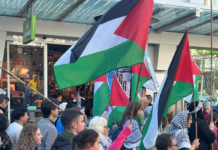
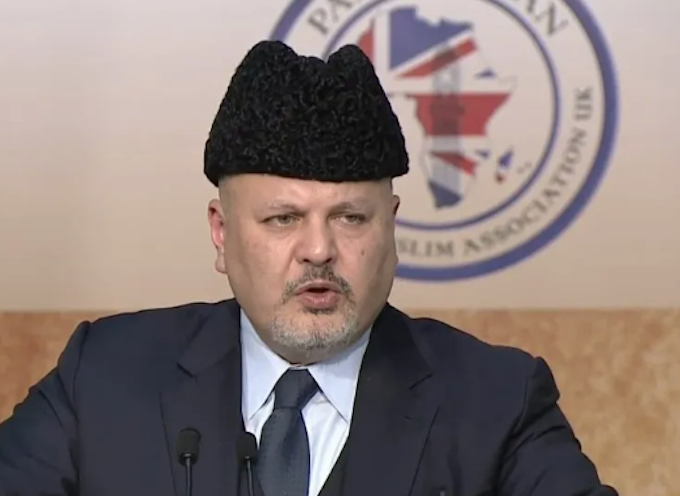
A leading Palestine solidarity group in New Zealand has challenged Prime Minister Christopher Luxon to explain why his government has not revealed how the country voted at the International Criminal Court over the ouster of ICC Chief Prosecutor Karim Khan after intense Israeli and US lobbying.
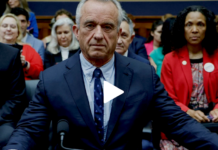
Khan has been under attack from Israel and the US because he successfully filed arrest warrants for Israeli Prime Minister Netanyahu and former Israeli Defence Minister Yoav Gallant on charges of war crimes and crimes against humanity in Israel’s genocidal attacks on Gaza.
Palestine Solidarity Network Aotearoa (PSNA) spokesperson Rinad Tamimi said Israel and the US had “intensified their lobbying and diplomatic bullying” after an ICC Judicial Panel established to examine the evidence on claims of sexual abuse against Khan declared they were “unanimously of the opinion that the factual findings by OIOS (the ICC evidence collecting body) do not establish misconduct or breach of duty under the relevant legal framework”.
- READ MORE: Israel accused of ‘buying Pacific votes’ over plan to open Nauru embassy in Jerusalem
- Former UN oversight chief says ICC prosecutor Karim Khan is ‘victim of massive stitch-up’
- ‘Humiliating as a New Zealander’: Helen Clark slams decision to abstain on UN vote
- How Volker Turk won new UN rights chief term despite US, Israel opposition
- Other Gaza genocide reports
Israel and the US rejected the ICC legal ruling and demanded a vote of all member states of the ICC to remove Khan. That vote was held on Friday and Khan was removed from office.
“The key question for Mr Luxon is ‘Did we capitulate to Israel/US pressure, or did we stand up for the ICC’s legal processes?” Tamimi said in a statement.
“We are not able to make any judgment on the allegations against Mr Khan, but New Zealand should have voted against his expulsion and insisted a proper judicial process be followed.
“Did we?” asked Tamimi.
“In October last year, Foreign Minister Winston Peters issued a formal statement, with Nordic ministers in Stockholm, to ‘reaffirm our unwavering support for the International Court of Justice and the International Criminal Court’.”
“Mr Peters, did we waver on Friday?”
Khan’s removal lines up neatly with the fight to neutralise Netanyahu’s arrest warrant. Coincidence is a luxury intl law can no longer afford.
This proves that justice DOES threaten Apartheid Israel & Co. So if the ICC is paralysed, lawyers and judges worldwide must do more. https://t.co/wQEoPEoiIF
— Francesca Albanese, UN Special Rapporteur oPt (@FranceskAlbs) July 25, 2026
“New Zealand has already failed numerous times to uphold international law in the face of Israeli/US pressure. We want an assurance the Coalition [government] didn’t throw in the towel again.”
Controversy over NZ abstention
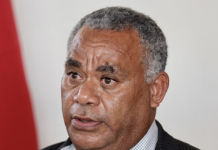
Meanwhile, there is also controversy over New Zealand’s abstention over the vote extending Volker Türk as United Nations High Commissioner for Human Rights.
Former Prime Minister Helen Clark has strongly criticised the decision by New Zealand to abstain, saying the vote put the country in “very bad company” and made her “feel humiliated to be a New Zealander.”
New Zealand was one of just 13 countries to abstain in the UN General Assembly vote to reappoint Türk for another four years.
The General Assembly voted 144 in favour, 10 against with 13 abstentions to renew Türk’s four-year term from 12 October 2026 until 11 October 2030.
Astonished to see #NZ Govt vote against reappointment of @volker_turk as UN High Commissioner for #HumanRights. NZ was 1 of 13 abstentions; there were 144 Yes, 10 No. This demands a “please explain” from NZG as to why it didn’t support @antonioguterres recommendation to reappoint https://t.co/tkYvds42uL
— Helen Clark (@HelenClarkNZ) July 25, 2026
The abstention placed New Zealand outside the overwhelming majority of UN member states that supported Secretary-General António Guterres’ recommendation to reappoint the Austrian diplomat, while also stopping short of joining the ten countries that opposed the appointment.
Turk, who has served in the role since 2022, will become the first person to serve two full terms as the UN rights chief since the position was created in 1993.
The role of UN human rights chief is inherently controversial because it requires public criticism of governments of UN members for alleged rights violations.
Turk’s outspoken criticism of policies in Israel, Russia and the US has put him at odds with all three countries.
Turk has repeatedly criticised Israel’s genocidal war on Gaza, its deadly assault on Lebanon, and a “shameful” lack of accountability for its rights abuses in the Occupied Palestinian Territory.