



ANALYSIS: By Lim Tean
America’s entire emergency oil reserve now covers 16 days. Sixteen.
The world spent 40 years building a shock absorber for exactly this war — and burned it down in five months.
What comes next isn’t just a higher petrol price. It’s a bill mailed to every fragile economy on earth, at the worst possible moment to receive one.
- READ MORE: US bombs Iran as IRGC and Houthis claim attacks on ships in Hormuz, Red Sea
- Lim Tean: You cannot bomb a strait open – Hormuz, Chabahar and the coming battle for Bab el-Mandeb
- Other Lim Tean articles
The economic consequences of war
In 1919, Keynes wrote his famous polemic — The Economic Consequences of the Peace — a warning that the true cost of the Treaty of Versailles would not be paid at the signing table, but for years afterward, by economies nobody had bothered to examine while the ink dried.
The world was so consumed by the drama of the settlement that it missed the mechanism that would define the following decade.
We are making the same mistake now, in reverse. Everyone is watching the war. Almost no one is watching the buffer.
The numbers that matter
Since February, the world has been drawing down oil reserves it spent four decades accumulating. International Energy Agency (IEA) member states held 4.1 billion barrels in strategic reserves in 2004. By 2026, that figure has fallen to 1.8 billion.
The US Strategic Petroleum Reserve — 414 million barrels at the war’s outset — had fallen to roughly 316–320 million by mid-July, its lowest level since 1983. American crude inventories overall, reserve included, are at their lowest since 1984.
Put that in terms people can actually feel: at America’s total daily consumption of just over 20 million barrels a day, today’s Strategic Petroleum Reserve alone covers barely 16 days. Sixteen days. That is the entire emergency margin behind the world’s largest economy — before commercial stockpiles and ordinary imports, which normally do the heavy lifting, have to carry the load on their own.
This is not incidental. It is the entire reason the war has felt, to most people, survivable.
Governments made a deliberate choice: burn the buffer, keep prices tolerable, buy time for diplomacy.
in March, the IEA itself coordinated the largest emergency release in its history — 400 million barrels. It worked. Prices that could have spiralled were instead managed.
The US bombs Iran for the 12th consecutive night.
Iran’s Minister of Foreign Affairs, Abbas Araghchi, says Tehran’s defence doctrine is an “eye for an eye”.
🔴 Follow our LIVE coverage: https://t.co/kGUykdVSBy pic.twitter.com/rvYFPnzhph
— Al Jazeera English (@AJEnglish) July 23, 2026
But a reserve is not a subsidy. It is a loan against the future, and the bill is now due. The IEA estimates that refilling what has been drawn down will require an extra one million barrels a day of supply, sustained, for three years — a claim on the market running through 2029.
That is not a wartime cost. That is a peacetime cost, arriving after the guns fall silent, exactly as Keynes argued the costs of Versailles would.
The collision nobody is pricing
Here is the trap. The refill has to happen at scale, which means sustained buying pressure on oil for the rest of the decade. At the same time, markets are expecting a return to surplus once the war ends. Cheap oil and an aggressive refill bid cannot coexist for long — every government rushing to rebuild its stockpile at once will bid up the very barrels it is trying to buy cheaply.
The floor under oil prices for the next three years is being set in storage tanks, not on a trading screen.
What I see from the insurance market
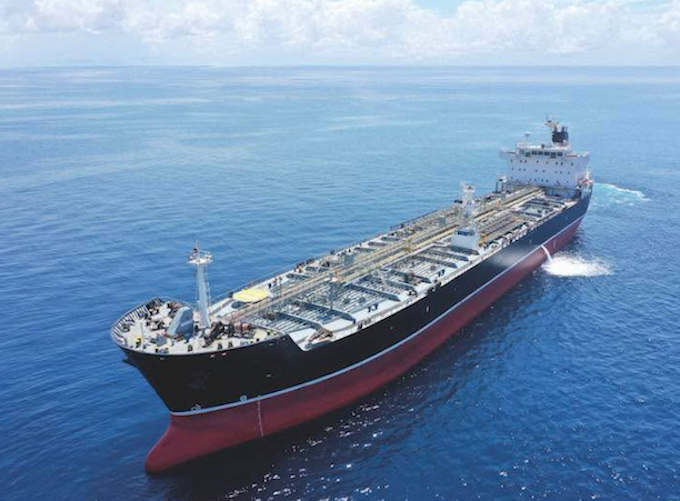
I spent three and a half decades in marine war risk and P&I before any of this made headlines, and the insurance data tells the sharpest version of this story. Before the war, hull war-risk cover for a Hormuz transit cost roughly 0.1–0.15 percent of a vessel’s value — background noise.
During the worst weeks, that spiked as high as 4 percent for seven days of cover on some routings — a 4000-fold multiple on a single VLCC transit, turning a $150,000 cost into $5–7 million.
Rates eased when the US-Iran MoU was signed in June. Then three vessels were attacked in Omani waters this month, two UAE supertankers were struck in the strait itself, and rates snapped back to roughly 5 percent as the new market norm.
That volatility is not a shipping story. It is a leading indicator. War risk premiums move days before oil prices catch up, because underwriters are pricing the war in real time, with their own capital, before anyone else has to.
Right now they are telling you the ceasefire architecture is fragile and the reserve cushion behind it is nearly gone.
What this means for the price of everything
This is where the story stops being about oil and starts being about you. A three-year refill bid of a million extra barrels a day, colliding with markets that expected relief once the shooting stopped, does not stay in the energy pages. It moves into diesel, into freight, into fertiliser, into the price of the food on the shelf and the electricity bill in the post.
Every supply chain on earth still runs, in the end, on the price of a barrel of crude.
And it is landing on an economy that had no slack to begin with. Global growth going into this war was already sluggish — most major economies limping along on thin margins, high debt loads, and a decade of accumulated fragility. Layer a multi-year oil-price floor and a cost-of-living shock on top of that, and the honest question is no longer whether we are heading for a mild recession.
It is whether the world has the reserves — financial as much as physical — to stop a downturn like this becoming something considerably deeper. I do not say that to be alarmist. I say it because the people who priced the 4000-fold jump in war-risk insurance premiums were not being alarmist either. They were simply the first to see what was coming.
The peace will not be peace
When the war ends — and it will end — the headlines will move on. They always do. But the refill bid doesn’t end with the war. The insurance market’s memory doesn’t reset with a ceasefire. The Strategic Petroleum Reserve’s physical withdrawal infrastructure, built in the 1970s for a 25-year lifespan and now pushed well past it, doesn’t repair itself.
Keynes’s argument was never really about Versailles. It was about the danger of a world that mistakes the signing of an agreement for the resolution of its underlying economics.
We are about to make exactly that mistake again — celebrating a ceasefire while the real invoice, three years long and running through 2029, quietly gets mailed to every economy that depends on oil.
The war will end. The economic consequences of the war will not.
Lim Tean is a Singaporean lawyer, politician and commentator. He is the founder of the political party People’s Voice and a co-founder of the political alliance People’s Alliance for Reform. He also hosts Lim’s Substack.