






By Lucy Xia of RNZ
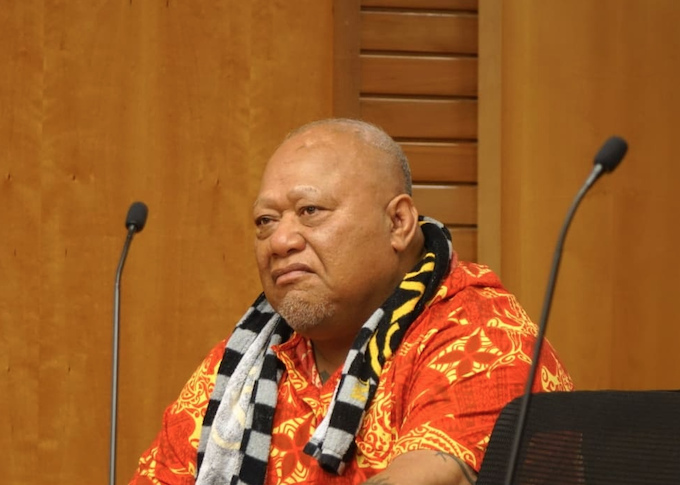
A Hawke’s Bay horticultural labour contractor, who was the first person to be convicted of both human trafficking and slavery in New Zealand, has been granted parole and will be released next month.
Seventy-one-year-old Joseph Matamata, who also goes by Viliamu Samu, was sentenced to 11 years imprisonment for using 13 people as slaves and 10 charges of human trafficking.
Two of the trafficking convictions were nullified by the Court of Appeal, because of a procedural error in the Solicitor-General’s office.
- READ MORE: Hawke’s Bay human trafficker Joseph Matamata loses sentence bid
- Joseph Auga Matamata sentenced to 11 years for human trafficking and slavery
- Other slavery and trafficking reports
Between 1994 and 2019, Matamata brought people from Samoa on three-month holiday visas to work on orchards in Hawke’s Bay. He’d also adopted three young people in 2016.
On Friday, Matamata appeared before the Parole Board for the third time, after serving nearly six years in prison.
He was refused parole twice last year.
Parole Board member Serina Bailey said when considering undue risk of reoffending the board believed it could grant Matamata parole. However, she said it believed Matamata had minimised his offending and did not have a clear understanding of the full impact of his actions.
14 hour days
During his trial in 2020, the court heard that Matamata made his victims work up to 14 hours a day in the fields, seven days a week, restricted their movement, and withheld their wages.
They worked at Matamata’s home late into the evening and were beaten up if they broke rules, including speaking to their families in Samoa or leaving his Hastings home without permission.
Immigration New Zealand “conservatively estimated” that Matamata kept more than $400,000 in wages they had earned.
Matamata’s youngest victim was a 12-year-old boy, and the court heard that he was beaten, and stabbed with a secateur.
Another victim, a 15-year-old girl who thought she would be going to school in New Zealand, told the jury she was made to look after Matamata’s children, cook and clean.
She said she had escaped to Auckland but was later brought back by Matamata, whom she said tied her up in his car on the journey back to Hastings, and put her in a storeroom for the night.
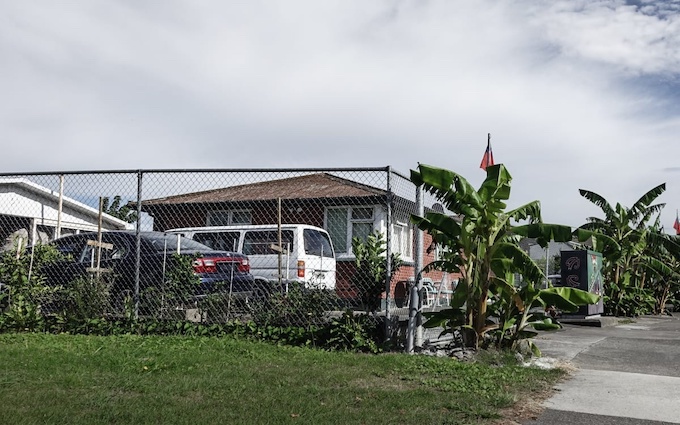
Matamata’s lawyer Regena Sommers told the Parole Board that he was sorry for using the victims and not seeing their needs, and that he was under a lot of pressure at the time. He was sending the fruits of his work and the victims’ labour to pay for various ceremonies and events back in Samoa, which could cost up to $100,000.
‘Humbled’ by ordeal
Sommers said Matamata had been “humbled by this entire ordeal” and that he had addressed his offending through rehabilitation programmes.
When asked by Bailey how he could have treated the victims the way he did, Matamata said through an interpreter, “I am sad after realising that what I did and what happened was wrong, I realise now that living in New Zealand is very different from life in Samoa”.
Bailey asked if he meant that he could treat people like that in Samoa, and he didn’t understand he couldn’t do this in New Zealand.
Matamata replied that in Samoa people worked for themselves on their own plantations and that for him, “we were working with everybody here” in a similar way, “and hence the conviction”, he added.
Asked why he worked his victims so hard, he said it was because he couldn’t afford at the time to provide for everyone who lived with their family.
He also told the Parole Board that he sometimes took loans to bring people over from Samoa and pay for their flights, and that it was agreed that the people needed to repay the loans when they started working — “It was their way of contributing,” he said.
Asked by Bailey why did the assaults on his victims happen, Matamata said a lot of the assaults were things that happened when he was young, and behaved like a youth.
Life changed
He said his life changed after he got married and had children.
Matamata cried at times when he told the Parole Board that after taking the rehabilitation programme, it was clear to him what he put those people through was wrong and that he realised he was guilty.
He was emotional when speaking of his wife and his children, and the difficulty of being away from them.
Parole Board member Materoa Dodd told Matamata that while there was honesty in some parts of his responses, she thought he minimised his offending in other parts, such as talking about his youth when asked about the violence.
“Really the assaults were about assaults that you made on the victims of your current offending, not when you were a youth,” she said.
Asked how he had addressed his anger management, Matamata said a rehabilitation programme he attended had given him new insight, and that the course taught him how to deal with high risk situations.
Asked about high risks for himself and the community if he was released, Matamata used the examples of if his wife was not happy with him, he would walk away, or if someone wanted to fight him, he would think about the repercussions.
Avoid migrant requests
Later he added that if anybody in his extended family wanted to come to New Zealand, that could be a risk “because that situation has led to me being here with conviction”. He said he would avoid those requests.
Parole Board member Alistair Spierling commented that he noticed that the first high risk in Matamata’s safety plan was greed or money, but Matamata had not spoken of either of those.
He also said he had concerns about Matamata’s minimisation of his offending.
Sommers told the Parole Board that a psychologist who reviewed Matamata’s safety plan did not raise any concerns.
She said Matamata not “responding perfectly” to the board was a sign that he was nervous and overwhelmed.
Matamata’s case manager said applications had been submitted for him to be supported by community organisations, where he could reintegrate in a “guided release” and maintain his Pasifika culture.
A prison officer told the Parole Board Matamata had interacted with different cultures during his term, and had mixed well in social gatherings. She said he had maintained compliance.
This story was first published on