


Asia Pacific Report
Pesta Babi (Pig feast), the controversial Papuan documentary film critical of a major development project impacting on the environment in the southeastern Melanesian region, is stirring public debate and a “crackdown” across Indonesia.
The film caused a stir when it had its premiere in New Zealand in March and was described in a review by Asia Pacific Report as “exposing oligarchs, food security crisis and ecocide under the noses of the military”.
Screenings followed in Australia but there have been reports of a backlash in some parts of Indonesia and some public shows being shut down.
- READ MORE: West Papuan doco Pig Feast exposes oligarchs, food security crisis and ecocide under noses of military
- Army chief denies direct central command over Pesta Babi film crackdown
- Other Pesta Babi reports
However, the Indonesian military denied they were responsible for the crackdown, blaming some local authorities.
An Al Jazeera television report said Indonesian authorities had shut down several screenings of the documentary about alleged human rights abuses in Papua, including Indigenous land seizures.
It noted that human rights groups and international media still faced restricted access to the Papuan region, which is mainly referred to as “West Papua” in Pacific countries.
Pesta Babi is focused on the largest forest conversion project in modern history in a remote are near Merauke — turning 2.5 million ha of tropical forest into industrial plantations under the guise of “food security” and the “energy transition”.
Footage of village resistance
Dramatic footage of scenes show Indigenous village resisters against the massive destruction of rainforest in one of the three largest “lungs of the world”, shipping of barge-loads of heavy machinery, vast swathes of forest scoured out for rice and palm oil plantations, and of a traditional “pig feast” — the first in a decade.
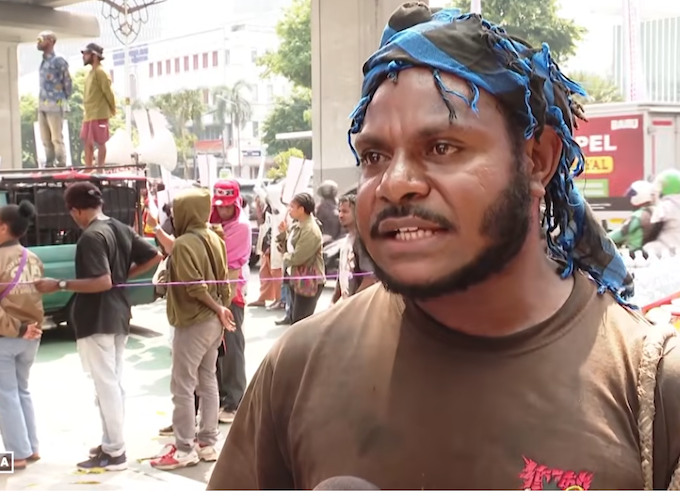
Papuan environmental film ‘blocked’ Video: Al Jazeera
In an editorial last week, The Jakarta Post said: “A series of crackdowns on public screenings and discussions of the documentary film Pesta Babi (Pig Feast) serves as a grim reminder that the nation’s democratic progress is not only stalling but effectively backsliding.”
Indnesian Army Chief-of-Staff General Maruli Simanjuntak said there had been “no direct instructions from the central military command to shut down public screenings of the documentary film Pesta Babi: Kolonialisme di Zaman Kita (Pig Party: Colonialism in Our Era).

“The shutdowns came from local administrations to maintain regional safety,” he said at the House of Representatives in Jakarta, according to antaranews.com.
“It is the responsibility of the regional coordinator … who deemed there was a risk of rioting. There was no direct instruction.”
Coordinating Minister for Legal and Human Rights Yusril Ihza Mahendra described the title of the film as “provocative” but denied there was a formal ban on screening it.
‘Important educational film’
Jubi News reports from Manokwari, West Papua, that a member of Indonesia’s Regional Representative Council (DPD RI) for West Papua, Filep Wamafma, welcomed the documentary as an “important educational medium” to open public discussion about development issues facing Papuans.
Wamafma said this after attending a public screening of the documentary at the School of Law (STIH) campus in Wosi, Manokwari Regency, last Monday.
The screening was organised by the academic community from Manokwari School of Law in collaboration with academics from Universitas Papua. Participants included students, lecturers, activists, and members of the public.
Wamafma said social conflicts arising from competition over natural resources and economic interests occured not only in Papua but also in many parts of the world.
However, he stressed that Papua’s problems had “unique characteristics” needing serious attention.
“This is a real global phenomenon, but each region has different problems. This film provides a concrete picture of the issues currently faced by Papuan society,” Wamafma said.
He encouraged students, especially law students, to approach the issues raised in the documentary through academic and constitutional perspectives.
Students, he said, should develop systematic analytical thinking by examining facts, legal norms, conducting analysis, and drawing conclusions.
The documentary has been made by award-winning investigative filmmaker Dandhy Dwi Laksono and producer Victor Mambor, founder of Jubi Media, who first visited New Zealand 12 years ago.