




By Mark Rabago of RNZ Pacific
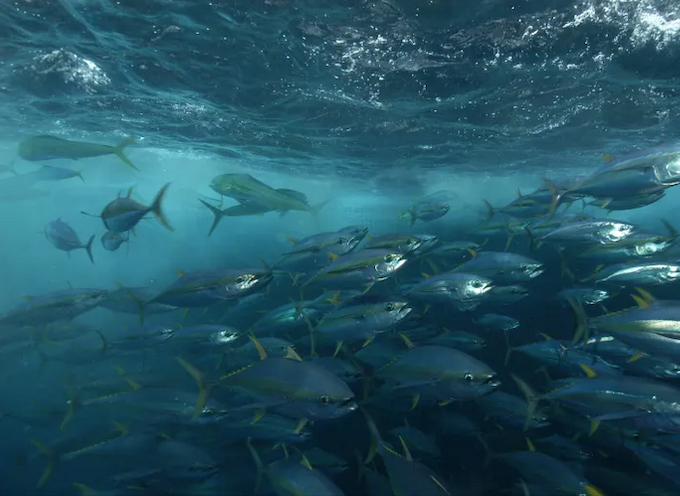
The adoption of key tuna fisheries management measures on the table for this year’s 23rd Regular Session of the Western and Central Pacific Fisheries Commission (WCPFC), scheduled to take place in Port Vila, Vanuatu, from November 30, is critical for the sustainability of tuna fisheries in the region.
Niue’s Josie Tamate, who is the WCPFC chair, told RNZ Pacific last week that all measures that are being discussed and that would be tabled at the meeting, are focused on ensuring that tuna stocks remain healthy, and that small island developing states that rely largely on their fisheries for income, are not negatively affected.
She said the big decisions for the commission would be the adoption of the implementing measure for the South Pacific albacore, and also the bigeye management procedure.
Tamate, who is also finishing off as chair at the Port Vila meeting, said they would also be monitoring the COP31 meeting in Turkey, especially on the decisions on the oceans.
The WCPFC adopted a resolution on climate change in 2019, and there was also decision for climate change to be a standing agenda item at the commission meeting.
“It is a challenge because, you know, we’re managing and then you also have these conditions, the changing conditions due to climate change, so we will continue to have a conversation on the impact of climate change,” Tamate said.
“I like to see what will be the outcomes from the COP31, and how do we weave those in as part of an overall conversation that we need to have at the commission, so we’re not just doing things in isolation.
“We don’t work in a bubble, but we’re working with all these issues that has an impact on the fisheries, and especially on the distribution of tuna and movement.
“There’s some information that says that there’s a movement of the distribution from the west to the east. Again, those are implications that the commission will be looking into because it does come with a whole lot of implications.”
Critical measures
On the decisions around management procedures and measures, Tamate reiterated that in 2022 the interim skipjack management procedure was adopted while the commission adopted the South Pacific Albacore Management Procedure last year in Manila.
“So, this year, on our schedule, the commission is expected to adopt the the implementing measure for the South Pacific albacore and the management procedure for bigeye tuna,” she said.
“In addition to that, maybe the the yellowfin management procedure as well and there’s some expectation to adopt the the Pacific blue fin tuna management procedure. This Pacific blue fin is work that is led by the Northern Committee, and they will be presenting that for adoption at the WCPFC.
“We continue the ongoing discussions on the work of the Commission and the tasking, but the key one for me, critical for this meeting, would be decision on the implementing measure for the South Pacific Albacore, and also the decision on the Big Eye management procedure.”
Tamate said all these measures and procedures have been discussed over the past few years, with science also involved in the decision-making.
She said the special science commission meeting prior to the full Commission meeting is a significant one, and is the first to be held as part of the annual gathering.
“That’s a layer we never had before, but the the special science committee is important because of the the advice from the science is built into the to the decision making process by the commission the following week.
“I think there’s we’ve done everything that we can. It’s going to be a lot of negotiation that’s going to take place.”
Challenges
Tamate said time and implementation are two major individual challenges.
She said since taking over as WCPFC chair three years ago, there were a lot more issues and alot more work to be done.
“I think it’s time,” she said. “We only have five days at the commission meeting to make substantial decisions with respect to the management of our tuna fisheries, but the work has been undertaken throughout the year.
“For me timing and also just the opportunity to be able to address some of this complex discussions because there are other features and issues that comes on top of that as well.
“The different interests that are at play, the interests of fishing states, interests of coastal states and trying to find a pathway on a lot of the important issues that it will be before the commissions, and it’s ongoing discussion.”
She said there are two important phase of the discussions.
The first focused on the negotiation of the conservation management measure, which is the measure to be adopted.
Ensuring compliance
The second part is the actual implementation of those into making sure that there is compliance.
“So, I think that’s the other big challenge, the compliance,” she said.
“Those will be ongoing challenges, and the commission has been working very hard to address those, to make sure that there is clarity and also transparency in the way that we do the work.
“So I think for me it is the time, and it’s just finding the balance, finding a way forward, and also the making sure that when we adopt measures, that there is obligations followed through.
“But it would also be understanding the capacities of the members and the participatory territories in the commission to implement a lot of these measures that has been adopted by the commission.”
Highlights
On a personal note, Tamate said the adoption of special tuna fisheries measures over the last three years and those that would be adopted in Port Vila would be the highlights of her leadership term.
She said being WCPFC chair from a small island state like Niue was challenging and daunting in an important sector like tuna fisheries, but having commission members agree to take critical steps together for the betterment of the tuna fisheries had been exciting.
“For me the highlight has been the adoption of some of the critical decisions that have been made by the commission,” she said.
“We’ve been able to progress a lot of this work, and this is due mainly to the support by the the commission members, but also the work with the secretariat as well, and the work that was undertaken by the the regional organisations, such as the Forum Fisheries Agency, the Pacific Community (SPC) and other stakeholders and partners.
“There is a lot of work and a lot of interest in making sure that the the health of the the key tuna stocks continue to be healthy, so that we’re still in green.”
She said all key tuna species under the Commission’s mandate “is still in the green”, meaning the stocks are still healthy.
“For me that’s a highlight in terms of the work and the contribution that I made into the the work of the commission to spearhead a lot of the discussions and that we maintain that green status of our key stocks,” she said.
“I’m also very proud of the the work that’s been undertaken by the Commission in terms of the harvest strategies and it’s important to build the capacity of everybody, especially those where the fishery is important for their livelihoods.
“I’m proud of all the work that has been undertaken by all the members, the SIDS, and all the. The 33 members of the commission, they continue to come with the willingness to find positive ways forward, because it is the livelihood of the fishery, which is the livelihood for a lot of people, not only for the Pacific Islands but also those who operate in the Western and Central Pacific Ocean.
“It’s highly important that we need to sustain the fishery and keeping the health of the tuna species that we have, especially when they’re in the interface of climate change and all these other discussion that that will have an impact on the way we work going forward.”
Forum Fisheries take
Meanwhile, the Forum Fisheries Agency (FFA) said its 17 members will push for a landmark management procedure for bigeye tuna at the upcoming meeting.
The FFA said in a statement the proposal is among several fisheries management priorities formally submitted to the Commission following the 22nd Management Options Consultation (MOC22), a weeklong series of meetings involving FFA Members, partners and stakeholders on key regional fisheries management issues.
If adopted, the proposed bigeye tuna measure would be the Commission’s first management procedure covering both purse seine and longline fisheries, two major fishing methods used to catch tuna.
The FFA said it would be an important step towards strengthening the management of the world’s largest bigeye tuna stock, which accounts for approximately 40 percent of global bigeye tuna catches and, according to the latest stock assessment, has never been overfished.
Managing bigeye tuna remains a challenge because both purse seine and longline fisheries catch the same stock. Existing restrictions on purse seine fishing help protect bigeye tuna but also reduce fishing opportunities and potential revenue for Pacific Island countries, while benefiting longline fisheries.
FFA said members are seeking a more balanced approach that protects bigeye tuna while recognising the economic interests of Pacific Island countries and ensuring that conservation responsibilities are shared more fairly between the two fishing methods.
Other proposals submitted by FFA members include new arrangements for managing South Pacific Albacore, stronger fisheries reporting and monitoring and stronger management of transhipment activities.
The FFA members are also calling for stronger fisheries monitoring and compliance, including a prohibition on transferring fish between vessels on the high seas until the Commission adopts clear guidelines.
Other priorities include improving fisheries data reporting and protecting Pacific Island countries’ fishing rights and economic interests as climate change affects tuna distribution.
The FFA decisions were taken during the 22nd Management Options Consultation in Honiara on October 30.
This story was first published on