


COMMENTARY: By Eugene Doyle
Chaos, confusion and, in some quarters, depression, reign in New Zealand following the most baffling election result since New Zeapanders moved to proportional representation (MMP) in 1996.
Labour captured a handful more votes (29.3 percent) than National (29.2 percent) but due to the quirks of the electoral system the Nats snaffled six more seats than Labour.
That means National, along with their coalition partners, may hold on to power with a one or two-seat majority in Parliament. Maybe. The results of the special votes will not be known until November 27 and that could yet change the result.
- READ MORE: Sean Ackland: Chin up. There’s still a lot to celebrate over NZ election in spite of voter suppression tactics
- Other NZ election reports
Dazed and confused Prime Minister Christopher Luxon has shown he has neither the wit nor the cunning to stop his party being cannibalised from all sides — National crashing to below 30 percent in the popular vote. An unloved Labour was the same.
Sub-30 percent for both parties was a first in the modern era. Across the Western world the populace have fallen out of love with legacy parties that offer few solutions to today’s problems. We are seeing country after country teeter towards ungovernability. Are the Kiwis the latest?
The Right bloc are more likely to form the next government — but are increasingly looking like a three-headed monster (conservative National, ultra neo-liberal ACT, and angry populists New Zealand First) increasingly pulling in opposite directions and snarling at each other.
Strange bedfellows
Prime Minister Luxon seems to be trying to strengthen his position by luring first-time parliamentarians Opportunity (seven MPs) on to his team, partly to moderate the two far-right parties he is lumbered with. This would deliver — and I use the term advisedly — strange bedfellows.
Imagine this for uncomfortable:
The oily Michael Laws, 6th-ranked NZ First MP, sitting next to Opportunity’s Kayla Kingdon-Bebb, a woman he imagined having sex during a misogynistic rant on a radio show during the campaign. Or imagine the famously racist Foreign Minister Winston Peters, who cannot see a Chinese person without saying something obnoxious, sitting next to Opportunity Leader Qiulae Wong.
The policy mix that would emerge from such a distasteful marriage of convenience would not be pretty.

Opportunity, still potential kingmakers, position themselves as evidence-based centrists, committed to progressive environmental policies, innovative economics and consensus politics. Could they share government benches with MPs who cannot see an Israeli flag without hugging it and who use the same playbook as Pauline Hanson, Nigel Farage or Marine Le Pen when it comes to race, immigration and refugees?
New Zealand First and ACT both want New Zealand out of the Paris climate accord.
Pity the ordinary Kiwis who are increasingly anxious about the economy and job prospects in particular. They saw neither bloc as offering real, tangible, short-to-medium term solutions to these and other pressing needs.
Overpriced houses, cows, and tree trunks
Our economy is still too dependent on us selling over-priced houses to each other, cows, tree trunks, and hoping the Chinese tourists come back.
Since the last election 200,000 Kiwis had already voted with their feet (my children included) and left the country, many to Melbourne and Sydney. These are mainly young and well-educated professionals and skilled tradies who have fled the government’s assault on the public sector and its driving of the economy to the edge of the cliff.
Finance Minister Nicola Willis has promised to cut 9000 more jobs from the much-diminished public payroll in what the Left sees as a war on Wellington, the most progressive stronghold in the country.
Gutting the country’s political and cultural capital to please neoliberals like ACT’s David Seymour and National’s own economic radicals is not visionary politics. Ironically, Nicola Willis, National’s Deputy Leader, just lost her own job in Wellington — not getting a seat in Parliament because National did not get a single List seat (see below).
Three other senior National Party MPs also got the heave-ho: including the Speaker of the House Gerry Brownlee, the Minister of Defence, Paul Goldsmith — one of those “Ministers of Everything” who holds multiple portfolios — and Chris Bishop, the talented Minister of Housing, who was quite possibly going to roll Luxon post-election but is now pondering whether to take up golf or gardening.
In almost any normal year, these senior MPs, the backbone of the National Party in government, would have still entered Parliament via The List, the proportional representation system’s way of “topping up” a party’s quota to ensure proportionality. This year was different — National’s successful electorate campaign gobbled up its entire share of seats, leaving high-ranked MPs without a get-out-jail/get-into-parliament card.
This anomaly — The Overhang — is bending heads out of shape in the Kiwi blogosphere (TLDR).
Wishy-washy Labour campaign
Many Labour supporters howled at the wishy-washy campaign that Chris Hipkins ran, bungling a golden opportunity to make this a one-term government. Described as an Aussie-style Small Target campaign (don’t draw too much attention to your policies, mumble and hope you win because people hate the other lot more), it left the Left bloc de-energised and depressed.
Many I spoke to in the aftermath said they saw no vision from Labour, no energy, and insufficient steel when it came to the issues they campaigned on: jobs, health, housing. Offering a couple of bucks off your transport and health costs just wasn’t enough to shift the dial and contributed to a woefully low voter turnout.
The coalition, borrowing from the US Republicans, also ran what some called an effective voter suppression strategy, including a dramatically earlier voter registration cut-off.
The Green Party had a strong result pulling in their highest ever catch of seats. Their mission will be to pressure Labour to show more backbone, to fight for wealth redistribution, revitalised core services, less militarism and more climate action.
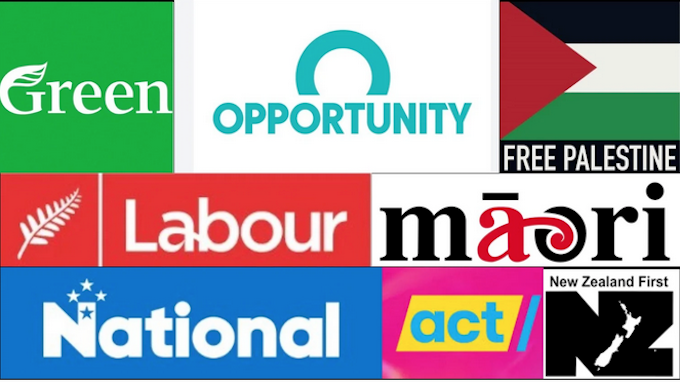
The Greens and Te Pāti Māori, who share a number of progressive policies, now command 21 seats in Parliament, a healthy increase. This will be important for those opposed to the government’s increasing attacks on Māori, for example, through the failed Treaty Principles Bill and the Regulatory Standards Bill, and the scrapping of the Māori Health Authority. Other measures, such as pay equity and reversing tax breaks for landlords will give the Opposition plenty to fight for.
Political pundits are picking we are in for a raucous and unruly Parliament, riven with irreconcilable differences at a time when the economy, the region and the world seems beset on all sides by frightening challenges.
Both ACT and New Zealand First increased their share of seats at the expense of National. Buoyed by this, they will increasingly lord it over the Nats. As our national anthem says, “God Defend New Zealand” — because our politicians sure are doing a bad job.
Eugene Doyle is a writer based in Wellington, New Zealand. He has written extensively on the Middle East, as well as peace and security issues in the Asia Pacific region, and contributes to Asia Pacific Report. He hosts solidarity.co.nz . This article first appeared in the Australian public policy journal Pearls & Irritations and is republished from Solidarity with permission.