
By Johnny Blades of RNZ Pacific
West Papuan civil society organisations have called on Indonesia to allow access to their region for the United Nations High Commissioner for Human Rights, and to open up genuine, inclusive dialogue.
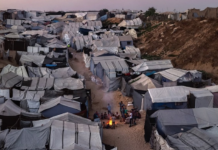
Claims of persistent human rights abuses continue as violent conflict has deepened in the rugged interior of the Indonesian-controlled Papua region in recent months, causing an increasing number of Internally Displaced People (IDPs).
In recent weeks, numerous Pacific countries have echoed the 2019 call by the Pacific Islands Forum (PIF) for Indonesia to allow the UN rights office to visit Papua to assess claims of widespread rights abuses.
- READ MORE: Pacific leaders urge Jakarta to allow UN rights visit to West Papua
- Other West Papua reports
Seven years on and the visit is yet to occur, although Indonesia’s government told RNZ Pacific last month the visit remains “on track”.
However, the patience of Pacific island countries has been tested — the call was again made at last month’s PIF summit by the countries in the Melanesian Spearhead Group (MSG) bloc.
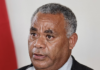
Human rights advocacy group Elsham Papua’s director Paul Mambrasar said that the request is one of a series of calls to action and demands the civil society groups have made.
“The first one is unconditional international access by the UN body, and also from representatives from MSG and PIF, which is the result of the recent communiqué to visit West Papua,” Mambrasar said.
“It is an invitation which needs to be made by Indonesia.”
‘Credible claims taken seriously’
Speaking at this month’s UN General Assembly in response to recent calls by Pacific governments, including Solomon Islands and Vanuatu, Indonesian diplomat Nona Gae Luna said the government “takes all credible claims of human rights violations seriously”.
“Our national institutions and legal mechanisms, including the Independent National Human Rights Commission, is working continuously to address such allegations,” she said.
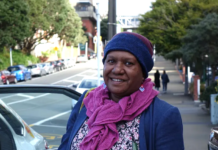
West Papuan human rights defender Rosa Moiwend said Jakarta had long dismissed concerns about rights issues in Papua.
“The Indonesian government is always promoting the positive image of the human rights situation in West Papua, while the real situation on the ground is still getting worse, especially around the military operations and the impact to the people,” Moiwend said.
“We now have like 127,000 IDPs waiting for the right time to go back home, and this is something that [has] happened for a long time.”
Access to Papua is also restricted for international humanitarian organisations who could help the IDPs.
Jakarta’s sensitivity over any attempts to internationalise the Papua issue was evident at the UN.
“Arrangements for any visit by the High Commissioner should be agreed between the host state and the office of the High Commissioner — they are not set by a third (party) or any regional body,” Gae Luna said.
Nonetheless, Moiwend said the renewed Pacific Islands push for access to West Papua was welcome and timely.
“This is very consistent because the leaders already made a communiqué before, and the West Papuans, especially the CSOs, was really happy with that because the consistency is still there,” she said.
“However, they need a clear action, and they also urged the Indonesian government to respond constructively with the statement made by the leaders.”
Military forces
Mambrasar said the renewed call by Pacific countries was also timely because Papua was now more militarised than ever as Indonesian troops had deployed in greater numbers to fight the disparate guerrilla forces of the West Papua National Liberation Army (TPNPB).
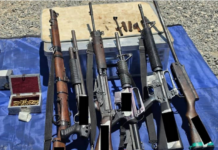
“They use more advanced military equipment to fight insurgencies. They now have drone unit, and then, for example, they now use aeroplane to bomb the insurgent fighters,” he said of the evolving tech used by Indonesia’s military [TNI].
“They use the Brazilian-made Super [Tucano] Toucan aeroplane to bomb. It’s not only a law and order issue, which in the past has been the main domain of the police, but now the military is also engaged.”
The Indonesian government considers the Liberation Army to be an armed criminal group, and rarely refers to the Papuan struggle for independence.
Gae Luna underlined that Indonesia makes no apologies for the presence of security forces in Papua
“Any serious discussion of Papua must reflect the full picture. Innocent civilians, teachers, health workers, and many others have fallen victim to violence by armed criminal groups.
“Indonesia has a responsibility to protect all of its citizens. Law enforcement must and will remain subject to Indonesia’s laws and our international human rights obligations.”
Dialogue
One of the other calls by the civil society groups is for a credible, inclusive, and meaningful political dialogue to resolve the root causes of the Papuan conflict permanently,
Mambrasar said that Jakarta may ignore the troubled history of Papua’s incorporation into Indonesia, but each new generation of Papuans comes back to the problem, and that needs to be acknowledged.
“When you engage with issues otherwise, you’ll go nowhere,” he told RNZ Pacific.
“Because it’s been going for decades, and young generations of Papua keep on coming, emitting the same issue, so we’re going in same thing over and over again.
“So, what Indonesia must do now is to sit and invite all the genuine representatives of West Papuans to sit and talk, and you know to discuss the best ways to go forward.
“Once you sit together and you know equally, and you see West Papuans as human beings, then you know we can find something.
“I believe things have happened in East Timor, in South Africa and in some parts of Africa and South America, why don’t we just look at those experience and maybe pick up one or two, and we can use it here.”
This story was first published on