




REVIEW: By David Robie, editor of Asia Pacific Report
I have watched the most disturbing film in my lifetime — a warning to the world of a horrendous dystopian future when human life and death is being decided by remote AI-assisted control warfare weapons. The problem is that this dystopian future is already with us now and has been unfolding for three years — with genocide in the Israeli besieged Palestinian enclave of Gaza.
Unlike the Venice film festival premiere last month when the audience gave an unprecedented 25-minute standing ovation for The Guardian-produced NAZA: A Window into Systems of Mass Killing, the New Zealand preview audience at Auckland’s Rialto Cinemas sat in shocked silence for minutes at the end, unsure how to respond to this harrowing documentary by Yuval Abraham and Rachel Szor. NAZA won the Venice Special Jury Prize.
So stunned was the Auckland audience that there was not a single clap.
This is a chilling visual testimony (surely likely evidence for future war crimes trials of Benjamin Netanyahu and others?) of what Australian journalist Antony Loewenstein wrote about in his landmark 2023 global book The Palestine Laboratory. At least 75,000 Palestinians have now been slaughtered (the real total is bound to be far, far higher) in the more than 1000 days since the genocide began — mostly women and children (some 25,000 of the latter).
And a Republican congressman, David Valadao, has just been reported as gloating about the US “benefits” of the war on Gaza in that weapons “are tested there; we are able to learn from that”. “We”? Sickening!
Ironically, the standing ovation in Venice eclipsed by a couple of minutes another Gaza film last year, Kaouther Ben Hania’s The Voice of Hind Rajab, a dramatised feature film about the cold-blooded murder of a five-year-old girl by an Israeli tank crew, who also ambushed and assassinated the two ambulance responders sent to rescue her.
The Hind Rajab film was heart-rending and tragic, whereas NAZA is so deeply disturbing because of the sheer callousness and remoteness of the killing carried out by 24 intelligence agents and soldiers at the push of a button through their AI applications known by Orwellian labels such as “Lavender”and “Where’s Daddy?” Yet to their credit, perhaps, they must have at least had tugs at their conscience to agree to being interviewed for this film (anonymous and with disguised voices) in secret to expose the industrial level killing.
Acceptable kill ratios
One of the interviewees tells of approval to kill 500 civilians as acceptable to target one Hamas resistance fighter. Others spoke of 200 killings at a time for one target as “acceptable” – or even “expected”. The gloves of revenge were cruelly off.
The official Naza documentary trailer. Video: Madman Films
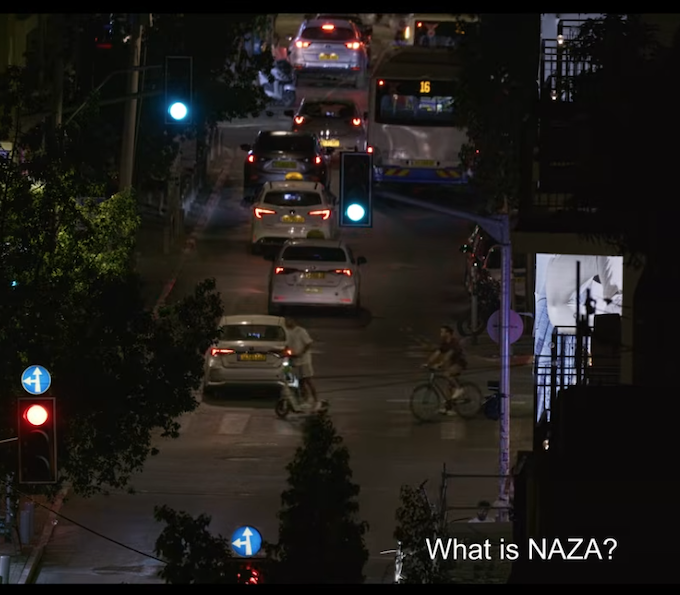
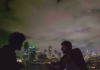
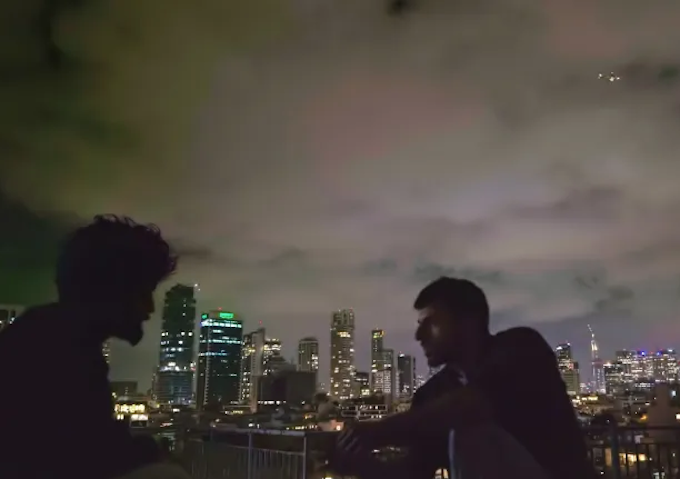
The location is eerie, even ghostly, as the narratives explore remote killings during the interviews on (presumably) Tel Aviv rooftops. In the background, are the lights from Israeli apartments as people go about their mundane lives — a far cry from the terror experienced by Gazan families as they are targeted, often during the night, by quadcopters, missiles or bombs — or “Whoops”, mini drones designed especially for attacking inside homes.
“It’s so insanely fun. . . ” “It’s like a video game . . . ” “You understand that your goal is to destroy . . . ” are some of the reflections of the death dealers under the cover of darkness. The “whistleblowers”, if we can call them that, spoke to co-director Abraham under the expectation of complete anonymity for fear of retribution from the system they were once — or possibly still are — embedded in.
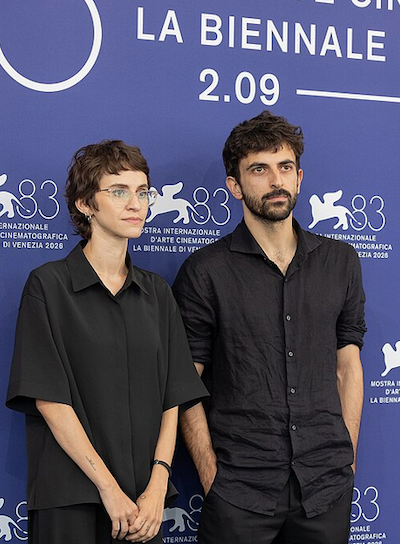
The film title NAZA is an acronym standing for the Hebrew term Nezek Agavi, which means “collateral damage”.
This documentary has provoked an immediate and savage response by the extreme rightwing Netanyahu regime. Responses began with Culture Minister Miki Zohar calling the film “despicable” and saying he would “act immediately to revoke the Israeli citizenship of these despicable creators on the grounds of treason against the state”.
Prime Minister Benjamin Netanyahu himself, who is wanted on an International Criminal Court (ICC) arrest warrant for alleged war crimes and crimes against humanity, was the next to attack the filmmakers. He declared he would introduce two legislative bills targeting those who “defame” the Israeli military. According to him, the first bill would enable revoking the citizenship of “anyone who defames soldiers”. The second would boost “twentyfold” the amount in damages in lawsuits for defamation.
The military itself has also threatened action. Chief-of-staff Eyal Zamir ordered punitive legal steps against the filmmakers with the help of the internal intelligence agency Shin Bet.
Punishing the filmmakers
The documentary is not an outlier in the allegations it makes, and it is revealing that the Israeli establishment should seek to punish the filmmakers rather than examine the abhorrent rules of engagement that have blighted this war on Gaza (in response to the Hamas attack on 7 October 2023 – a “breakout” from their 23-year prison enclave).
Just this week, the German news magazine Der Siegel has published accounts from 10 Israeli soldiers describing how troops killed Palestinian civilians in Gaza and branded them as “terrorists”. The soldiers recounted war crimes in their testimonies, including slaughtering unarmed Palestinians and destroying entire neighbourhoods to prevent families returning. One infantry reservist described how he was encouraged to kill unarmed civilians, saying: “The Arabs must be punished.” Collective punishment is a war crime.
The Israeli authorities are so desperate to minimise the political damage from this documentary that a hurriedly produced “counter” film as part of the $1 billion hasbara propaganda programme has been released — but this is littered with lies and disinformation and is unlikely to have the desired impact.
For an accurate exposé of the Gaza breakout itself that triggered the genocide following more than seven decades of occupation and repression since 750,000 Palestinians were expelled from their own land during the 1948 Nakba (“the Catastrophe”), it is hard to match the Al Jazeera investigation October 7.
• NAZA: A Window into Systems of Mass Killing, directed by Yuval Abraham and Rachel Szor (Madman Entertainment). The film has been released in 55 countries, including New Zealand, but is banned from screening in Israel. It will be streamed for free on The Guardian’s website in late November.