





By Johnny Blades of RNZ Pacific
As the Pacific Islands region reels from a series of recent maritime tragedies, a regional climatologist says it is imperative that boat operators take extra caution in a time of turbulent weather.
There have been dozens of fatalities from incidents at sea in recent months in Papua New Guinea, Solomon Islands, and Vanuatu among other Pacific countries.
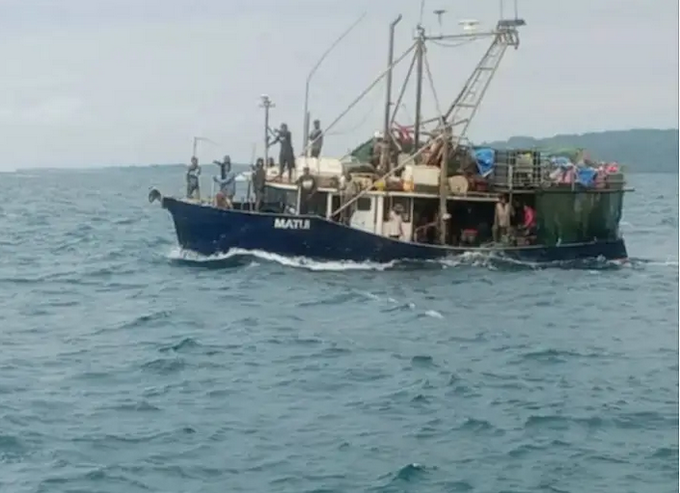
Although an official or confirmed death toll is not yet known for Vanuatu’s MV Matui tragedy on September 11, it is likely that dozens of people died.
A common factor in this and other maritime tragedies in the Pacific over recent months has been rough seas and weather conditions, and coincides with a time when the El Niño phase is getting into full swing across the Pacific.
El Niño has caused extreme heat in parts of the world, extensive drought in the Western Pacific and disruptions to ocean currents through the tropical Pacific.
A senior climatologist with the Pacific Regional Environment Programme, Philip Malsale, said El Niño had created a lot of movement of warm waters towards the Eastern Pacific, as a high pressure system moved up closer to the equator, with an active monsoon trough over the Western Pacific as well.
But he told RNZ Pacific that El Niño was not necessarily directly to blame for the rough seas and marine conditions in which various boats had got into trouble.
“Well there is some connection, but not directly. I think it is more related to the weather conditions — but also we need to take into account our season now,” Malsale said.
“We are in the winter season when we have the strong trade winds that are persistent at this time of the year.
“We have the high pressure system move up to the towards the equator, and we have dominant southeast trades (tradewinds), those kind of systems can also cause high pressure gradient over the countries, and it influences a lot of the weather synoptic situations across the countries like Tonga, Vanuatu, Fiji, Solomon Islands, and Papua New Guinea.”
Regional met talks
Malsale, who is from Vanuatu, last week joined regional counterparts in Tonga for the 8th Pacific Meteorological Council Meeting.
A big point of discussion was how to strengthen weather and climate services and make warnings more effective, at a time when some boat operators choose to ignore them and go out to sea, endangering lives.
Malsale and other weather experts are underlining that taking these warnings seriously is absolutely critical for people going to sea.
“We have mandated organisations such as the national weather services in countries. So boat owners or shipowners, captains should reach out to the national met services, find out what the current situation is, before they can plan the trip over to the islands.”
Vanuatu’s government is considering linking marine weather warnings to permissions for which boats can operate under particular conditions.
“Just because the warning is too general, but we can link that up to certain boat size or ships capacity,” Malsale said.
“So you put a certain warning, on which category of ship that is referred to in terms of not sailing or not carrying passengers to other islands.
Climate extremes
Discussions at the Met Council summit also focused on the ongoing wider challenges of climate change and the more extreme conditions it brings.
“There was agreement among all the Met Services to put this as a priority as well on the latest science to help the COP negotiators from the Pacific,” Malsale said.
“This is one area of services that that the national Met services want for our donors to continue to provide funding for.”
Weather experts have warned that the El Niño phenomenon developing in the Pacific Ocean is already the strongest ever recorded.
Malsale said the peak is still to come later this year and into 2027.
“That’s the forecast like to peak between probably November and January 2027. But these are only the indicators that we’re monitoring, but the impact can peak later on during the year.
However, he added that with cyclone season just around the corner, there could be even more impactful weather in store for the Pacific.
This story was first published on