


By Lillian Hanly of RNZ
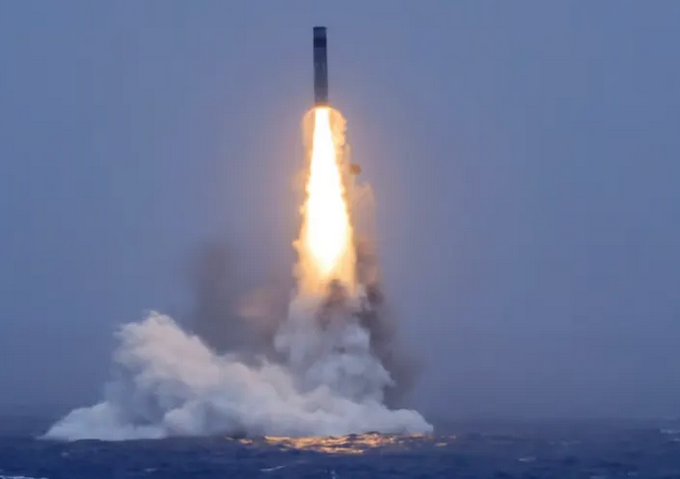
Leaders in the Pacific have registered their concern over a nuclear-capable missile test conducted by China in July, calling on all states to provide advance warning ahead of any testing.
Nauru – one of the 18 Pacific Island Forum (PIF) members – noted its dissent from the statement.
Partners to the Forum will also be split into two tiers in future, and member states agreed to a declaration for urgent and inclusive climate action to keep 1.5 degrees of warming within reach.
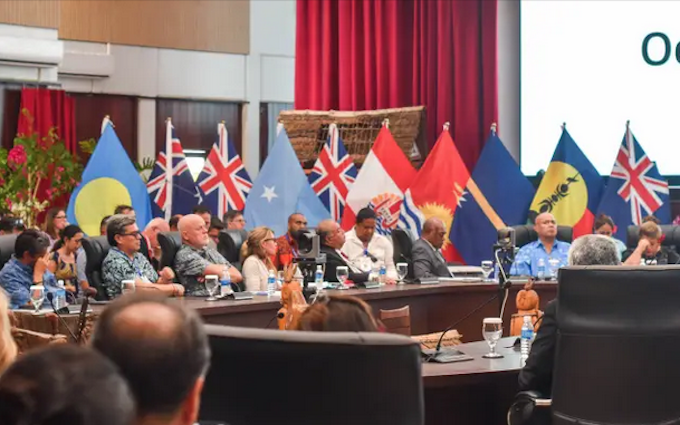
The Pacifc Islands’ Forum in Palau has concluded, with leaders taking part in a daylong meeting on Thursday to discuss various issues, releasing a joint statement outlining their conclusions.
Specifically, the Forum noted an intercontinental ballistic missile test that had “overflew” a number of members “without adequate notice”.
The members called on all states undertaking testing of intercontinental ballistic missiles to provide transparency and reassurance, including advance notification of at least 24 hours.
Palauan President Surangel Whipps Jr, who read the statement, concluded by saying: “I might note that the Republic of Naoero [Nauru] has dissented.”
Overshadowed by tensions
The Forum has been overshadowed with the tensions between China and Taiwan.
One local told RNZ all he had been hearing about was “China, Taiwan, and how the outside world, outside countries are … making certain nations either afraid to talk or not standing up boldly.
“All I hear is about just drama, and that defeats the whole purpose.”
He said he wanted to hear more about what other countries were going through, whether that matched up with the problems facing Palau — like outmigration, cost of living, and drugs — and see what could be done by working together.
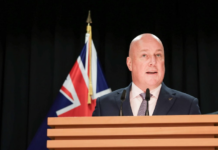
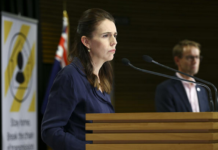
New Zealand Prime Minister Christopher Luxon said on Thursday that China-Taiwan had not been a focus inside the PIF.
“It’s a piece of a conversation, but it’s not the dominant conversation.”
But another geopolitical issue was the lingering desire by many in the Forum to reach consensus on condemning the intercontinental ballistic missile test by China.
Full consensus blocked
It is understood Naoero and Kiribati, both closely aligned with China, stood in the way of full consensus on a statement earlier in August.
Even as the meeting on Thursday was taking place, China’s Foreign Ministry made accusations toward Palau, after the host of the Forum urged the group to condemn China’s launch.
“Palau has repeatedly raised this issue in an ill-intentioned attempt to hijack the position of other member states of the Pacific Islands Forum. It will not have its way,” the ministry said.
Luxon himself felt strongly about the matter, telling reporters later it was important to push back so the behaviour was not normalised.
“Given all the history in our part of the world with nuclear testing… that’s just not something we want to see.”
Luxon described Naoero as being “in the room”, and wanting to be “disassociated with the statement”.
“We said, look, that’s great, but we’re not going to not make a statement as a Pacific Island Forum because of the objection of one country, and you’d have to ask them as to what their rationale for that was.
“Suffice to say, everyone else was fully on board.”
No Kiribati representation
When pressed on whether Kiribati was also on board, Luxon said Kiribati had no representation in the room.
Even stranger was the delayed recognition during the closing ceremony of Kiribati’s representative to the Forum, David Teaboo, well after all the other leaders had received applause.
The Forum also confirmed it would run a tiered system next year, splitting around 30 partners into two streams: one for strategic partners, and one for sector partners.
“Everyone’s a partner, but we just need to make sure that we can manage it well going forward,” said Luxon.
“We have to acknowledge that as we go forward, we can’t treat them all the same or give the same sort of effort.”
Taiwan remains a development partner, and while its Foreign Minister, Lin Chia-lung, was attending the Forum this year after being invited by Palau, New Zealand’s Foreign Minister indicated on Thursday that would not be the case next year.
New Zealand adheres to the One China policy, which means it does not have formal diplomatic relations with Taiwan.
Foreign Minister not invited
That would prevent the Foreign Minister being invited — instead representation at a lower level would be likely at next year’s forum.
Despite the geostrategic tensions at play throughout the Forum, Luxon said PIF was at its “strongest”.
Before setting off to Palau, Luxon denied PIF was being weakened as a mechanism for resolving region-wide difficulties.
“No, I think it’s about strengthening it, though,” Luxon said.
After his hours’ long meeting on Thursday, he said he wanted to see PIF “continue to evolve and strengthen and move — it’s the arc of progress that we’re focused on”.
That work will continue into next year, as New Zealand readies itself to host the forum.
This story was first published on