

COMMENTARY: By Stefan Armbruster
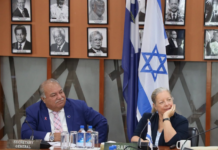
Israel voted against all UN resolutions concerning decolonisation of the six Pacific territories at the UN General Assembly’s Fourth Committee (Decolonisation — C-24) meeting last week.
Decolonisation has been a founding principle of the Pacific Islands Forum (PIF) since its establishment in 1971.
The announcement by Israeli Foreign Minister Gideon Sa’ar that it has become a PIF partner on social media earlier this week has stirred controversy.
- READ MORE: Israel’s relationship with Pacific is ‘biblical, ageless, real’, says Fiji deputy PM
- NZ’s foreign policy obligation to confront Israel’s Gaza genocide
- ‘Please explain’, Palestine Forum tells NZ over Israeli-Pacific Islands Forum ‘partnership’
- ‘Serious questions to answer’ – Labour slams Luxon over Israel’s Pacific Islands Forum move
- Israel joins Pacific Islands Forum as development partner
- Other Gaza genocide reports
As well as voting against decolonisation on October 15, Israel — along with the US — were the only countries to oppose all resolutions at the Fourth Committee including:
- reporting obligations for administering powers;
- dissemination of decolonisation information;
- economic activities affecting territorial peoples;
- education and training opportunities; and
- implementation of the UN Declaration on decolonisation.
At the same meeting, the US explicitly called for the abolition of the UN Special Committee on Decolonisation’s mandate. Israel did not address the committee.
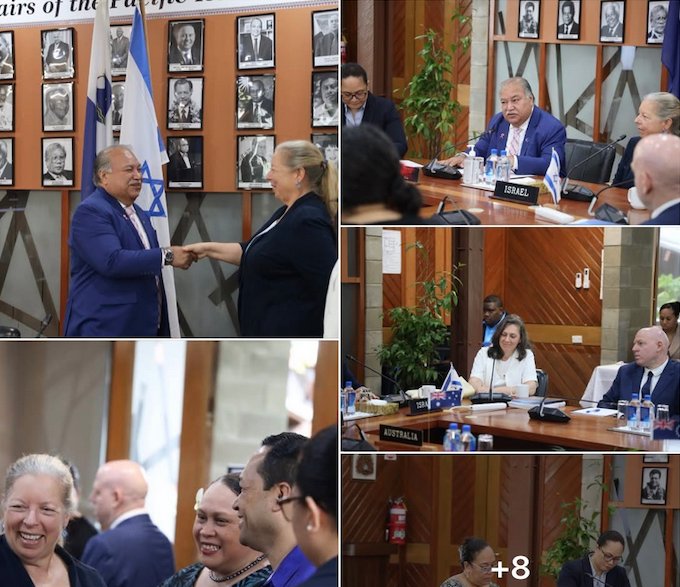
On October 20, Sa’ar posted on social media that the Pacific Islands Forum Secretary-General Baron Waqa had told him Pacific leaders accepted the country as a Forum Partner at PIFLM in Palau last month.
Another diplomatic achievement: Israel joins the Pacific Islands Forum (PIF) as a Forum Partner.
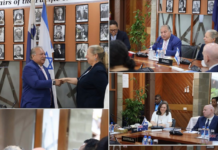
The Secretary General of the Pacific Islands Forum, Baron Divavesi Waqa, has informed me that Israel has been accepted as a Forum Partner, following a decision at the meeting of the Forum’s member state leaders in Palau.
This follows my visit to Fiji in June, where I met with the Secretary General and presented Israel’s request to join the Forum.
Strengthening ties with the Pacific Island nations is one of my objectives. Earlier this year, I opened Israel’s Embassy in Fiji, which also serves nine other Pacific Island nations, all friendly to Israel.
Under the current government, three of these countries, Papua New Guinea, Fiji and Nauru, have opened embassies in Jerusalem.As a Forum Partner, Israel will participate in a framework for cooperation in areas of mutual interest, based on regional priorities and Israel’s expertise in water management, desalination, agriculture, tackling climate change, innovation and sustainable development.
Israel and the Forum will also develop a joint action plan setting out practical areas of cooperation and a mechanism to monitor progress.
— Gideon Sa’ar | גדעון סער (@gidonsaar) October 20, 2026
There was no mention of Israeli or any other country’s partner status in this year’s 55th PIFLM Communique and there has been no subsequent statement from the PIF secretariat.
On the PIF Review of the Regional Architecture and partner status, the Communique said, “leaders further agreed that the Secretary General would communicate the decision to Partners in line with the endorsed communication approach”.
PIF’s last status update on Israel was a meeting with ambassadors and its international aid agency Mashav on October 18, with no mention of its partner status.
“The criteria for PIF Dialogue Partners, which must be met by countries at the time of admission and then continuously adhered to, are:
- demonstratable commitment to advancing the vision and priorities of the Leaders of the Pacific Islands Forum;
- long-term forward commitment to the Pacific region as demonstrated through foreign policy commitments, engagement strategies, diplomatic missions and engagement with regional organisations, and transparency in declaring economic, political, and strategic interests in engaging in the region; and
- shared interests and common positions on international issues and a commitment to using global networks and membership of international organisations to support Forum priorities.”
Six of the 17 non-self governing territories on the UN decolonisation list are in the Pacific — American Samoa, French Polynesia (Mā’ohi Nui), Guam, New Caledonia (Kanaky), Pitcairn and Tokelau.
Pacific leaders at PIFLM in 1981 passed a resolution “reaffirming their belief in the principles of self-determination and independence applying to non self-governing Pacific Island countries, including the French territories”.
In 1991, the PIF leaders Communique under the heading “Decolonisation” stated they “again reaffirmed the importance of the universal realisation of the right of peoples to self-determination in accordance with the Charter of the United Nations, and the principles and practices of the United Nations pertaining thereto.”
The UN recognises the Occupied Palestinian Territories (West Bank, East Jerusalem, and the Gaza Strip) under the framework of belligerent occupation and international humanitarian law not the UN Special Committee on Decolonisation.
Stefan Armbruster is a freelance journalist covering Pacific regional issues.