



By Patrick Decloitre of RNZ Pacific
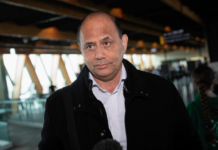
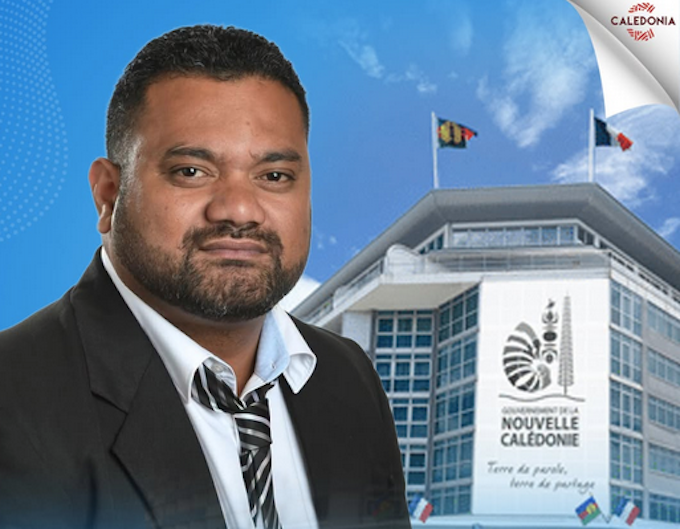
New Caledonia’s President Milakulo Tukumuli on Monday outlined the urgent issues facing the French Pacific territory.
In a special address at New Caledonia’s Congress, Tukumuli, who was elected president of the collegial multiparty government on July 31 following provincial elections, said he gave his government six months to tackle the most pressing issues facing New Caledonia.
After this, he said his government would start to focus on other issues.
He said the most immediate urgencies included necessary efforts to salvage the territory’s pension and health insurance schemes, currently facing a short-term risk of total collapse.
He added, if nothing was done, more than 40,000 New Caledonian pensioners could find themselves pensionless “within a few months”.
New Caledonia’s healthcare system was also under direct threat with a cumulated current deficit to the tune of US$420 million.
Another urgency was to examine the local political system’s expenditures in order to reduce costs.
First ‘fix the canoe’
“The fall is now receding, but recovery has not started yet. When a canoe is taking water, it’s not time to take stock of what is onboard. You begin by fixing the hull and restoring the course,” he told local Congress members as part of his general policy speech.
“I did not request this position just to manage impotency,” he said, stressing that New Caledonia was still recovering from the damage caused by the 2024 civil unrest.
On the crucial nickel mining sector in New Caledonia, where most of the stakeholders and operators are still searching for new investors, Tukumuli said his government would support any “coherent” offer by “solid” and “durably engaged” stakeholders.
But he said New Caledonia’s economy also needed to reduce its long-term dependency on nickel through other economic sectors such as tourism, agriculture, the blue economy or digital-based projects.
“Let’s make sure that a future New Caledonia remembers us as those who have chosen to put it back on its feet”.
He said economic recovery must include “social justice”.
“These are the two sides of the same coin: wealth without justice does not hold. And justice without wealth cannot last”, he told the Congress, saying one of his priorities was to bring New Caledonians a “dignified life”.
Mending the multiethnic social fabric
Being the first New Caledonian government president of Wallisian heritage, he also mentioned the need for all citizens of all ethnic heritages to “feel at home”.
“Our country is made of all these components, the Kanak people, first inhabitants of New Caledonia. But also women and men who came from Europe, Tahiti, Wallis and Futuna, Asia, Vanuatu and elsewhere, and who, generation after generation, have also made this land theirs and know no other one.
“The events of May 2024 have reopened fractures that we knew were there, but preferred not to see.”
He said New Caledonia’s social cohesion cannot be dictated, but “is built also within our institutions, through the words we use and the way we speak to each other”.
Political reactions
Reactions from across the political chessboard were generally positive, including in the pro-independence ranks.
Pro-independence member for Kanaky-NC (mostly consisting of members of Union Calédonienne) Omaira Naisseline said the speech was “responsible”, but that her political group remained “attentive”.
On the pro-France side, Congress members (who have struck a coalition pact with Tukumuli’s Eveil Océanien party), hailed Tukumuli’s “truthful and responsible” roadmap.
“It’s a make or break situation. We’re up against a wall,” Congress member for pro-France Les Loyalistes-Rassemblement told the media after the speech, saying his party would support Tukumuli’s government reform efforts.
Congress President (Speaker) Virginie Ruffenach (pro-France) said the address was “very pragmatic” and “tough”.
Bipartisan delegation in Paris next week
Tukumuli also confirmed he would lead a bipartisan delegation to Paris next week, with the main objective being to renegotiate with the French government the terms of massive loans contracted in the past few years.
This included loans contracted as a result of the covid crisis, and later following the massive damages incurred during the May 2024 unrest, which resulted in 14 deaths, more than 2.2 billion euros (NZ$4.3 billion) in material damage, thousands of jobless and a drop of some 13.5 percent in New Caledonia’s Gross Domestic Product (GDP).
Despite French assistance packages, New Caledonia was still short of over 100 million euros (NZ$196 million) just to finish the 2026 financial year.
The delegation (which will consist of Tukumuli, some of his government members, Congress members and New Caledonia’s two MPs from the French National Assembly) mainly aims at convincing the French government to turn the massive loans into non-refundable grants.
“The loans have avoided total collapse, but they have also generated a debt course that we cannot sustain. Our debt has now reached a level New Caledonia has never seen before”, Tukumuli said on Monday.
Speaking shortly after his election in July, he described the situation as a very real short-term risk of “shutdown”.
“We’re not asking for charity … New Caledonia will not pass 2027 without fresh financial support from the French State,” he said on Monday.
New Caledonia’s Congress has to vote its 2027 budget before the end of 2026.
“This budget will have to be sincere and balanced. It will greatly depend on France’s financial support. What we are proposing is a contract of responsibility with known amounts and reciprocal commitments. New Caledonia will pursue its reforms”.
Even though the delegation’s trip to Paris does not include further negotiations on New Caledonia’s future political status, Tukumuli also called on politicians to remain mobilised in view of future institutional talks with France about the French territory’s future political status.
“Uncertainty about tomorrow does not authorise us to remain motionless today”.
The general feeling among the current majority of New Caledonia’s politicians is that those talks, which have currently stalled earlier this year due to a rejection from the French National Assembly, would be likely to resume after France’s presidential and general elections, starting in April 2027.
This story was first published on