

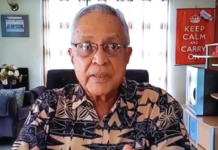


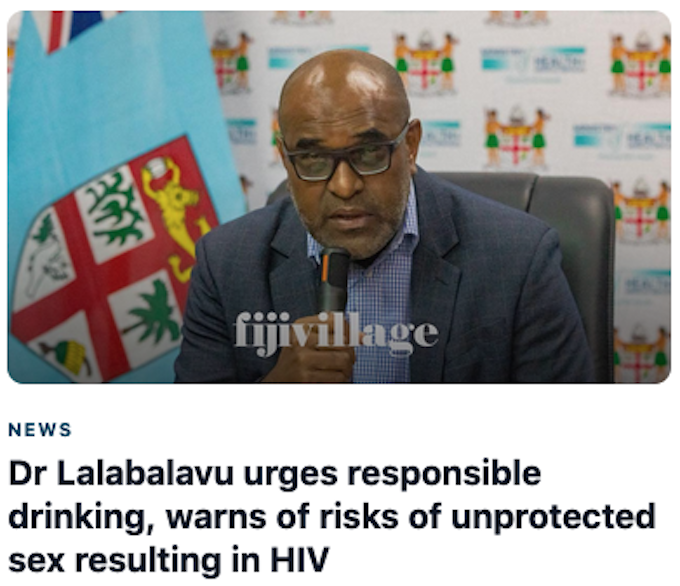
Fiji’s Health Minister Dr Ratu Atonio Lalabalavu has formally declared a national HIV emergency in the country.
In a pre-recorded video press statement on Tuesday, Dr Lalabalavu said the decision was backed by Prime Minister Sitiveni Rabuka and his Cabinet due to the “seriousness of the epidemic”.
The health minister confirmed that the government’s current estimates indicated that one in every 60 adults in Fiji is living with HIV.
- READ MORE: ‘Horrendously high’ number of HIV infections in Fiji babies, says health researcher
- Dr Lalabalavu urges responsible drinking
- Other Fiji HIV reports
“Five years ago, the estimate was one in 1667. In 2024, we recorded 2060 new HIV diagnoses,” he said.
“HIV prevalence among women attending antenatal care reached around two percent. That means one out of 50 pregnant women now has HIV. These figures tell us the response must reach further and follow through more consistently.”
This week, a health researcher told RNZ Checkpoint that a “horrendously high” number of newborns were dying due to HIV-related complications in Fiji.
The NZ government’s SafeTravel website is warning people traveling to Fiji to avoid activities that could increase their risk of infection.
Second-fastest growth in Asia-Pacific
According to the World Health Organisation (WHO), Fiji has the second-fastest-growing HIV epidemic in the Asia-Pacific region behind Papua New Guinea (PNG).
An estimated 9000 Fijians were living with HIV as of March this year, and officials pointed to high-risk drug use contributing to the rapid rise.
Dr Lalabalavu said every diagnosis must lead to care and every person starting treatment needed support to remain on it.
He said authorities would move quickly to introduce new interventions and scale up established services backed by evidence.
“That means expanding testing, treatment, and access to pre-exposure prophylaxis, or PrEP. It also means accelerating the introduction of a formal needle and syringe programme and long-acting injectable prevention.”
He stressed that treatment was central to the government’s response.
“It helps people living with HIV stay well, and when it achieves and maintains an undetectable viral load, it prevents sexual transmission.”
Coordinated implementation
Fiji’s Sexual Reproductive Health and HIV Programme Management Unit is expected to coordinate implementation, working through divisional and sub-divisional health services, and with community partners.
Dr Lalabalavu said Australia, New Zealand, the Global Fund, India, and the United Nations Joint Team on HIV and AIDS, and other partners were supporting the country with its HIV response.
The Fijian government had also proposed the establishment of a parliamentary standing committee on HIV and related matters, he said.
“To anyone who has been diagnosed with HIV, a diagnosis does not take away your future. Effective treatment can help you live a long and healthy life. Keep taking your medicine as prescribed, even when you feel well.
“I call on families, communities, faith leaders, schools, employers, and partners to join in this response, encourage testing, support people to stay in care, and challenge stigma wherever you encounter it.”
This story was first published on