

ANALYSIS: By Laurens Ikinia in Jakarta
As Indonesia marks the 81st anniversary of its independence today — August 17 — the republic has much to celebrate.
Over eight decades, Indonesia has transformed itself from a newly independent archipelago into one of the world’s largest democracies and economies, holding together an extraordinarily diverse nation across thousands of islands.
But anniversaries are not only moments for celebration. They are also moments for reflection.
- READ MORE: Indonesia at 81: Whose sovereignty are we celebrating?
- Indonesia’s magnitude 7.7 quake kills at least 51, displaces thousands
- Other Laurens Ikinia articles
From Papua, Indonesia’s easternmost region, one question deserves particular attention:
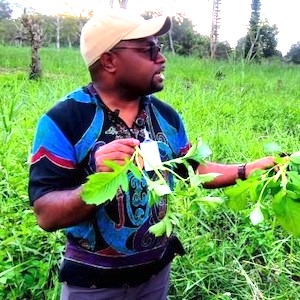
After 81 years of independence, what do development, equality and “Merdeka” (“freedom”) really mean for Indigenous Papuans?
Recent demographic figures make that question increasingly urgent.
Population data from May–June 2026 puts the population across the land of Papua — Indonesia’s six Papuan provinces — at 5,797,499 people. Of these, 2,283,703 are recorded as Orang Asli Papua (OAP), or Indigenous Papuans, in Indonesia’s centralised Population Administration Information System.
That is roughly 39.4 percent of the total population.
This could mean everyone outside that category is non-Papuan. Administrative records may include Indigenous Papuans whose status has not been properly identified. Better verification is essential.
Still, the figures point to a profound demographic transformation. Indonesia, at 81, needs to talk seriously about what that means.
Independence and Indigenous dignity
Indonesia’s independence was founded on a powerful principle: people should live with dignity and have a meaningful say over their future. That principle matters for Indigenous peoples too.
Around the world, Indigenous rights increasingly mean more than formal equality. They include protecting cultures, languages, customary institutions, and ancestral lands, while ensuring meaningful participation in decisions that affect Indigenous communities. Papua belongs in that conversation.
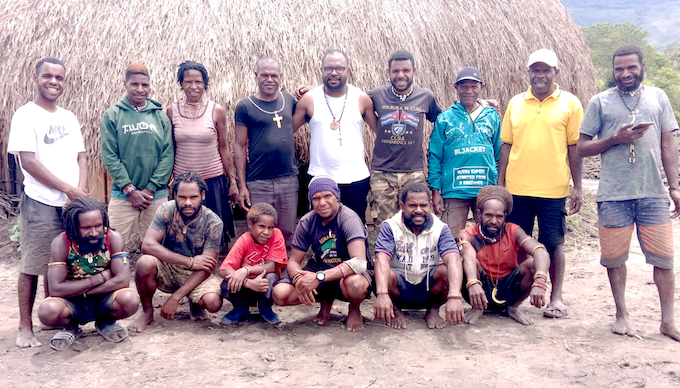
Indigenous Papuans are not simply another category in a population database. They represent hundreds of communities with distinct languages, customary systems, histories and relationships with ancestral territories.
Papua is among the most culturally and linguistically diverse places on Earth.
Protecting that diversity should not be seen as an obstacle to Indonesian nation-building. It should be one of its achievements.
After 81 years, Indonesia should be confident enough to recognise that national unity and Indigenous rights are not contradictory. A strong nation should be able to protect both.
Papua’s quiet demographic transformation
Papua has changed dramatically in recent decades. Roads now connect communities once accessible mainly by air or on foot. Towns have expanded. New provinces and districts have emerged. Airports, ports, telecommunications, mining, plantations and government institutions have transformed the economic landscape.
Alongside this development has come another powerful force: internal migration from other parts of Indonesia.
Migration itself is not the enemy. Many migrants have lived in Papua for decades. Some were born there. They teach in schools, work in hospitals, operate businesses, serve in government and contribute to local economies. The real issue is not whether non-Papuans should live in Papua.
The question is whether rapid demographic change, combined with unequal access to education, capital and economic networks, could gradually weaken Indigenous Papuans’ ability to shape the economic and social future of their ancestral homeland.
Across Papua’s growing urban centres, economic competition is intensifying. Land values are rising, businesses are expanding, and new opportunities are emerging. But people do not enter that competition from the same starting line.
A young Indigenous entrepreneur from Papua’s highlands may compete with someone raised with better schools, stronger business networks, easier access to banking and greater family capital. Calling that competition “equal” does not make the starting conditions equal.
What has Special Autonomy delivered?
Indonesia has already recognised that Papua requires a distinctive policy approach. That recognition lies at the heart of Special Autonomy, or Otonomi Khusus Papua.
Special Autonomy was intended, among other things, to give Papua greater authority and resources while strengthening the protection and empowerment of Indigenous Papuans.
More than two decades later, however, the important question is no longer simply how much money has been allocated. It is what that money has achieved.
How many Indigenous Papuan doctors, engineers, teachers, academics and entrepreneurs have been produced? How many OAP-owned companies have become competitive businesses? How many Indigenous Papuans hold senior positions in industries operating in their ancestral territories?
And how many children in remote Papuan communities now receive an education comparable to children elsewhere in Indonesia? These should be among the measures defining the next generation of Special Autonomy.
Papua does not simply need more government spending. It needs measurable Indigenous empowerment.
Land is more than an economic asset
Demographic change becomes particularly sensitive when it intersects with Indigenous land. For many Papuan communities, land is not simply property. It is identity. Mountains, forests, rivers and valleys carry genealogical, spiritual and historical relationships stretching across generations.
Modern development, however, also gives land commercial value. A road can turn customary territory into valuable real estate. An administrative centre creates demand for housing. Plantations transform forests into economic assets. Mining can turn mountains into resources worth billions.
In these situations, Indigenous communities may find themselves negotiating with institutions and corporations possessing far greater financial, legal and political resources. That imbalance cannot be ignored.
Indigenous rights should therefore become a central pillar of Papua’s development model, rather than something discussed only after disputes emerge.
Customary communities need stronger legal protection, transparent consultation and meaningful participation in decisions affecting their territories. Development should happen with Indigenous Papuans, not merely around them.
Better data, better policy
The 2026 figures expose another challenge: Indonesia needs more transparent and credible Indigenous demographic data.
The figure of 2.28 million registered OAP should be the beginning of the conversation, not its conclusion. A census is needed.
Indonesia should be able to answer basic questions: How many OAP live in each province and district? What are their education and health outcomes? How many attend university or own businesses? How much customary land remains under Indigenous control? And how is internal migration changing Papua’s demographic landscape?
Without reliable data, policy risks becoming guesswork. Special Autonomy cannot be properly evaluated if the government from the central to regional level cannot measure whether Indigenous Papuans themselves are progressing.
Education is the real battleground
Ultimately, Papua’s future will not be determined by population numbers alone. It will be determined by human capacity.
A population can be numerically smaller yet remain culturally, economically and politically strong when its people are educated, healthy and economically productive. That is why education should become the centrepiece of Indonesia’s next Papua strategy.
Consider a Papuan child born today in Puncak, Intan Jaya, Yahukimo, Nduga or Pegunungan Bintang districts. One day, that child may compete for a university place or professional job with students from Jakarta, Surabaya, Makassar or Yogyakarta.
But that competition begins long before the university entrance examination. It begins with maternal nutrition and early childhood development. It continues through primary education, teacher quality, electricity, internet access, books, laboratories and healthcare.
If those foundations are radically unequal, the final competition cannot reasonably be called equal.
The most powerful affirmative-action policy Indonesia can pursue is therefore not simply reserving positions for Indigenous Papuans. It is preparing Papuans so well that they can compete for those positions with confidence.
Papua does not need permanent dependency. Papua needs capacity.
A new meaning of Merdeka
Every August 17, the word “Merdeka” echoes across Indonesia.
It means freedom. But 81 years after independence, perhaps freedom should also be measured by whether people have the capacity to shape their own future.
For Indigenous Papuans, Merdeka should mean that a child born in a remote village has a realistic pathway to become a doctor, engineer, professor, entrepreneur or national leader.
It should mean communities can participate in development without losing their ancestral land. It should mean Papuan languages and cultures survive modernisation rather than becoming its casualties.
And it should mean demographic change does not translate into cultural, economic or political marginalisation.
This is not an argument against migration, nor a call to divide Papuans from other Indonesians. It is a call for Indonesia to make the promise of independence meaningful for one of its most distinctive Indigenous populations.
The demographic figures should not create fear. They should create urgency.
Indonesia still has an opportunity to build a model in Papua where economic growth, national integration and Indigenous rights reinforce rather than undermine one another.
That means better demographic data, stronger protection of customary land, investment in education and healthcare, affirmative economic opportunities, accountable Special Autonomy institutions and meaningful OAP participation in decisions affecting Papua.
Ultimately, Indonesia’s Papua policy should be judged by a simple question: Are Indigenous Papuans becoming stronger or weaker in their own homeland?
By Indonesia’s centenary in 2045, Papua will look very different. Its cities will be larger, its infrastructure more extensive and its economy more closely connected to Indonesia and the wider Asia-Pacific.
But infrastructure alone will not define success.
The real test will be whether Indigenous Papuans stand at the centre of that transformation — educated, healthy, economically competitive, culturally confident and capable of shaping their communities’ future.
A nation can build roads, airports, ports and cities. The greater achievement is building a country where development does not require Indigenous peoples to disappear.
Eighty-one years after independence, Indonesia has an opportunity to prove that Papua can modernise without losing Papuans — and that “Merdeka” can mean progress without erasure.
Laurens Ikinia is a Papuan lecturer and researcher at the Institute of Pacific Studies, Indonesian Christian University, Jakarta. He is also an honorary member of the Asia Pacific Media Network (APMN) in Aotearoa New Zealand, and a contributor to Asia Pacific Report.