

By Patrick Decloitre, RNZ Pacific correspondent French Pacific desk
The French National Assembly has voted to allow “native” voters to take part in New Caledonia’s local provincial elections scheduled for next month.
However, the French parliament’s Lower House also refused to include their “spouses”, just like the Senate did two days earlier.
Amid debates in Paris on Wednesday evening (Thursday NZT), the vote to include people who were born in New Caledonia since 1998 came at an absolute majority of 386 in favour and 127 against.
- READ MORE: French Senate endorses change to New Caledonia’s ‘frozen’ electoral roll
- Other Kanaky New Caledonia reports
But the vote on this “organic bill”, only weeks ahead of crucial elections to be held on in the French Pacific territory, is still subject to the verdict of the French Constitutional Council.
French Prime Minister Sébastien Lecornu, who took part in the heated debates, said the main purposes of the partial “unfreezing” of New Caledonia’s electoral restrictions was to rectify “growing distortions” in New Caledonia’s electoral roll.
He said the restrictions were imposed as part of the implementation of the autonomy Nouméa Accord signed in 1998 (since referred to as the “frozen” electoral roll).
But since 1998, due to demographic changes, the proportion of “native” people (from all ethnic groups) has grown from seven percent to 17 percent — an estimated 10,500 people.
‘Small step’ but ‘major’
Lecornu reacted to the vote to include “natives”, saying even though it could be regarded as a “small step”, it was a “major step forward” and a “victory for good sense”.
But the French Lower House’s vote failed to endorse another amendment regarding the “spouses” of qualified voters and whether they could also be included in the “special electoral roll” (specifically designed for provincial elections).
The vote on this specific topic was one vote short (164 against and 163 in favour).
The “spouses” category includes about 1700 people who are married to qualified voters — either by legal marriage or by way of a civil union pact (what the French civil status refers to as PACS) for a minimum period of five years.
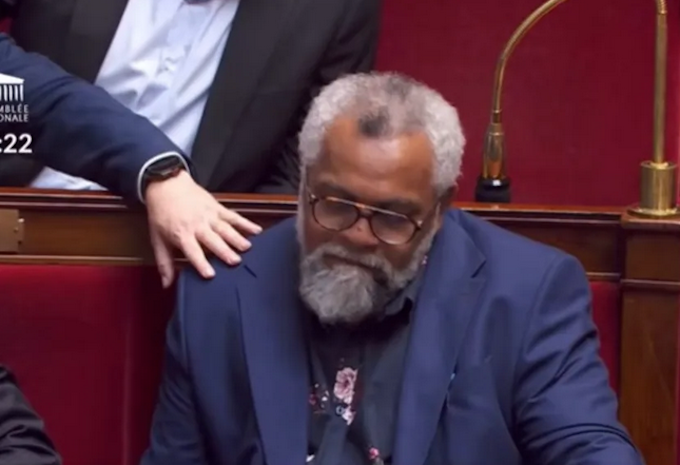
Pro-independence FLNKS MP Emmanuel Tjibaou, during debates, repeated that New Caledonia’s electoral roll could not be modified “without the agreement of the colonised people” (the indigenous Kanak population) and that a prior “consensus on a comprehensive agreement” was required.
Talks in view of such a comprehensive agreement were mooted by Lecornu, after the crucial elections to be held on 28 June 2026.
The French PM also promised that a comprehensive agreement on New Caledonia’s political future would be finalised “by the end of this year”.
Tjibaou assurance
Tjibaou, during debates, assured that his pro-independence camp remained engaged in view of the announced post-elections discussions, sometime in July.
However, for the pro-France side (parties that wish New Caledonia to remain a part of France), the inclusion of natives but not of the “spouses” was mainly regarded as “disappointing” and “insufficient”.
An emotional pro-France MP for New Caledonia, Nicolas Metzdorf (Les Loyalistes), during debates on Wednesday, said even though he was “very happy for the natives of New Caledonia” — “for us, this is far from being enough”.
“You are the shame of the Republic, you are the shame of New Caledonia”, he lashed out at French MPs.
He warned that since the “spouses” were still denied the right to vote at those local elections, his party would not take part in the announced talks with the French government after the poll and that they would now wait until the next French Presidential elections in 2027.
“We have nothing left to expect from this government”, he told the House.
Local reactions
New Caledonia’s Senator Georges Naturel (Les Républicains, rightwing), who was the mover of the motion in the French Parliament, hailed the lawmakers’ vote (both in the Senate and the National Assembly), saying the inclusion of “natives” was “a gesture of justice and democratic consistency”.
However, he remained cautious on the upcoming verdict from France’s Constitutional Council, saying the legal framework was “narrow”.
One of the leaders of moderate pro-independence group “UNI” (Union Nationale pour l’Indépendance, which split from FLNKS in 2024), Victor Tutugoro, said this was a “wise decision” on the part of French MPs, because it was in keeping with the spirit of the 1998 Nouméa Accord.
Speaking on behalf of the moderate Wallisian-based Éveil Océanien party, Milakulo Tukumuli said he was rather satisfied with the outcome of the vote, because “it is totally in keeping with our position”.
The very issue of modifications to New Caledonia’s conditions of eligibility for voters was perceived as one of the main triggering factors that led to riots in May 2024, causing 14 deaths and more than 2 billion euros (NZ$3.9 billion) in material damages, a drop of 13.5 percent in the local GDP, as well as thousands of unemployed due to the destruction of hundreds of businesses.
Due to the riots, New Caledonia’s provincial elections have been postponed three times since 2024.
Those elections are crucial in the sense that they will choose new members for New Caledonia’s three provincial assembles (North, South and the Loyalty outer islands) and then, proportionally, will determine the makeup of the territorial Congress and its “collegial” government, as well as its president.
This article is republished under a community partnership agreement with RNZ.