


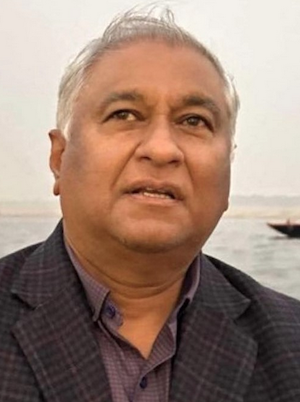
ANALYSIS: By Dr Satyendra Prasad
Internationally, we are marking the 2025 Human Rights Day at a time of extraordinary retreat from human rights protection across the World. Every human right, every breach of human right and every advance in the protection of human rights must matter equally to us.
The frameworks for human rights protection are well established internationally reflecting the genesis of the international system in the horrors of the Second World War. Social, cultural, political, women’s, indigenous, children’s, and all fundamental human rights are well protected in international laws that have evolved since then.
What may seem like a paralysis in protection of fundamental human rights internationally today does not arise from the absence of protections in international law but from the fractures that characterise the international interstate system in a phase of severe disruption.
- READ MORE: How climate change is threatening human rights
- Climate change demands a step up on human rights protection
The significant advances in protection of human rights internationally arose from a rare postwar geopolitical consensus. That global consensus is dead.
Though the UN Charter and the Universal Declaration of Human Rights have their origins in this context, it was not until 2008 that the UN made an explicit resolution on human rights and climate change stating that climate change posed a real and substantial threat to the full enjoyment of human rights.
The Pacific’s human rights story
When the Blue Pacific discusses human rights impacts of climate change, it is shaped by our lived realities. The fundamental right to life in the Pacific is persistently harmed by heat stress.
It is estimated that more than 1200 deaths annually are now attributed to heat stress.
The fundamental right to health is eroded by growing illnesses and diseases arising from rising temperatures. Across the Pacific, well in excess of 1000 deaths are already attributed to climate change related illnesses annually.
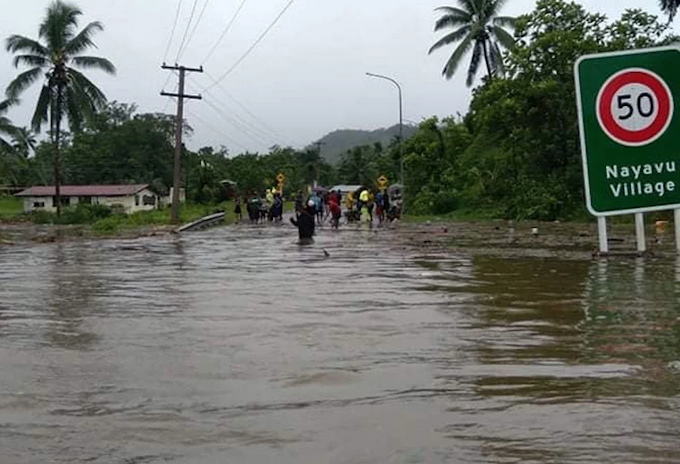
The fundamental right to water faces worsening pressures arising from sea water intrusion into ground water, more frequent and prolonged droughts and sewage contamination of water systems as a result of floodings.
The fundamental right to food is persistently harmed by rising surface and ocean temperatures and experienced through failed crops, subsistence farms destroyed by winds and rains, collapse of coral reef systems and with that oceanic foods.
Indigenous people’s rights are similarly persistently harmed as communities across Melanesia undertake climate change induced migration without corresponding transfer of land and other social and cultural rights.
In Tuvalu and atoll states these are likely to lead to more unsettling outcomes as their small and culturally compact communities get thinly dispersed across larger countries such as New Zealand, Australia and Fiji.
Policy choices are needed to respond to worsening human rights protection that are a consequence of climate change.
Climate change and human rights in Pacific education
The right to education is one of foundational rights in international law. Having access to continuous, safe and quality education is the foundation for the enjoyment of this right.
Every time a student misses school because the river that she crosses is flooded or at risk of flooding, that student is denied the full enjoyment of this right. Learning days lost are increasing in Fiji and Melanesia generally. This has lifelong consequences.
The more painful reality is that learning loss is felt so unevenly. It is often people in our poorest households who stay in most flood-prone areas.
In Fiji’s case it is also the case too many I-Taukei settlements/villages are in flood prone areas or in areas more likely to be cut off from school access roads and bridges.
The average day time surface temperatures has increased between 1-3 degrees Celsius across the Pacific within a space of four decades. It may be much higher in schools in urban areas. The safe classroom temperatures for children are 24-26 degrees Celsius at the upper end.
In many schools, classroom temperatures are well above 30C for days on end. The health impacts of prolonged exposure to these temperature are seen through general weaknesses, fainting, headaches and fatigue.
I know of no school that systematically monitors classroom temperatures. I have heard of schools closing down for a day or two when the risks of flooding are high. I have not heard of schools being closed when temperatures are in the mid-30s during periods of high humidity.
Quite shockingly, school building and major repairs are still being carried out in so many schools in exactly the same way as they were done 4-5 decades ago.
The human rights context in education is profoundly gendered. Some of these simply arise from the fact that decisions are made by male leaders.
When reconstruction of several schools in Vanua Levu happened a few years back, boys’ and girls’ hostels needed to be rebuilt following one of the recent cyclones.
The boys’ hostels were reconstructed within a year of two back-to-back cyclones. A 100 percent of the hostel boys were back in school.
The girl’s hostel took another year to be up and running. Only one girl returned to school from those who were resident in hostels during the cyclone year.
A whole generation of girls in the middle to high schools from one of the most disadvantages regions of our country and from some of the most economically disadvantaged communities had simply dropped out of school.
This is a story that repeats itself in so many ways each across the Pacific.
Health, human rights and climate change
As with education, universal access to the sufficient health care constitutes yet another core human right.
One of the worst and least understood aspects of the health and climate change interface in the Pacific is its impacts on mental health.
Following extreme weather events — mental health consequences linger for long periods and most intensely among young children. When winds pick up ever so slightly, many children in schools get frightened — scared — quietly reliving their trauma in full view of teachers who are poorly trained to understand what is happening.
But the health consequences of climate change are far broader. Influenza, dengue including in off seasons, leptospirosis are profoundly impacting our communities. Loss of concentration, performance and worsening learning outcomes are some of these harsh trendlines inside classrooms.
Growing food insecurity
The right to food is a core part of our global human rights architecture. A few years back I had the great pleasure of visiting several schools in Vanua Levu.
I have taught in Fiji’s high schools. I know what I am talking about in a deeply personal way. Nothing prepared me for this.
The numbers/percentages of children who came to schools without lunch was just shocking. Nearly a third of students in one the classes that I visited came to school without lunch that morning.
Rates of stunting rates of children in primary schools (in peri and urban areas) in Fiji can be as high as 10 percent. Stunting rates are much higher in PNG at nearly 50 percent — one of the highest in the world.
Nutritional deprivation leads to delayed cognitive development and over time harms performance. Damage from stunting has life long and intergenerational consequences.
How does climate change feature in this?
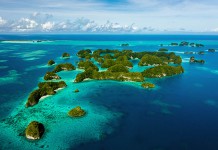
The most obvious one is that global warming impacts on our coral reef systems. There is a near collapse of oceanic foods across so many Pacific’s coastal communities.
Equally on the high lands of PNG, delayed precipitation, prolonged rains and droughts harm and overtime irreversibly erode food security. This has widespread consequences.
Food insecurity, gender violence and inter-community conflict are a growing part of the Blue Pacific’s climate story.
Human rights, climate change and cultural and political rights
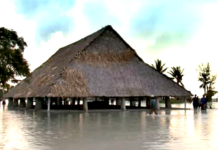
Nowhere does climate change demonstrate the scale of its destructiveness as in our closest atoll state neighbour.
Tuvalu may be uninhabitable within 4-6 decades even with the adaptation measures underway. It is forced to contemplate the real prospects of near total loss of land. The state has taken protective measures by amending its constitution to preserve sovereignty under any scenario.
Fiji and fellow PIF members have undertaken to respect its sovereignty under any climate scenario.
Compared with PNG, Solomon Islands and Fiji where communities are being relocated, the human rights and climate story of Tuvalu is of a different order altogether. Land rights, cultural rights are rooted and grounded. They do not move when communities are relocated. Relocations are deeply disrespectful of all rights — including cultural, social rights.
It is indeed possible that its whole populations in time may come to be dispersed outside of Tuvalu — in Australia through the Falepili Treaty, in Fiji and in New Zealand. Small and dispersed communities will over time lose their language. They are over time likely to lose many elements of their Tuvaluan identity.
Indigenous and cultural rights are rooted to land and oceans in such deep ways. These rights are recognised as fundamental human rights internationally. Global warming and rising seas treat these rights with callous disregard.
From a 1.5 to 2.8C world
The Blue Pacific has to fight the battle of our lives to return the planet to a 1.5C pathway. No one will do this for us. All our economic forecasting today are based on 1.5C temperature increase. But the reality is that we are on course for a 2.8C or perhaps even a post 3.0C world.
The consequences of a 3.0C future on human rights of people across the Pacific Islands are unimaginable. For a start, most of the existing infrastructure, school buildings , health centres, data centers are simply not built to withstand 450 km/h winds.
Most of the Pacific’s towns and settlements are coastal. Our entire tourism infrastructure is barely a few metres above sea level. In Melanesia alone there are more than 600 schools that need to be relocated and/or rebuilt.
Several hundred health centres need to be moved. These are estimates based on 1.5C — not twice that. The near total collapse of coastal fisheries is almost a foregone conclusion at anywhere above 2.0C. The silliest thing we can do as a region and as a people is to not prepare for a 3.0C world.
Shaping our story of hope
On the 2025 Human Rights Day, I have reflected on the broad and deep impacts on human rights that directly result from climate change. Ours is a story of hope.
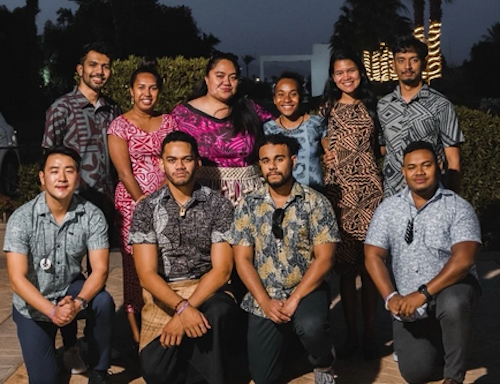
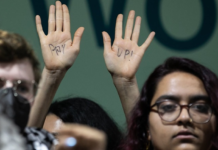
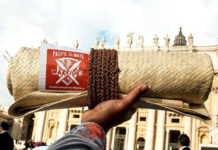
On this day, then let me celebrate the extraordinary leadership shown by Pacific’s students who took the world to court — to the International Court of Justice (ICJ) and won.
We owe such an extraordinary gratitude to Fiji’s Vishal Prasad, Cynthia Houniuhi, Solomon Yeo from Solomon Islands and that small group of university students at USP who decided to take on the world. We celebrate Vanuatu’s leadership on all our behalf. Collective action matters.
We make a difference as individuals. We make a difference as a people and as large ocean states. I urge that we deepen our shared understanding of the unfolding universe of elevated human rights vulnerabilities across the Pacific.
Sharing our stories, deepening our understanding of interlinkages between human rights and global warming and beginning honest conversations about things taboo are foundational starting points.
In universities, this may mean adding climate change and human rights legal studies so that graduates leave with a firmer understanding of the world they will enter into.
At medical schools, this means integrating climate change into how human health is studied and researched.
In social science schools, that means advancing our understanding of the rapid evolution of kinship, leadership and culture in traditional Fijian and Pacific societies in a climate changed context.
In communications and journalism programmes, this may mean preparing students to communicate climate crisis with humility, sensitivity and empathy.
As responsible employers, we may be able to lead by ensuring that human rights protection arising from climate change are as mainframed as is possible. Being able to provide the level of sociopsychological support to students and staff bearing the silent scars of slow onset or climate catastrophes would be another great start.
This may include, as well, the simplest of things such as allowing paid compassionate leave for staff to recover from climate change related extreme weather events. In the longer term, the employment laws of Pacific Island states will need to catch up.
I have advised many Pacific island countries to take a hard look at even their school calendar. Few schools measure class room temperatures today.
Our colonial legacy has shaped the school year. We today subject our students to their final examinations when the temperatures inside class rooms are the highest. We today pressure students to prepare for their exams in the months when the chances of catastrophic events are the highest and the chances of illness that are climate change induced are the highest.
A school calendar that is climate informed and that protects human rights in the education context is more likely to commence the school year in September (third term) and conclude exams by August (end of second term).
All of these things are within our gift. We do not need international conferences or even international assistance to do all of these as the changes needed are so simple and so basic.
Building blocs for advancing human rights in a climate changed world:
- First is that individual and communities need to know how their fundamental rights are impacted by climate change. This is a task for all of us — not governments alone.
- Across the region, so many laws and legislative frameworks need to be revised to reflect how climate change and human rights play out. How many hours should an agricultural worker or road construction worker be working when temperatures are higher than 1.5C.
- For employers and service providers, what are the human rights obligations in a climate changed context? What does the waiting room in a health care facility look like in a 1.5C temperature increase and in a 3.0 degree world? They surely cannot be the same.
- National human rights and legal settings need to pay systematic attention to human rights and climate change. This means ensuring that national human rights agencies and courts build up their capabilities to provide the necessary jurisprudence; and our citizens both supported and empowered to approach courts and relevant agencies.
- Internationally, the Pacific Island states including Pacific Islands Forum (PIF) are well advised to ramp up their presence internationally. The next decade must be the decade when the region pushes the boundaries of international law. The decade following that may just be too late.
A Pacific Pre-COP31
I am delighted to have been invited to deliver my remarks so soon after COP30 and well in time for reflections for Pacific’s preparations for Pre-COP31. This climate conference to be held in the Pacific next year will be a great opportunity to bring a consolidated understanding of how fundamental human rights are being harmed by runaway climate change.
Shape this well — together, respectfully and with humility. We can present our agenda for advancing human rights protection in the Pacific powerfully at this Pre-COP.
As a region, we need to begin to win the argument about climate change in the theatres of international public opinion. Lobbyists and interests groups — including much of the global mainstream media — so wedded to petro interests appear to be winning.
We need to tell our stories with clarity and with impact. We need to back that with strategic bargains in all our international relations. A Pre-COP in the Pacific gives us a real chance of doing so.
Thank you for marking the 2025 International Human Rights Day in this way.
This speech about climate change and human rights was delivered by Dr Satyendra Prasad, the climate lead at Abt Global and Fiji’s former ambassador to the United Nations, during the 2025 Human Rights Day on December 10 at the University of Fiji. It is republished from Wansolwara News as part of Asia Pacific Report’s collaboration with the University of the South Pacific Journalism Programme.