

By Kaya Selby of RNZ Pacific
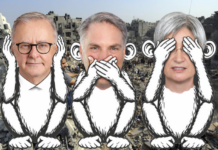
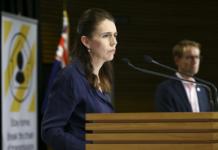
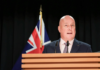
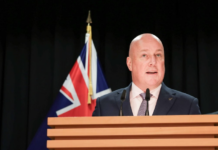
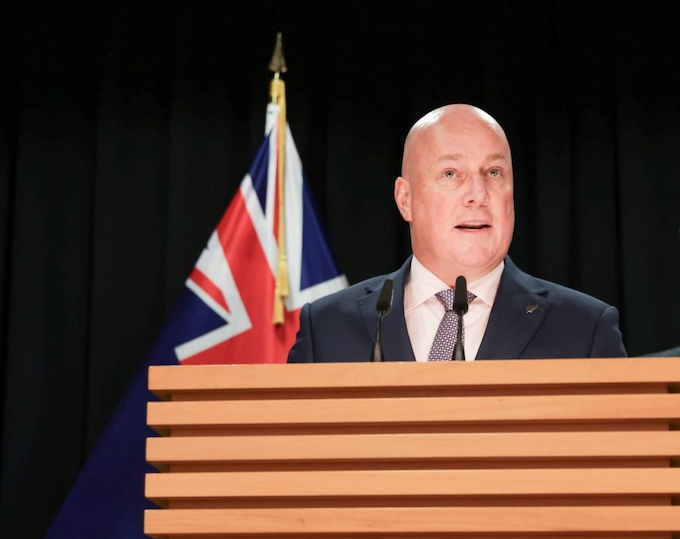
New Zealand Prime Minister Christopher Luxon has “serious questions to answer” over Israel becoming a partner of the region’s main political decision-making institution, Labour’s foreign affairs spokesperson says.
Israel has joined the Pacific Islands Forum (PIF) as a development partner, the Israeli Foreign Ministry announced in a statement on Wednesday.
A number of Pacific governments have been forging closer ties with Israel’s government at the same time that its standing in the international community has dropped to a new low.
- READ MORE: Israel joins Pacific Islands Forum as development partner
- Other Israel and the Pacific reports
The Israeli government has been widely accused of violating international law with its devastating military attack on Gaza and attacks on four other Middle Eastern countries over the past two years.
Luxon stated earlier this month that his Israel counterpart Benjamin Netanyahu would be arrested if he came to New Zealand, after the International Criminal Court’s recent decision to issue arrest warrants for Netanyahu and others in his cabinet.
He said Israel’s entry to the PIF ecosystem was ultimately a decision for the Forum, but noted its partnership status would be “lower tier”.
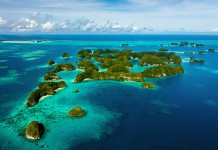
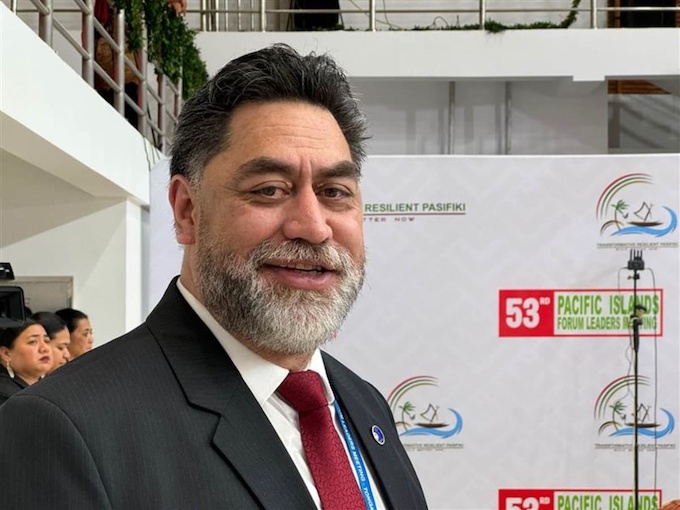
The New Zealand leader attended the meeting in Palau last month when PIF leaders decided to recognise Israel as a new partner.
‘Warm Pacific welcome’
ACT leader David Seymour extended “a warm Pacific welcome” to Israel after it was accepted as a partner state.
“Another democratic country in the Pacific Islands Forum is a good thing — possibly a bit geographically challenged. But then we’ve had Britain try and join the Trans-Pacific Partnership, so it seems geography is no barrier these days.”
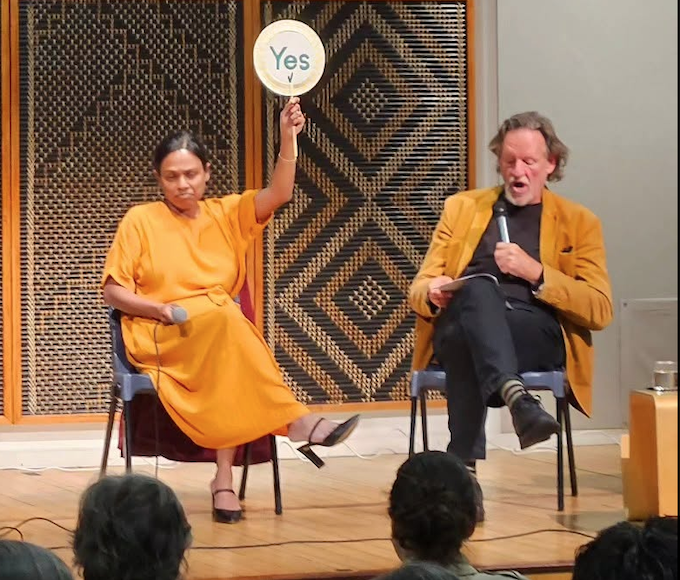
However, Labour’s foreign affairs spokesperson Vanushi Walters said if her party were in government, it would have opposed Israel’s inclusion in the PIF.
“Christopher Luxon has said that he would arrest Israeli Prime Minister Benjamin Netanyahu if he came to New Zealand,” she said.
“He has serious questions to answer on how this situation has come about and what steps New Zealand took to object.”
New Zealand has issued a travel ban targeting some Israeli leaders. But in terms of who from Israel would be attending the PIF summit in New Zealand next year, Luxon said it was more on an official level, rather than leader level.
Tel Aviv has stepped up its diplomatic focus on the Pacific over the last few years, gaining support from a number of Pacific countries in the process.
With its new PIF status, Israel will be obliged to engage actively with the region on development priorities in the areas such as water management, desalination, agriculture and climate change adaptation.
“Israel will participate in the Forum’s Sectoral Partnership Stream, enabling focused cooperation in areas of mutual interest,” the Israeli Foreign Ministry said.
It also referred to a more wide-ranging agreement between Israel and the PIF that would set out key goals, and a mechanism to measure their progress.
The PIF Secretariat itself has not issued a formal statement.
In recent times, three Pacific countries have announced they would open embassies in Jerusalem — Papua New Guinea, Fiji and Naoero, and other Pacific nations are considering following suit.
They are among just a handful of countries that recognise Jerusalem as the capital of Israel, in spite of the United Nations Security Council Resolution 478 and subsequent international consensus that foreign embassies in Jerusalem are considered a violation of international law.
Samoan government released a statement last night highlighting Prime Minister La’aulialemalietoa (La’auli) Leuatea Schmidt’s reflections from his past visit. La’auli wants to open the embassy as soon as possible and they are looking forward to it.
“The Prime Minister spoke about some of his greatest memories in Israel and one is when he was walking through the old city and seeing an abundance of fruits used to make juice which he said was amazing,” the Samoan government said in a statement on Tuesday night.
A play for recognition
Sione Tekiteki, a former PIF advisor and now law lecturer at Auckland University of Technology (AUT), told RNZ’s Midday Report that Israel was seeking to use the Pacific as a means of legitimising itself — using the affection it has won in the region.
“They are obviously tied. The strategic aspect here is gaining formal recognition through the Forum, which elevates it’s status beyond bilateral relationships,” he said.
In June, Fiji hammered out an agreement for Israel to open an embassy in Suva, which would service nine Pacific countries.
Foreign Minister Gideon Sa’ar, who is subject to multiple complaints at the ICC in relation to Gaza, landed in Fiji last June, and was welcomed by Prime Minister Sitiveni Rabuka — who himself was deployed in the Golan Heights in his military days.
Rabuka, while sharing a kava bowl with Sa’ar, told him “we will always be with you”.
Most recently, Naoero opened a Jerusalem embassy within days of withdrawing from the ICC. Its government boasted about its record of voting in tow with Israel at the United Nations.
Most recently, Naoero opened a Jerusalem embassy within days of withdrawing from the ICC, a move applauded by the Trump administration.
The Naoero government press office has not responded to questions on whether this decision had to do with active ICC charges laid against Israeli leaders.
How will Israel participate in the Pacific?
Tekiteki said in the decision to grant membership — made in Palau at last month’s PIF leaders summit — partners were considered in their totality, “as opposed to having specific conversations around specific countries”.
The nature of Israel’s diplomacy in the region has been described by Israel officials as a “sharing of expertise”, rather than a traditional aid relationship.
Israeli firms have established themselves in several Pacific countries, and Pacific nationals are provided opportunities to travel to Israel to study and work.
Israeli Deputy Foreign Minister Sharren Haskel told RNZ Pacific last year that they do not measure their friendship with the region by the amount spend on aid — which is relatively minor.
“Israel is not a major economical power that has a lot of money to spend, especially during times of war,” she said, adding that Israel had no plans to increase support in monetary terms.
“It’s not about the amount of money that we can invest but the quality and the things and how it affects the people.”
Haskel visited Papua New Guinea and Fiji a year ago. Her country agreed to provide for cybersecurity services in Fiji, with representatives from defence contractor Elbit, also part of her visiting delegation.
On the same trip, Haskel suggested that Fiji could deploy army personnel to the Gaza strip, where it is currently carrying out a devastating long-term military campaign against Palestinians.
This came before a formal request by the United States to Fiji in December for troops to join a UN-authorised International Stabilisation Force in Gaza — which Fiji has given no formal response to.
As for PIF itself, Tekieki said New Zealand, as next year’s hosts, would have to make some hard decisions around Israel’s participation.
“Israel is a sectoral partner … it is still unclear whether, moving forward, sectoral partners would be invited into the PIF leaders meeting, or whether those dialogues would be held at ministerial level.”
This story was first published on