

By Prishanta Sharma in Savusavu
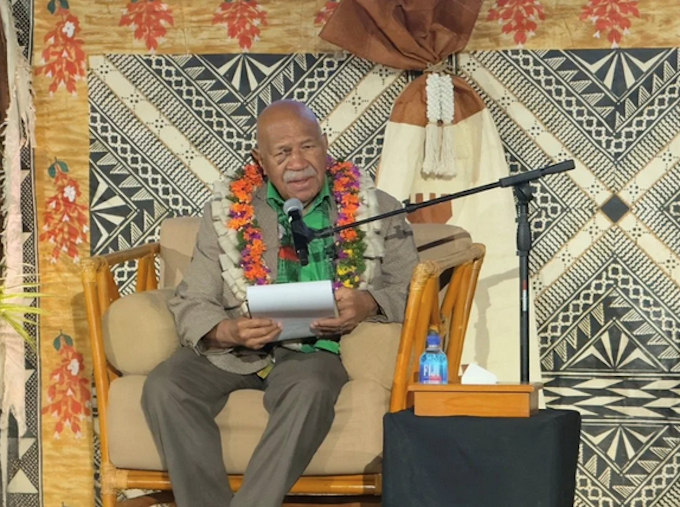
Reaching communities beyond Pacific capitals must remain at the heart of journalism as technology creates new ways for the region to share its stories, says Fiji Prime Minister Sitiveni Rabuka.
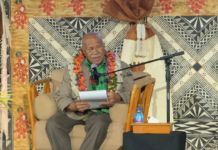
Opening the 8th Pacific Media Summit in Savusavu, Rabuka said the vast distances separating Pacific communities should not prevent people from being informed, heard and connected.
The summit theme, “Reaching the Remote: Media and Digital Innovation for a Connected Blue Pacific,” reflected a challenge that was bigger than technology.
“Connectivity is more than just technological issue. It is a development issue. It is an inclusion issue. It is a resilient issue,” Rabuka said.
For communities far from major centres, he said access to reliable information could affect their ability to access services, participate in national discussions and respond during emergencies.
Rabuka said this was particularly important during cyclones, floods and other disasters, when accurate and timely information could save lives.
He urged Pacific journalists to go beyond reporting from capital cities and document what was happening in communities across the region.
“Reaching the remote means reaching the people,” he said.
Pacific responsibility
Rabuka said Pacific reporting also had a responsibility to take the region’s own experiences to wider audiences.
He pointed to issues including climate change, oceans, fisheries, natural resources, poverty, inequality, economic pressures and transnational crime as matters that needed to be reported through the experiences of Pacific communities.
“These are not simply statistics. They are stories about people, families, communities and livelihoods,” he said.
He said the Pacific should not be defined only by outside reporting.
“The Pacific should not only be spoken about. The Pacific must also speak for itself,” Rabuka said.
While technology could expand the reach of Pacific journalism, Rabuka said it also created greater responsibility for journalists to maintain professional standards.
He warned that information could reach thousands of people before it had been properly checked, while artificial intelligence, synthetic content and digital manipulation were creating new challenges for newsrooms.
Stronger media literacy
Rabuka said journalists needed to verify information and citizens needed stronger media literacy to assess what they see and hear.
“We need citizens who can question what they see and hear. We need journalists who can verify information and we need newsrooms that can adapt to new technologies while protecting professional standards,” he said.
He also linked responsible journalism to the role of the media in a democracy, saying journalists must continue to question institutions, investigate issues and hold those in positions of power accountable.
Rabuka said disagreement between governments and the media was normal in a democracy and should not prevent dialogue.
Instead, he said, differences should encourage better questions, better information and better decisions.
The Prime Minister also announced the establishment of the Pacific Centre for Communications and Journalism, through a partnership between Fiji National University and the Fijian Media Association (FIMA).
The centre will provide a platform for professional training, research, regional cooperation and the development of future Pacific media leaders, with a focus on digital journalism, media literacy and the responsible use of emerging technologies.
Rabuka said strengthening Pacific journalism would require cooperation between governments, media organisations, civil society, academia, development partners and stronger regional media networks.
He said the goal should be a media sector capable of adapting to technological change while retaining the professional standards that underpin public trust.
Prishanta Sharma is a third-year student journalist at The University of the South Pacific (USP), Laucala Campus. She was sponsored by PINA and the UN Office on Drugs and Crime (UNODC) to participate in a pre-summit workshop in Savusavu.