




The president of the Pacific Islands News Association (PINA) says journalists need greater protection when reporting on organised crime networks.
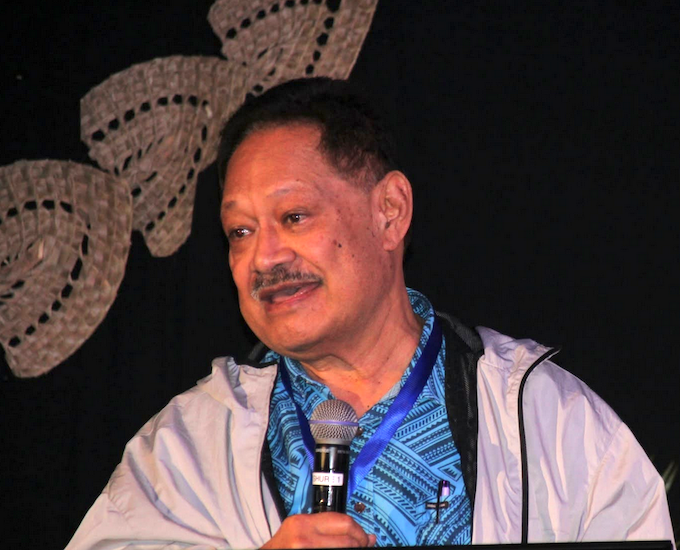
Speaking at a panel discussion on organised crime in Savusavu, Kalafi Moala said journalists investigating drug trafficking face increasing threats to their personal safety.
Moala, who is also RNZ Pacific correspondent in Tonga, recalled an incident involving a journalist from Tonga’s Kele’a newspaper who reported on Tongan gangs.
- READ MORE: UN adviser tells Pacific journalists to probe ‘accountability’ in climate change, disaster funding
- Other PINA reports
A gang member went to the newspaper’s office the following day and threatened the journalist.
Moala pointed out that in Tonga alone, organised crime has become more sophisticated.
He said as crime grows, continued reporting and scrutiny are needed, but journalists must be protected from threats and violence while doing their job.
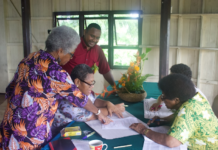
Pacific media professionals from across the region are in Fiji for this year’s PINA Media Summit. The summit, which officially began today, will shine a spotlight on issues facing many Pacific newsroom across the region.
Moala told RNZ Pacific he hoped the summit will address some of the fundamental issues facing journalism in the region.
“In terms of storytelling, in terms of engagement with government and other powers, how do we do research to be able to do stories? How do we fact-check our stories?
“Those are fundamental things that I think it needs to be brought back and re-emphasised in our training. And the reason for that is there are a lot of young people that are coming in.”
More than 200 people are taking part in the PINA summit. Moala said this was its biggest gathering yet.
He told RNZ Pacific that PINA still needed to exist.
“It is an association where it allows us to be able to stand together on the key principles of our profession, of our faith. It is always better to stand together than to stand alone.”
Women in media
A Fiji media leader says Pacific women in media continue to face challenges in the industry, including accessing information from government agencies.
Rosi Doviverata from the Women in Media Fiji organisation said delays in responses can hold up reporting on issues affecting communities.
She told RNZ Pacific Waves reporters could sometimes wait two or three months for answers.
“That can be really frustrating, and we have people in the community asking why have not you reported this, and that is mainly because we are waiting on ministries to respond to those issues,” she said.
Speaking prior to the launch of the PINA media summit in Savusavu, Doviverata said support from colleagues and editors could help Pacific female reporters advance in their careers.
“For us in Fiji, we have seen we are where we are because of that male allyship,” she said.
“We are active, we are engaging with different organisations, because of that support.”
This story was first published on