




By Iliesa Tora of RNZ Pacific
Fiji’s government is working on a “Diaspora Policy” focused on ensuring Fijians around the globe play a key role in the country’s economic development.
The country’s Minister for Foreign Affairs and External Trade Sakiasi Ditoka has just been to New Zealand, where he met with investors and the Fijian business diaspora.
Ditoka told RNZ Pacific the increasing interest from the diaspora across New Zealand, Australia, the United States and Europe is positive for the island nation.
He said every effort is being made to ensure that interests are safeguarded and served for the mutual benefit of Fiji and her diaspora investors.
He also confirmed a diaspora policy is being finalised and will be sent to Cabinet for approval soon.
“It’s [diaspora policy] vital. It’s very important for Fiji that we engage with our diaspora. In fact, as we speak, the diaspora policy is being finalised. It’s going through the the final processes of being passed through Cabinet,” he told RNZ Pacific in Auckland on Saturday.
The policy is going through the development sub-committee level, which means that senior officials are now having a look at it before it is escalated to Cabinet for sign-off.
Wide-ranging policy
He said the policy is wide-ranging, but the central theme is “the diaspora community is very, very important to Fiji”.
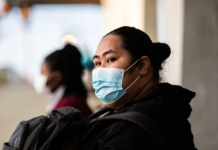
Ditoka said the levels of investment members of the Fijian diaspora are putting back into the country keep increasing and help propel its economy. It includes overseas remittances, with an ever-increasing number of Fijians moving overseas for work, including sports contracts, the Recognised Seasonal Employer (RSE) scheme in New Zealand and the PALM Scheme in Australia.
The Fijian diaspora serves as the second-largest foreign exchange earner for Fiji’s economy. Personal remittances sent by the diaspora officially surpassed the $1 billion threshold between January to September 2025.
According to The Fiji Times, a total of 1134 Fiji residents departed the country for employment purposes in June 2026 based on the latest figures released by the Fiji Bureau of Statistics.
Employment was the third-largest reason for overseas travel, accounting for 7.9 percent of all resident departures.
The figures show that 407 people left for overseas employment for periods of less than three months, while 318 departed for between three and 12 months.
A further 409 residents left Fiji for employment periods ranging from one to five years.
F$1 billion milestone
Ditoka said the Reserve Bank of Fiji (RBF) recorded overseas remittances first crossed the F$1 billion milestone in 2022, and have consistently remained above this mark.
The RBF said driven by extensive out-migration and regional labour programmes, remittances have outpaced traditional sectors, like sugar and garment manufacturing, and serve as one of Fiji’s largest sources of foreign exchange, trailing only behind tourism.
More than 60 percent of these financial inflows originate from the Fijian diaspora and seasonal workers living in Australia, the US and New Zealand.
Ditoka said military personnel serving in the United Kingdom, as well as Fiji rugby players all over Europe have also contributed a lot to the remittance figures.
“It’s a marvellous thing to behold, so I encourage our diaspora to keep coming back to Fiji,” he said.
“There are many, some of them who have decided to come and settle back in Fiji, even though they’ve made their lives here in New Zealand and some in Canada, in the US and in Australia.
“Some of them have decided that if they retire, they retire back in Fiji, and we encourage them to keep doing that.”
He said discussions over the past few months have also raised the critical importance of ensuring that systems are changed to be more effective and efficient — which is something he and his ministry is working on.
“As far as the importance of diaspora is to Fiji, they are very important part of Fiji’s economic investment plan, and we continue to engage with them and try to help them in in their plans in investing and working with Fiji,” he said.
Ditoka said there have been “many choke points and blockages” raised with the government in its discussions with the diaspora in Aotearoa.
“So, those are the things I’ve committed to as minister, as well as the permanent secretary who I came with here, to go and work on to make sure that their plans to come back to Fiji is not stopped or slowed down by inefficiencies [and] ineffectiveness of systems and processes that we can work on.”
Duavata partnership
Ditoka and his Permanent Secretary Dr Raijieli Taga were joined by Fiji’s High Commissioner to New Zealand, Ratu Inoke Kubuabola, and members of the Fiji Trade Mission in Auckland in meetings in the past week.
It included the signing of a refreshed Duavata Partnership with New Zealand.
Ditoka said the Duavata Partnership (2026-2030) he signed with his New Zealand counterpart Winston Peters was a milestone in the two countries’ bilateral relationship.
He said the agreement was an important step in advancing one of Fiji’s closest relationship and builds on the success of the first agreement that was first signed in March 2022.
Ditoka said the continued growth in bilateral trade, which had reached F$1.9 billion, would be boosted by the agreement, especially as both governments work on achieving F$2 billion in two-way trade by 2030.
“The signing of the refreshed agreement comes at a critical juncture for regional diplomacy and both our nations have reiterated our dedication to the Pacific Islands Forum’s 2050 Strategy for the Blue Pacific Continent and the Ocean of Peace, emphasising that bilateral cooperation under the Duavata Partnership will continue to bolster wider regional solidarity, peace, and sustainable development,” he said.
“We look forward to improving and in increasing all the current things that we’re doing in our relations, as well as other issues where it’s concerned the RSE programme, as well as trade and investment, and what we can do to improve the facilities that are needed to support the work that they do.”
Ways and means talks
Ditoka and his team also met with the New Zealand Fiji Business Council with discussions focusing on ways and means that the Fiji government can help and assist both current and potential investors.
It was followed by attending the ‘Pacific Trade Invest’ and the ‘Future for investment and trade partnerships’ meetings.
He stated the “Future for investment and trade partnerships” meeting was an eye-opener as it featured small to medium-sized economies like New Zealand, Singapore, UAE, Norway, Brunei, Malaysia, Thailand and Rwanda.
“Similar issues. So I think we’ve got our our list full from the things that we need to go and do back when we return to Fiji,” he said.
“For me, that was very important because it’s just going to help us expand our investment footprint back in Fiji, as well as the the mutual benefits that it’ll create for both our two nations
“Looking at the way the current international rules-based order seems to have not worked so well, we believe that we can find a way forward. Also, looking at the World Trade Organisation and how there are concerns that there’s so much inertia in the work that needs to be progressed, but some have stalled for over a decade, some more than that.
“We believe that the plurilateral arrangements such as these will probably pave the way forward for nations such as Fiji to to improve its economic position. Fiji is aiming, in its national development plan, to be a high income country by 2050, and we believe these kinds of relationships and partnerships with our international partners will help us on how to get on the right path, to get to where we want to go.”
Trade office reopening
Meanwhile, Fiji will reopen its Trade and Consular office in Auckland in early October.
Ditoka said that was a critical part of the plan to serve the diaspora better.
“The New Zealand diaspora is one of the most important of the diaspora communities of Fiji abroad, and as far as New Zealand is concerned, about 70 percent of the diaspora community live in the Auckland and surrounding areas,” he said.
“It’s important for us to have this consulate and trade commission set up to help assist in the things that they want to do.
“It’s a very important part of Fiji’s footprint in New Zealand and in helping to get the mutually beneficial relationship of the diaspora and Fiji up and running again.”
This story was first published on