




COMMENTARY: By Marcus Alexander
In a stunning resignation that has sent shockwaves through Washington, former National Counterterrorism Center Director Joe Kent has exposed what many have long suspected but few have dared to state publicly — Israel is systematically undermining peace in the Middle East to serve its own expansionist agenda.
Joe Kent, a 20-year Army Special Forces veteran and Gold Star husband who lost his first wife in a Syria suicide bombing, didn’t mince words. His accusation is simple yet devastating: Israel is intentionally sabotaging diplomatic solutions because peace threatens its strategic objectives.
The most compelling evidence supporting Kent’s claim is the targeted assassination of Ali Larijani, Iran’s National Security Adviser and chief nuclear negotiator.
- READ MORE: Trump says no ceasefire as Khamenei tells of ‘dizzying blow’ to US, Israel
- Ian Powell: Iran, US imperialism and the New Zealand lapdog
- US counterterror chief says in resignation letter Israel ‘deceived’ Trump into attacking Iran
- Other US-Israeli war on Iran reports
According to Kent, Larijani wasn’t just another Iranian official — he was actively engaged in negotiations that could have de-escalated regional tensions.
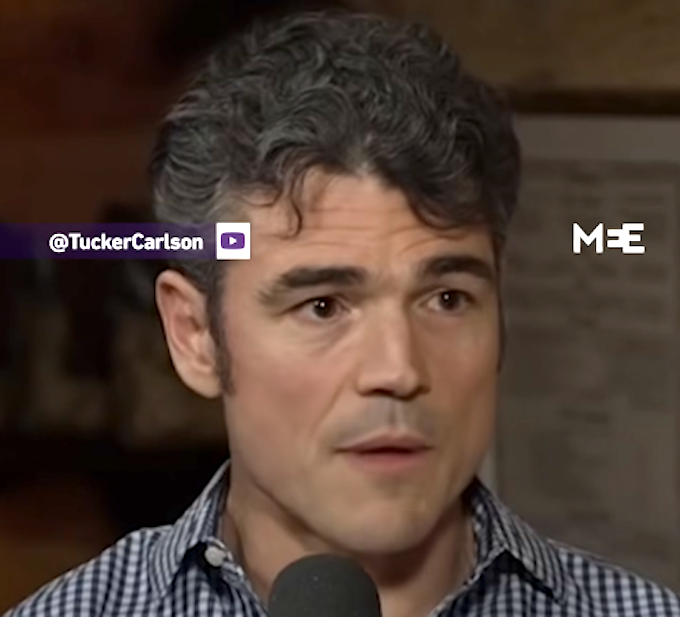
“Larijani was eager to get us a deal,” Kent revealed in an interview with Tucker Carlson.
But instead of pursuing diplomacy, US-Israeli strikes eliminated him, along with his son and several staff members. The message could not be clearer — anyone willing to negotiate for peace becomes a target.
This wasn’t just another military operation. Larijani represented the pragmatic wing of the Iranian establishment — someone capable of conducting the sorts of talks needed to end conflicts.
By eliminating him, Israel ensured that the path to negotiation was closed, leaving only the path of escalation.

Energy warfare masquerading as security
Kent’s second explosive claim involves energy infrastructure. He argues that strategic opportunities — particularly Qatar’s gas potential to stabilise global markets — have been deliberately targeted to increase tensions rather than reduce them .
The facts support him. On March 18, 2026, Israel launched a significant aerial assault on Iran’s South Pars gas field, which provides nearly 70 percent of Iran’s domestic gas. Prime Minister Benjamin Netanyahu admitted Israel “acted alone” in this attack.
The result? Iran retaliated by striking Qatar’s Ras Laffan Industrial City — the world’s premier LNG hub — damaging approximately 17 percent of Qatar’s export capacity .
Global gas prices surged toward US$117 per barrel. The UK benchmark peaked at almost 183p per therm. Markets destabilised. And for what?
Here is the inconvenient truth, a stable energy market benefiting from Qatari and Iranian gas would reduce conflict incentives. By attacking this infrastructure, Israel ensured that economic interdependence — often the foundation of lasting peace — remains impossible.
Even President Trump distanced himself from the attack, stating the US “knew nothing about this particular strike” and describing it as Israel “violently lashing out”. When an American president feels compelled to publicly disavow his closest regional ally’s actions, something is fundamentally broken.
The ‘clean break’ strategy: 30 years of sabotage
Kent’s accusations didn’t emerge from nowhere. They reflect a consistent pattern dating back to 1996, when a group of neoconservatives — including figures who would later serve in the Bush administration — produced a policy paper titled “A Clean Break: A New Strategy for Securing the Realm”.
This document, prepared for Netanyahu, explicitly rejected the “land for peace” formula and proposed reordering the Middle East through military confrontations and regime change. It identified Iraq, Syria, Lebanon, Libya and Iran as targets.
It called for “removing Saddam Hussein from power” and “weakening, containing, and even rolling back Syria”.
Three decades later, we’re living the consequences. The Iraq war cost thousands of American lives. Syria descended into a catastrophic civil war. And now Iran faces sustained attacks. All while Israel’s security — not America’s — remained the central objective.
Kent’s resignation letter directly connected these dots: “It is clear that we started this war due to pressure from Israel and its powerful American lobby . . . This is the same tactic the Israelis used to draw us into the disastrous Iraq war”.
The human cost
Perhaps the most damning aspect of Kent’s accusation is personal. His wife, Navy cryptologist Shannon Kent, was killed in Syria in a suicide bombing. Kent now describes that conflict as “a war manufactured by Israel”.
Think about that. A Gold Star husband — someone who paid the ultimate price for American foreign policy — is telling us that his wife died in a war that served Israeli, not American, interests. If that doesn’t demand scrutiny, what does?
Why this matters now
Critics dismiss Kent as antisemitic or claim he is leaking classified information. But ad hominem attacks don’t address the substance.
Did Israel target a negotiator actively seeking peace? Yes. Did Israel attack energy infrastructure knowing it would destabilise global markets? Yes. Does Israel have a documented 30-year strategy of military confrontation over diplomacy? Yes.
The situation in Gaza further illustrates the pattern. As one analysis noted, Netanyahu’s “ceasefire” effectively granted Israel breathing space to consolidate political control while evading accountability. Within days, Israel’s Parliament passed a bill paving the way for West Bank annexation. This isn’t peace — it’s a pause for rearmament.
The parasite metaphor
A parasite feeds on its host, weakening it while appearing inseparable from it. Israel’s relationship with American foreign policy fits this description uncomfortably well.
American blood and treasure fund Israeli objectives. American credibility suffers when allies act unilaterally. American interests in stable energy markets get sacrificed for Israeli security concerns.
Joe Kent’s accusations deserve more than reflexive dismissal. They deserve investigation. Because if a Gold Star husband and former counterterrorism chief is correct — if Israel is indeed sabotaging peace for its own ends — then Americans have a right to know why their soldiers are dying and their markets are destabilised for another nation’s strategic objectives.
The description of Israel as a parasite may be harsh. But sometimes harsh truths are the only ones that break through comfortable lies.
Israel has positioned itself as America’s indispensable ally. Kent’s resignation suggests it may actually be the parasite draining American power while sabotaging any chance of Middle Eastern peace.
Marcus Alexander is an independent writer in Doha and contributor to Channel Media Network.