




Pacific Island governments are urging their citizens not to panic about the supply of fuels amid the conflict in the Middle East between Israel, the United States and Iran.
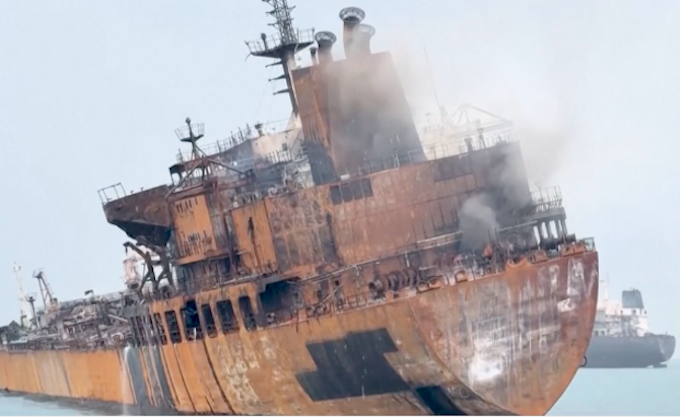
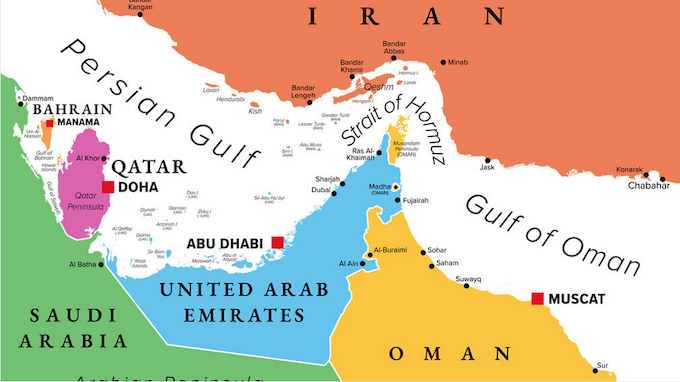
The conflict has resulted in the closure of the Strait of Hormuz, a vital shipping route that carries around 20 percent of the world’s oil (20 million barrels a day), by Iran’s Islamic Revolutionary Guard Corps (IRGC).
The IRGC has warned that any ship passing through the strait would be attacked, triggering a near-total halt in vessels attempting to pass through the waterway, causing a surge in oil prices.
- READ MORE: Trump scolds allies over Strait of Hormuz operation; UAE closes airspace
- Chris Hedges: The world according to Gaza – it’s only the start
- War on Iran: Australia should put trust in its neighbours not a modern Titanic rogue state
- Other US-Israel War on Iran reports
However, according to Iran’s Foreign Minister Abbas Araqchi, the Strait of Hormuz is closed only to Iran’s “enemies and their allies”, the IRGC-aligned Tasnim News Agency reported.
US President Donald Trump has demanded that allies send naval vessels to the Middle East to help escort ships through the strait.
Pacific Islands nations get nearly all of their refined fuel from refineries in Singapore, South Korea and Japan. But roughly 80 percent of the crude oil used by these Asian refineries passes through the Strait of Hormuz.
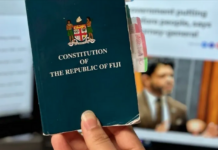
The Fiji government said on Monday that fuel supplies in the country were sufficient to meet energy needs for the next few months.
“There is no need to indulge in ‘panic buying’ at the service station,” it said in a statement.
Closely monitoring the war
It added that the government was closely monitoring the US-Israel war on Iran, and meeting with local suppliers who had already secured fuel supplies.
Prime Minister Sitiveni Rabuka and his cabinet were meeting today “to firm-up on the plan of action for the long-term, if there is no resolution to the conflict in the near future”.
Tonga’s government has also called on Tongans not to queue at petrol stations.
“There is no immediate need for concern or panic buying of fuel,” the Tonga Prime Minister’s Office said in a statement.
“We are assured by the energy sector that there is sufficient fuel available for now.”
Samoa’s Prime Minister Laaulialemalietoa Leuatea Polataivao Schmidt said his government’s immediate priority was to ensure that the country had enough fuel supply to meet its needs.
“What is happening . . . we can’t control, but we are working to ensure we have enough fuel for the next one or two years because we do not know what’s going to happen next,” La’auli said during a joint press conference with New Zealand Prime Minister Christopher Luxon yesterday.
Current stocks sufficient
Vanuatu’s government said it has engaged with Pacific Energy, Vanuatu’s primary fuel importer and supplier, to assess potential impacts on national fuel supply.
“Pacific Energy reports current stocks are sufficient to cover usual consumption, the company’s supply programme, based on a three-month rolling forecast, is secured, and no shortages are anticipated in the foreseeable future,” the Ministry of the Prime Minister in Vanuatu said in a statement.
In the Solomon Islands, the country’s central bank said that while the fuel prices at the petrol stations were currently stable, “the impact of the oil price shock is expected to be felt from April 2026 onwards”.
“Preliminary assessment indicates that sustained increases in global oil prices are likely to push up domestic fuel costs, thereby feeding into higher imported inflation and overall headline inflation,” the Central Bank of Solomon Islands said in a statement.
This article is republished under a community partnership agreement with RNZ.