





SPECIAL REPORT: By Coco Lance, RNZ Pacific digital journalist
Last week, New Zealand First leader Winston Peters said Aotearoa’s immigration settings were “no way to treat our Pacific cousins”.
“All Pacific people want is a fair go, equivalent to what other nations are getting, and they’re not getting it,” he said outside Parliament.
While Peters’ comments were made in the context of the Pacific Justice petition, the concept of the Pacific as “family” has become a common rhetoric used by politicians and leaders across New Zealand.
- READ MORE: Four key facts about climate change and human migration
- UN warns of millions displaced by climate change as COP30 opens in Brazil
- Other climate migration reports
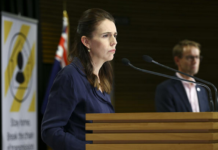
In 2018, former Prime Minister Dame Jacinda Ardern spoke on such issues facing the Pacific.
“We are the Pacific too, and we are doing our best to stand with our family as they face these threats,” she said during a talk at the Paris Institute.
At the Pacific Islands Forum last year, New Zealand Prime Minister Christopher Luxon said: “This is the Pacific family and we prioritise the centrality of the Pacific Islands Forum.”

But is Aotearoa doing enough to live up to this “Pacific family” rhetoric in the face of daunting and life-changing threats, such as climate change, continues to reshape the region?
Discussions and comparisons continue to arise off the back of Australia’s Falepili Union Treaty, which saw the first group of Tuvaluan migrants relocate towards the end of 2025.
Australia’s implementation of the treaty has sparked criticism over whether New Zealand is failing its Pacific neighbours when it comes to climate-related migration.
‘Increasingly perilous situations’
For Pacific Islanders hoping to move to Aotearoa, there is a pathway.
Under the Pacific Access Category (PAC) ballot, 150 people from specifically Kiribati and 250 from Tuvalu — two of the most vulnerable nations at the forefront of climate impacts — can gain residency every year.
Applicants must pay $1385, pass health checks, meet English requirements, be under 45, and secure a job offer.
Dr Olivia Yates has spent years researching climate mobility from Kiribati and Tuvalu.

She said the tension around climate mobility sits not in a lack of awareness, but in the design of the system itself.
“I think the main takeaway is that New Zealand’s current approach to climate mobility, or at least for the last five years — things are starting to change now — but initially — we do a lot of research, get a lot more information, and leave immigration systems as they are,” she said.
She said Pacific neighbours islands are facing “increasingly difficult” circumstances.
“Disasters are becoming more frequent … the access to food and to water is being challenged because of these creeping impacts of climate change. So as the New Zealand government takes one step forward, I feel like climate change is sort of a step ahead of us,” Dr Yates said.
“It sounds very doom and gloom, but the other thing I would say is that our Pacific neighbours, fundamentally and primarily, want to stay in place. Nobody wants to have to leave.”
In the meantime, people are moving, often through pathways never intended to respond to climate pressure.
“People are using these laws to come to the country and their laws that were not really set up to address climate change and the movement of people in response to climate change,” Dr Yates said.
“They’re primarily economically motivated, and so this creates a whole bunch of issues that are the downstream consequence of using a system for something that is not what it was designed for.”
She said that PAC ballot, created in 2001, has effectively become “the de facto pathway for people from Kiribati and Tuvalu to move here for reasons related to climate change”.
While many migrants cite work, family or opportunity as the primary motivations, these distinctions are becoming blurred.
“It’s kind of becoming increasingly difficult to separate climate change drivers from these factors,” Dr Yates explained.

And the consequences can be significant. When visas hinge on employment and strict eligibility criteria, families can find themselves vulnerable if those circumstances shift.
“Our current immigration laws are being used in a way that they weren’t designed for, and this is having really negative consequences on people, specifically from Kiribati and Tuvalu,” she said.
“On the other side of that, those that wish to stay, whether because they choose to or because they can’t afford to leave, that visas aren’t available to them, and they start to face increasingly perilous situations that breach their rights.”
Lacking a plan
Kiribati community leader Kinaua Ewels, who works closely with Pacific migrants settling in Aotearoa, said the system’s rigidity has left many feeling excluded and unsupported.
She does not believe New Zealand is set up to deal with the realities of climate migration
“I’m hoping the New Zealand government could help the people who are able to move on their own, using their own money, but when they get here, they can actually access work opportunities,” she said.

Ewels said the PAC still feels restrictive, and lacks a plan to help new arrivals adapt or secure employment.
“They pressure them to look for their own job. There’s no plan for the government to help them settle very easily, to run away from climate change and their life situations back on the island,” Ewels said.
“More can be done.”
According to Ewels, the families who do arrive with the hopes of safety and stability, end up struggling to navigate basic systems, such as healthcare and employment, and get no formal support.
“It’s very restricted in the way that it’s not supportive to the people from the Pacific Islands,” she said.
NZ govt ‘not ready to bring climate refugees’
Ewels said that while New Zealand spoke of the Pacific as “family,” those words continued ringing hollow for communities who saw little practical support.
“They use the family name, which is a very meaningful and deep word back home, but the process is not done yet,” she said.
“In reality, the government is not actually ready to bring people over here in terms of climate refugees or people needing to move because of climate change.”
Ewels said if New Zealand truly viewed the Pacific as family, that connection would extend itself into some meaningful collaboration with Pacific community leaders here in Aotearoa, who could help them navigate the complexities of this situation.
“If the government talks about family, they should work with us, the community leaders, so we can help them at least make sure people are warmly welcomed and supported when they come here,” Ewels said.
Dr Yates said the government was making efforts, but warned the the pace of policy was struggling to keep up with the pace of change happening in the world today.
“I would say that the New Zealand government is trying. But as the government takes one step forward, climate change is starting to outpace us.”
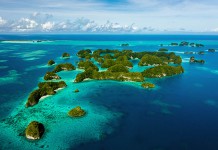
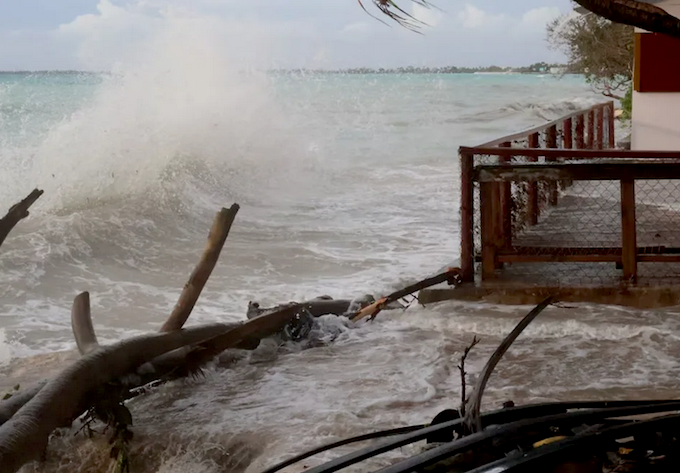
Pacific sea levels have risen by as much as 15cm over the past three decades.
There are predictions that around 50,000 Pacific people across the region could lose their homes each year as the climate crisis reshapes their environments.
In the past decade, one in 10 people from Kiribati, Nauru and Tuvalu have already migrated.

Kiribati community leader Charles Kiata told RNZ Pacific in October last year that life on the Micronesian island nation was becoming increasingly difficult, as it was being hit by severe storms, with higher temperatures and drought.
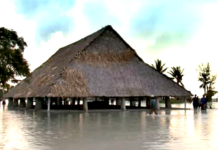
“Every part of life, food, shelter, health, is being affected and what hurts the most is that our people feel trapped. They love their home, but their home is slowly disappearing,” Kiata said at the time.
Crops are dying and fresh drinking water is becoming increasingly scarce for the island nation.
Kiata said Kiribati overstayers in New Zealand were anxious they would be sent back home.
“Deporting them back to flooded lands or places with no clean water like Kiribati is not only cruel but it also goes against our shared Pacific values.”
In 2020, Kiribati man Ioane Teitiota took New Zealand to the United Nations Human Rights Committee after his refugee claim, based on sea-level rise, was rejected.
The committee did find his deportation lawful, although ruled that governments must consider the human rights impacts of climate change when assessing deportations.
The term “climate refugee” remains unrecognised in binding international law. It is a term Dr Yates has previously told RNZ was always flawed.
“Climate change is this unique phenomenon because what is forcing people out of their countries comes from elsewhere,” she said.
“At face value, the idea of being a refugee didn’t fit.”
Many communities suffering at the hands of climate change do not want to leave their home, their culture, their land, their community.
Dr Yates said the term “climate mobility” was a better fit — describing it as a spectrum that recognises the desire for communities to have options.
Australia’s Falepili Treaty v NZ’s climate pathways
In late 2025, the first Tuvaluans began relocating to Australia under the Falepili Union, a bilateral treaty signed with Tuvalu in 2023.
The agreement creates a new permanent visa for up to 280 Tuvaluans each year, allocated by ballot. Applicants do not need a job offer, there is no age cap, nor disability exclusion.
The treaty has led debate on online platforms around why New Zealand does not offer a similar pathway.

International law expert Professor Jane McAdam is cautious against simplistic comparisons between New Zealand and Australia.
“It has been mislabelled in a lot of the international media as a climate refugee visa when it’s nothing of the sort,” Prof McAdam said.
“There’s often nothing in this visa that requires you to show that you’re concerned about the impacts of climate change in the future,” she said.
Professor McAdam pointed out that New Zealand had never been viewed as “totally useless” in climate-related migration of Pacific peoples.
“Historically, New Zealand has been seen as leading the way when it comes to providing pathways for people in the Pacific to move,” she said, noting the PAC visa and labour mobility schemes as examples.
“New Zealand has been leading the way globally in recognising how existing international refugee law and human rights work,” she added.
That includes influential tribunal decisions examining how climate impacts intersect with refugee and human rights law, even where claims ultimately failed.

In 2023, Pacific leaders endorsed the Pacific Regional Framework on Climate Mobility, the first regional document to formally acknowledge climate-related migration and commit states to cooperate on safe and dignified pathways.
Dr Yates said New Zealand was “furiously involved” in shaping the framework.
“The framework is the first time, put down on paper, that people are migrating because of climate-related reasons,” she said.
However, the document is non-binding.
“It means our government is ready to take this seriously. But I wouldn’t say they are taking this seriously, yet.”
She added a dedicated, rights-based climate mobility visa is needed that can account for a wide-range of people, including those with disabilities and others disproportionately affected.
RNZ Pacific approached the Immigration Minister Erica Stanford’s office for comment on whether New Zealand immigration law does explicitly recognise climate change or climate-induced displacement as grounds for special protection or a dedicated visa category.
We were advised Foreign Affairs Minister Winston Peters was the appropriate person to comment on the issue.
However, a spokesperson for Peters told RNZ Pacific the specific issue “would be a question for the Minister of Immigration, or the Climate Change Minister”.
This article is republished under a community partnership agreement with RNZ.