


ANAYSIS: By Laurens Ikinia in Jakarta
The global human rights landscape has witnessed a significant diplomatic milestone.
Indonesia, for the first time since the body’s establishment in 2006, has officially taken the presidency of the United Nations Human Rights Council (UNHRC).
Indonesia’s Permanent Representative to the UN in Geneva, Ambassador Sidharto Reza Suryodipuro, is currently guiding the procedural and diplomatic course of the world’s foremost human rights forum for the coming year.
- READ MORE: Minister Pigai affirms commitment to advancing human rights
- Other Indonesian human rights reports
This appointment, backed by consensus within the Asia-Pacific regional group and subsequently endorsed by the full council, is far more than a routine procedural rotation.
It is a mirror reflecting diplomatic success, yet also a fragile piñata — ready to spill forth either in praise or sharp criticism depending on the blows dealt by reality and unfolding dynamics.
This moment is not the end of a journey, but the opening of a new chapter rife with interpretation — a complex test of Indonesia’s credibility, capacity, and consistency on the stage of global issues.
The test begins not only in the halls of Geneva but simultaneously in the halls of power in Jakarta, where the government is pushing for the ratification of a revised Human Rights Law by this year.
This legislative endeavour has now become inextricably linked to the credibility of its international leadership.
Foundations and mandate
To understand the seriousness of this position, one must look to its foundational pillars.
The UN Charter, as the supreme constitution of global governance, clearly places the promotion and respect for human rights as a central pillar for maintaining international peace and security.
This charter provides an undeniable moral and political mandate. Indonesia’s presidency, within this framework, is an operational instrument to realise the charter’s noble aims — a collective trust bestowed by the community of nations.
The Human Rights Council itself is a product of the post-Cold War collective consciousness and the failures of its predecessor, the Commission on Human Rights. Established by General Assembly Resolution 60/251, it was designed as a more legitimate intergovernmental body with a mandate to strengthen the promotion and protection of human rights globally.
It is a space of often-tense dialogue, a tireless advocacy arena for civil society, and a stage where mechanisms like the Universal Periodic Review (UPR) and Special Procedures strive to illuminate dark corners of violations.
Within this complexity, the council president is not merely a passive moderator but a pacesetter, agenda-shaper, balance-keeper, and often a mediator in intricate political deadlocks. This position holds the key that can either unlock discussions on neglected issues or bury them in procedure.
The normative compass for the council is the International Bill of Human Rights — comprising the Universal Declaration of Human Rights (UDHR), the International Covenant on Civil and Political Rights (ICCPR), and the International Covenant on Economic, Social and Cultural Rights (ICESCR).
These standards are the shared measure, the common language, and the basis for demands.
Indonesia’s leadership will be judged on its ability to advance the language and spirit of these covenants, not only within the halls of Geneva but also through their resonance and enactment at the national level. It is here that the ongoing revision of Indonesia’s own Human Rights Law (Law Number 30 of 1999) transforms from a domestic legislative process into a litmus test for its international posture.
Two sides of the coin
Globally, this presidency represents the pinnacle of Indonesia’s soft power diplomacy. It affirms the image of a consequential developing nation deemed capable of leading even the most sensitive conversations.
It is an invaluable platform to voice Global South perspectives, emphasise the interdependence of civil-political and socio-economic rights, and champion dialogue over confrontation.
Indonesia has the opportunity to act as a bridge-builder, spanning the divides between West and East, North and South, in an increasingly polarised human rights discourse.
Yet, behind the stage lights, the shadows are long and critical. Organisations like Amnesty International and Human Rights Watch have consistently warned that leadership on the council must align with tangible commitment.
They are watching closely: Will Indonesia use its influence to push for access by special mandate-holders to global conflict zones, or will it cloak inaction in the rhetoric of state sovereignty?
Will its voice be loud in highlighting violations in one region while falling silent on another due to geopolitical and geostrategic considerations?
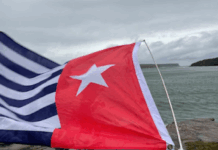
Herein lies the ultimate credibility test. The United Liberation Movement for West Papua (ULMWP) criticises Indonesia’s presidency, arguing it could swiftly become “hollow prestige” if seen merely as a product of regional rotation, not a recognition of substantive capability.
The ULMWP asserts that Indonesia is unfit for the role, pointing to allegations of a 60-year conflict in Papua, historical casualties, and comparing the situation to past international controversies.
They challenge Indonesia’s moral standing, citing unresolved historical allegations, internal displacement, and the long-standing refusal to grant access to the UN High Commissioner for Human Rights.
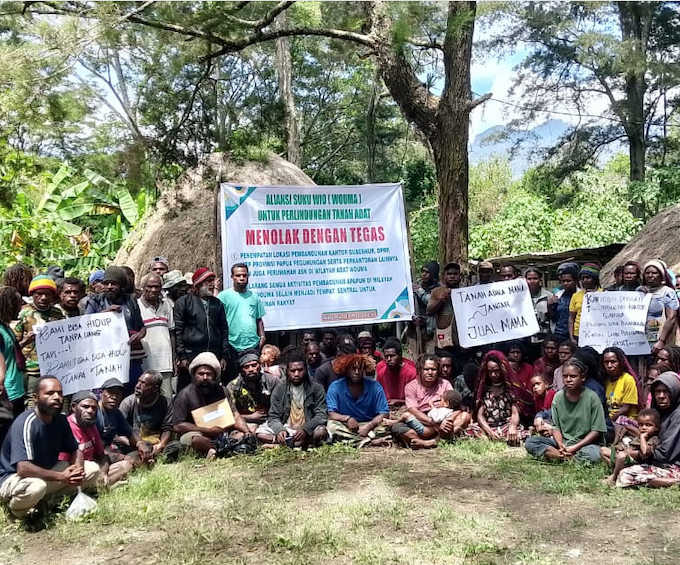
This opposition underscores the profound domestic scrutiny the presidency faces: every action on the global stage will be measured against conditions in Papua, where critics describe ongoing tensions and demand immediate access for journalists and a UN visit.
The most profound implications may, in fact, unfold domestically. This presidency is a mirror forcibly held up to the nation itself. It creates unique political and moral pressure to address longstanding homework.
Issues such as freedom of expression, protection of minorities and vulnerable groups, law enforcement in cases of alleged violations, and the state of labour and environmental rights will come under a brighter international spotlight.
In this context, the government’s move to revise the Human Rights Law is a direct response to this pressure.
Human Rights Minister Natalius Pigai, in a meeting with Commission III of the House of Representatives (DPR) on February 2, 2026, emphasised that the drafting process involves prominent national human rights figures — including Professor Jimly Asshiddiqie, Makarim Wibisono, Haris Azhar, Rocky Gerung, Ifdhal Kasim, and Roichatul Aswidah — to ensure the revised law is “more progressive and advanced”.
The government is targeting ratification in 2026, aiming to synchronise domestic legal progress with its international leadership year.
The government thus faces a stark choice: leverage this historic moment as a catalyst for deeper legal and institutional human rights reforms, open wider dialogue with civil society, and demonstrate tangible progress anchored in a stronger law; or, wield the position merely as a diplomatic shield to deflect criticism, content with symbolism over substance, even if that symbolism includes a newly passed but weakly implemented law.
The latter would be a damaging boomerang, deepening a crisis of trust both in the eyes of its own citizens and the global community.
Indonesian civil society, conversely, holds a golden opportunity. They now have a wider door to elevate domestic issues to the global forum, using their own nation’s presidential position as an accountability tool. The involvement of activists in the law revision process is a start, but the presidency must be seen not as the sole property of the government, but as a national asset to be filled with diverse and critical voices, both sweet and bitter, to ensure the promised progress is real.
Navigating the terrain
A clear-eyed SWOT analysis is indispensable for Indonesia to strategically navigate its historic presidency of the UN Human Rights Council. This framework illuminates the internal and external factors that will define its tenure, balancing inherent advantages against palpable risks, all while the domestic reform clock ticks.
Strengths: Indonesia enters this role with a formidable diplomatic toolkit. Its long-standing tradition of “free and active” foreign policy has cultivated a wide non-aligned network and substantial credibility as an independent voice in the Global South.
As the world’s third-largest democracy, it offers a practical case study in balancing governance, diversity, and development. Furthermore, its soft power assets — embodied in the national motto Bhinneka Tunggal Ika (Unity in Diversity) and its narrative of moderate Islam — provide unique cultural and religious leverage to mediate polarised debates on sensitive issues like religious freedom.
Operationally, the presidency itself confers significant agenda-setting power, allowing Indonesia to prioritise thematic issues such as the right to development, climate justice, and interfaith tolerance, while influencing the appointment of key human rights investigators.
The concurrent push for a progressive Human Rights Law revision can be framed as a strength, showcasing a commitment to aligning domestic norms with international aspirations.
Weaknesses: Indonesia’s most significant vulnerability remains the perceived gap between its international advocacy and its domestic human rights landscape. Longstanding, contentious issues — including restrictions on civil liberties, protections for minorities, and unresolved past alleged violations — provide immediate fodder for critics and undermine its moral authority.
This credibility deficit is a strategic weakness that adversaries will exploit. The revision of the Human Rights Law, if perceived as a rushed or cosmetic exercise to coincide with the presidency, could exacerbate this weakness rather than alleviate it.
Additionally, the technical and political capacity of its permanent mission in Geneva will be under immense strain, tested by the need to master complex procedural rules while managing intensely politicised negotiations among competing global blocs in real-time.
Opportunities: This presidency is an unparalleled platform for strategic nation-branding, casting Indonesia as a consensus-driven, responsible global leader. Domestically, it creates a powerful political catalyst to accelerate and deepen stalled legislative reforms.
The targeted 2026 ratification of the Human Rights Law is the prime opportunity; it must be used to revitalise national human rights institutions like the National Commission of Human Rights (Komnas HAM) and pass long-delayed bills like the Domestic Workers Protection Bill.
Internationally, it offers the chance to operationalise its bridge-builder identity, mediating in protracted conflicts or humanitarian crises where dialogue has stalled, thereby translating diplomatic principle into tangible impact.
Successfully shepherding a meaningful domestic reform would give Indonesia undeniable moral currency in these international efforts.
Threats: The external environment is fraught with challenges. The council is often an arena for great power politicisation, where human rights issues are weaponised for geopolitical ends. Indonesia risks being ensnared in these zero-sum games, which could drain diplomatic capital and compromise its neutral stance.
Simultaneously, it faces relentless scrutiny from a vigilant transnational civil society and global media, ensuring that any perceived stagnation or regression at home — such as a watered-down Human Rights Law or continued restrictions in Papua — will trigger amplified criticism internationally.
The paramount threat, however, is the boomerang effect: that the heightened visibility of the presidency exponentially raises expectations, and the subsequent failure to demonstrate concrete progress — both in Geneva through effective leadership and in Jakarta through substantive reform—could severely damage Indonesia’s hard-won diplomatic reputation, leaving it weaker than before it assumed the chair.
Thus, Indonesia’s tenure will be a constant balancing act: leveraging its strengths to seize opportunities, while meticulously managing its weaknesses to mitigate existential threats.
The presidency is not merely a position of honour, but a high-stakes test of strategic foresight and authentic commitment, where domestic legislative action is now part of the international exam.
From symbol to substance: The path forward
Indonesia’s election as the 2026 President of the UNHRC is an acknowledgment of its role and potential on the global stage. However, this acknowledgment comes as a loan of trust with very high interest: increased accountability and consistency.
The government’s own timeline, aiming to ratify a revised Human Rights Law within this same year, has voluntarily raised the stakes, tying its legacy directly to tangible domestic output.
This year of leadership is not a celebratory party, but a laboratory for authentic leadership. Its success will not be measured by the smoothness of procedural sessions or the number of meetings chaired.
It will be measured by the extent to which Indonesia can articulate and champion a vision of inclusive and just human rights globally, and — just as crucially — by the degree to which this office leaves a positive legacy for the advancement of human rights at home.
The revised Human Rights Law is poised to be the most visible component of that domestic legacy. Minister Pigai’s confidence in its progressiveness, bolstered by the involvement of respected figures, must translate into a law that meaningfully addresses past shortcomings and empowers institutions.
Indonesia stands at a crossroads. One path leads to transformative leadership, using this position to strengthen global norms while cleansing the domestic mirror through courageous reform and open engagement. The other leads to transactional leadership, leveraging prestige and a new but potentially inert law to impress without touching the core of the issues.
Indonesia’s choice will determine whether history records 2026 as the year Indonesia truly led the world on human rights by exemplifying the change it advocates, or merely performed a protocol duty on a stage where the lights are slowly fading on its credibility.
A historic mandate and its dual imperative
This strategic position is a historic achievement, cementing the country’s role while presenting a real-time test of its global credibility. As a body of 47 member states, the UNHRC holds vital authority in investigating violations, conducting periodic reviews, and shaping international human rights norms. The Council President controls the agenda, guides dialogue, and, most importantly, builds consensus from diverse interests.
Indonesia is no newcomer, currently serving its sixth membership term and often as a Vice-President. Securing the top seat opens the chance to shift from “player” to “game-setter,” potentially shaping a more inclusive global human rights discourse.
This achievement is built on active diplomacy: vigorous economic and peace diplomacy (including Indonesia’s peacemaker initiatives), strengthened regional diplomacy emphasising ASEAN centrality and Global South solidarity, and a consistent multilateral commitment as a strong UN system supporter.
The Indonesian Ministry of Foreign Affairs has affirmed its commitment to lead the council objectively, inclusively, and in a balanced manner. Potential agenda paths include advocating for contextualising human rights principles to be more sensitive to the historical, developmental, and socio-cultural contexts of developing nations; expanding the discourse to seriously discuss issues like corruption, environmental degradation, and electoral governance in the Council; and testing its bridge-builder capacity in acute conflicts, such as the Palestinian issue, by leading constructive diplomatic initiatives.
Ultimately, history will record not just the prestigious title of “UNHRC President,” but the substance and impact of the leadership. This position is a mirror: Is Indonesia ready to lead with consistency and firm moral principle, or will it become trapped in the contradiction between rhetoric in Geneva and reality at home?
The parallel process to revise the Human Rights Law is now part of that reflection. Its quality, its process, and its final enactment will be scrutinised as evidence of Indonesia’s sincerity.
True leadership will be measured by the courage to build bridges amid global divisions and the ability to connect words with concrete action and accountability domestically. The year 2026 will determine whether this moment is remembered as a renaissance of moral diplomacy, backed by genuine legal evolution at home, or merely a display window of symbolism where even new laws ring hollow.
The final word rests not on the title itself, but on the government’s collective actions in both the international arena and the national legislature. Success in this dual mission would add a brilliant and coherent achievement to the international record of the administration of President Prabowo Subianto and Vice-President Gibran Rakabuming Raka.
The choice — and the test — is in Indonesia’s hands.
Laurens Ikinia is a Papuan lecturer and researcher at the Institute of Pacific Studies, Indonesian Christian University, Jakarta. He is also an honorary member of the Asia Pacific Media Network (APMN) in Aotearoa New Zealand.