





SPECIAL REPORT: By Keeara Ofren
The lives of children will always tell the past and future of any community. My colleague Estelle and I will never forget the day we met Ximena*.
Last month, I lived alongside the Aeta community of the Philippines, observed their daily lives and human rights issues in the area. Life was different here, a peaceful pace; with locals who loved and trusted us so much.
Aeta culture is the oldest continuous culture in the Philippines. The people come from an earlier migration than Austronesians. They are dark skinned, many have curly hair and they speak a different language to Tagalog.
- READ MORE: A Filipino tribe fights to stay as a ‘Smart City’ rises on a former US base
- Other Indigenous reports in the Philippines
Amid turkeys, fire ants and lizards, we’d notice Venus in the starry sky, as if watching over the village. Ximena was a teenage girl who would frequent the local convenience store and would help out around the village. She had a particular spirit which transcended language.
Ximena was dignified and thoughtful, there was something about her which made us think that she carried herself like a leader.
Do you remember what it was like to be 14 years old? It is formative, nostalgic, freeing and stressful all at the same time.
I remember what it was like being 14 — rock and roll Catholic school, friend group fights, the dawning feeling that your hometown and parents would not have all the answers you were seeking. Fourteen for many of us was the time which we would start to develop our own political crust and values which could shape us forever.
Unique insight
With Ximena, I knew that I would have a unique insight, to find out what it was like to be an Indigenous girl in the Philippines. On paper, things seemed to be going well for Ximena. She was a dance champion, athletics team member and honour roll student.
But nothing prepared us for the heartbreak to come.
Estelle and I bonded with Ximena with a conversation of things which dominate teenage life — pop culture idols and how much Ximena loved to study makeup skills online. Ximena loved Marian Rivera. It is not hard to see why. Marian is a skilled dancer, she played Marimar in the Filipino telenovela of the same name. This show is symbolic of the Filipina maiden, a poor but resilient and devoted woman who works hard for her happy ending.
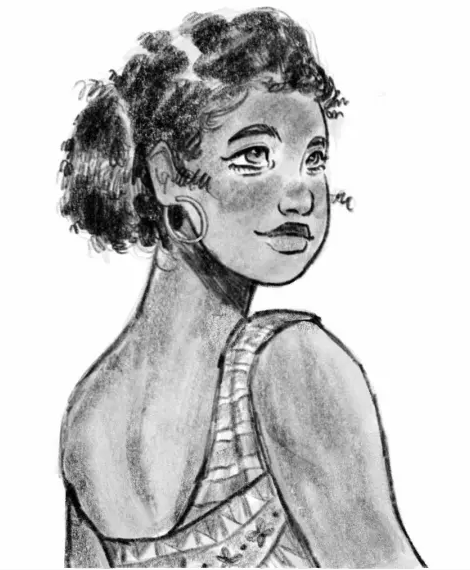
As soon as I asked Ximena, “how is school?”, Ximena’s sunny expression faded, as if her confidence sank.
“Honestly, I don’t like it. I don’t have any friends there. Sometimes I just cry behind the school buildings because I can’t take it. My mom tells me not to worry, that bad people get what’s coming to them in the end. But it’s hard.
“People tell me at school that my family and I will go nowhere in life. I even had someone say, ‘I wish you wouldn’t even exist’. I see other Aeta kids but I try not to mingle with them because I already feel so different”.
Ximena tells us that the students’ comments come from people looking down on the poor in Philippine society. For example, she tells us a story of when she found a group chat where students had taken photos of her lunch, which was steamed taro and rice.
Typical meal
This is a typical meal in the Aeta world, but to the students, this was a desperate meal of the poor. They all laughed.
We were horrified to hear that Ximena found that a teacher was in this very group chat too.
On other days, students would throw her lunch away or tamper with it. My eyes start welling up and it’s Ximena who strokes my hair and gives me a hug. I respond by saying that I understand what it is like to feel put down and hurt, I also had difficult teenage experiences.
“High school is not forever sweetheart. People love and care for you. Keep that love alive. Believe in yourself and speak confidently.”
“Thank you Ate (an affectionate term for ‘big sis’). You’re cute. It’s hard to fight back and to know what to do. I just cry at the back of the school. I want to focus on what is good for me. I like learning at school and I want to focus on that.”
Estelle explains to Ximena, that it’s ok to feel hurt and that there are many ways to fight back; even just learning, being clear when people make you uncomfortable and being her same loving self is a form of staying strong in that situation.
That being said, Estelle and I did give a chuckle and cheer when Ximena said that one day, she was so sick of the bullying, that she said to her tormentors, “What the hell is your problem?! We’re both brown! Your skin darkens in the sun too!”.
Open racism
“It’s more fun in the Philippines”, the tourist taglines say, and we all know Filipinos for the soft power of happy go lucky and kind locals. This was shattered by Ximena’s stories of the town; which were dotted with experiences of open racism which reminded me of stories of how people Riovera.
Randoms trying to instigate physical fights, people making a huge deal about your skin colour and hair texture and how people openly belittle you. For this reason, Ximena and other Aeta teens avoid walking around town on their own.
Does Filipino society accept Aeta people? For Ximena, she hoped so with her former friend group. That was until the day where they blackmailed her into smoking two packets of cigarettes in one go.
Ximena passed out and had to be rushed to hospital for severe nicotine poisoning. Due to her lack of oxygen and organ damage, her father was her blood transfusion donor.
Ximena’s father later passed away due his own health complications after this transfusion.
“After that, I vowed that I would do everything to take care of my family and to think about my studies and life most of all. I need to be around people who are good to me.” Ximena may not have friends at school anymore, but we were pleased to hear that Ximena was one in a friend group of 15 girls outside of her school in the neighbourhood, including non-Aeta girls who would stick up for Ximena.
In times like that, we always remember those who stood by us and those whom we stood with. Ximena remembers her new friends fondly. I think they will remember her too for what she has guided them to learn; the meaning of integrity as a friend.
Dreaming big
High school is also the time of part time jobs and a taste of independence. Ximena dreams big and makes those dreams come true. With her job as a nanny, she sends most of her money to her family, but I’m glad to know that she finds time to be a teen too.
She saved enough money for an iPhone, makeup and matching shoes and clothes for herself and her friends. We loved hearing that.
Life is more than grades too, what stays with us are the memories we have with friends and how we grew as people. This is stored in certain textures of pizza dough, nail polish shades, the music we listened to on commutes, mall perfume testers and the thrilling feeling of being about to choose and buy our own clothes.
For Ximena, these memories are stored in pink trainers, eyeliner, Budots electronic music and trying to figure out if a TikTok video is AI or not. But for Ximena, her part time job casts a shadow over her freedom.
“I nanny and help out at another house. The kids are naughty but the mother is kind. I like them but it’s not my real dream. My dream is to go to university and study English.”
Estelle notices a certain hesitation with Ximena. We learnt that while Ximena’s mother has since remarried and life continues nicely in their village home, Ximena’s mother is also having health problems.
Ximena tells us that it is somewhat inevitable that she will have to drop out of school later, to focus on working full time to support the family.
Special connection
Society debates about what it means to be Indigenous and what makes up the legal definitions of indigeneity, with all points being areas of controversy. These include being an originating group in an area, a history of violence, war or subjugation, cultural distinctiveness, a special connection to land, separate authority structures and/or realities of poverty.
But who wins from this controversy? And how do we adequately address the more urgent experiences of Aeta people? Ximena tells us of a time where she was hospitalised after 4 days of eating nothing but salt water. There was simply no food at home.
Aeta people have low school retention and literacy rates; due to adverse experiences at school, geographic barriers and poverty. This means that many Aeta are itinerant workers and are often exploited at work. Families are in cycles of poverty due to how prevalent discrimination is.
Despite everything, Ximena is hopeful that she could be the one to break free and guide her siblings too; Estelle and I felt that she was an articulate, loving and thoughtful girl with immense potential.
We all talk through what we all love, what gives us hope and what we like to work on outside of work and school. “My favourite subject is math. I like art too. But most of all, in my spare time, I write stories about my life.” We ask if she is comfortable to share one. It is a prayer about her family and how much she loves all of them.
Ximena was able to excel in her life despite all odds. It is like she has a guiding star with a compelling power. “When I’m exhausted, when my body wants to give up in a running race, I just close my eyes and think about my family. That makes me continue, and then, I win.”
* Name changed
Keeara Ofren is a law, politics and international relations graduate based in Aotearoa New Zealand. She writes a “cheeky, vibrant and provocative” blog at K For Kindling where this article was first published after a recent human rights exposure visit to the isolated Indigenous heartland of the Aeta people in Luzon, Philippines. Republished with permission.
More information and a call to action:
International Coalition for Human Rights in the Philippines
A global network of churches, trade unions, environmentalists and NGOs aiming to inform the world about the human rights situation in the Philippines. ICHRP carries out human rights fact finding, human rights education for communities and moral support for Philippine grassroots organisations.
https://ichrp.net/donate/
Karapatan
Karapatan is a Filipino human rights NGO alliance carrying out rights documentation and research as well as providing legal aid for communities facing human rights violations. Karapatan also provides engagement with international mechanisms for peace and reporting human rights issues in the Philippines.
Website: https://www.karapatan.org/
Facebook: https://www.facebook.com/karapatan/
Karapatan Central Luzon, an area where many Aeta communities are based: https://www.facebook.com/profile.php?id=61555246921656
Michael Beltran
Filipino journalist active on Al Jazeera writing about the human rights situation in the Philippines, including of the Aeta people.
https://www.aljazeera.com/author/maykel-beltran