


By ‘Alakihihifo Vailala of PMN News
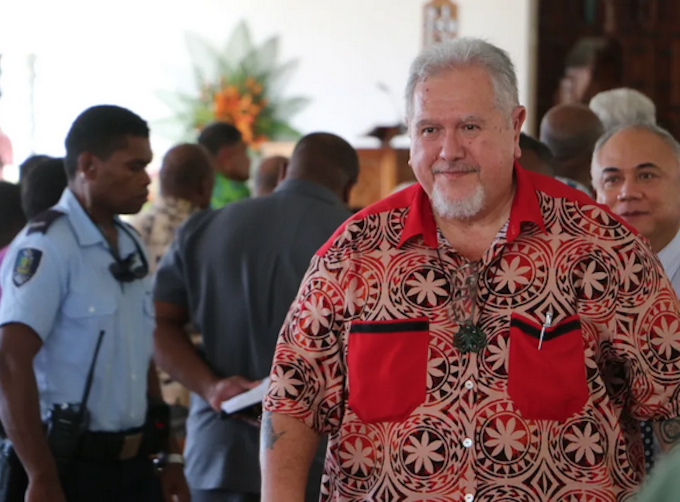
French Polynesia’s President Moetai Brotherson says growing global instability is a reminder that Pacific nations must strengthen cooperation within the region.
Speaking to PMN News in an exclusive interview, Brotherson said the Pacific must focus on deeper partnerships with neighbours such as New Zealand to build resilience against external shocks.
“When we see the turmoil in the world, it’s a reminder to us, as all the Pacific Island nations, that our first and foremost vicinity is our region,” Brotherson said.
- READ MORE: Iran says US, Israel have hit nearly 10,000 civilian sites since war began
- Other Pacific geopolitics reports
“We have to increase cooperation between ourselves to make us more resilient to outside crises.”
Brotherson has held the presidency since 2023 and previously represented French Polynesia’s third constituency in the French National Assembly from 2017.
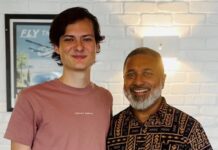
He made the comments following discussions with New Zealand Foreign Minister Vaovasamanaia Winston Peters during Peters’ visit to French Polynesia.
Peters described the meeting as a unique opportunity to strengthen ties between Pacific neighbours.
“We had a very good, quite unique discussion,” he said.
‘Pretty special’
“Where in the world would you sit down like that, with a president, and have a friendly New Zealand-type discussion, or Pacific-type discussion? It’s pretty special.”
Peters said New Zealand must place greater importance on its relationships in the region.
“We underrate the value of this. Because when we talk about the Pacific, it’s not our backyard like we used to say decades ago,” he said.
“It’s our front yard. And the sooner we understand that, the better.”
Brotherson said the historical, cultural, and genealogical ties between the two nations provided a foundation for closer cooperation.
He said collaboration could cover areas such as climate adaptation, maritime and air connectivity, digital infrastructure, and economic development.
“We have many areas of cooperation that needed to be discussed, and these were the topics that were addressed during our meeting,” he said.
Geopolitical competition
The French Polynesian leader also raised concerns about the growing geopolitical competition in the Pacific, particularly between the United States and China.
“We don’t want to align with anyone. I mean, either China or the US,” he said. “We want to be able to discuss with everyone and to have relationships, be it cultural or economic relationships with everyone.”
The Pacific has become an increasingly contested strategic region in recent years, with China expanding its economic and infrastructure partnerships with several island nations.
The United States and its allies have also increased diplomatic engagement, development funding, and security cooperation.
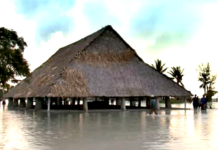
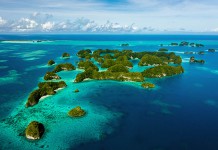
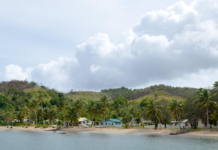
Climate change remains another major concern, particularly for the low-lying atolls of the Tuamotu archipelago — the world’s largest chain of coral atolls, located in French Polynesia northeast of Tahiti.
The French territory consists of 118 volcanic islands and coral atolls across five archipelagos in the South Pacific. Comprising 78 low-lying atolls (like Rangiroa and Fakarava) spread over 3.1 million sq km, this destination is renowned for its remote, pristine lagoons, world-class scuba diving, and black pearl farming
“They are facing the same issues as Tuvalu or other Pacific island nations that are at the forefront of climate change and the sea level rise,” Brotherson said.
‘Salination of water’
“What we are seeing currently is a salination of the water lentils on those atolls, rendering life very hard. It’s not impossible.
“So water management is going to be a real issue in the upcoming years related to climate change but you also have the coastal erosion that we have to tackle.”
The President of the Government of French Polynesia and the Foreign Minister of New Zealand.
🇵🇫 🇫🇷 🤝 🇳🇿 pic.twitter.com/z8QeiVsagB
— Winston Peters (@NewZealandMFA) March 8, 2026
For communities on these low-lying atolls, the impacts of climate change are already being felt through declining freshwater supplies, erosion, and pressure on traditional food sources.
Brotherson also reiterated his support for greater political sovereignty for French Polynesia. He said economic development and resilience must come first.
French Polynesia enjoys a high degree of autonomy under France, which retains control over defence, currency, and aspects of foreign policy.
Brotherson said the pathway toward greater sovereignty must be gradual and carefully managed.
He added that economic resilience will be key before any move toward full independence and said the territory could achieve political sovereignty within the next 10 to 15 years.
“It’s all about interdependencies, that’s how we’re going to build independence. When it comes to strengthening our economy, you know, we still have a lot of work to do on food security, on energy transition, and then we’ll be able to be more confident as a nation.”
This article is republished under a community partnership agreement with RNZ and PMN News.