





SPECIAL REPORT: By Scott Waide, RNZ Pacific PNG correspondent
A Papua New Guinea police operation in Tsak Valley, Enga Province, in the early hours of Friday, 2 January 2026 — which resulted in five deaths — has prompted calls for an independent investigation following sharply differing accounts of events from police and community sources, as well as a growing rift in public opinion.
The operation, conducted by members of the Royal Papua New Guinea Constabulary under an anti-terror policing framework, has been described as a success by police leadership, but has drawn strong criticism from some local leaders and clansmen.
Acting Police Commissioner Samson Kua said in a statement that security forces commenced operations shortly after 3am, “executing coordinated raids on two locations” in Tsak Valley.
The objective, he said, was to locate and apprehend suspects believed to be in possession of factory-made firearms linked to tribal fighting and criminal activity.
Various sources have indicated that Winis Kaki, one of the primary suspects and a prominent member of the Yambaran Warenge tribe, was armed during the raid when police shot him.
His wife, Margaret, a primary school teacher, was also killed.
The other victims have been identified as Nancy Kipongi, 60, a former ward councillor; Glendale Taso, 30; and Isaac Ipu, 27, who was reportedly shot near his food garden.
In its statement, police said officers attempting entry at the first location, identified as Winis Kaki’s residence, were met with gunfire from inside the dwelling.
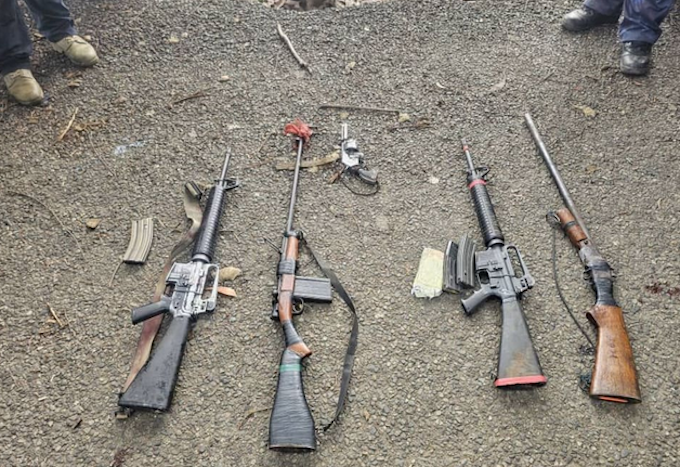
One officer was wounded. “Police returned fire, killing the armed suspect,” the statement said. An M16 rifle and a loaded magazine were recovered.
Police also confirmed the arrest of Joseph Tati, a pastor and community leader. Police further said another armed individual was shot dead during the operation.
Officers recovered a second M16 rifle, a modified .38-calibre revolver, and ammunition for 5.56mm and 7.62mm weapons. Three additional suspects were arrested.
“This engagement, which lasted over an hour, demonstrates our resolve to disarm these groups despite the high risks involved,” Kua said, adding that intelligence indicated the seized rifles were being used as “hired guns” in tribal conflicts.

Community accounts
Community accounts allege the use of excessive lethal force during the operation, particularly in relation to the deaths of the two women. Videos recorded after the raid show multiple spent bullet casings near a hut where several of the victims were shot.
A Tsak Valley clansman, who did not want to be identified, said his cousin was among those killed and claimed that at least one of the young men who died was not armed at the time.
He acknowledged that firearms are widespread in the valley, often kept for what residents describe as protection.
“It’s no secret that there are a lot of guns in the hands of individuals in the valley,” he said.
“Many arm themselves for protection against their tribal enemies. It is also no secret that prominent members of the community are often expected to contribute resources, including weapons, to support their tribesmen.”
Police have not confirmed these claims.
Government reaction
Over the last five years, the Papua New Guinea government has moved to strengthen its legal framework and policing response to escalating violence involving illegal firearms and large-scale tribal fighting.
Amendments to firearms legislation have significantly increased penalties for the unlawful possession, use and trafficking of guns, with some offences now carrying life imprisonment.
At the same time, new laws addressing what the government has described as domestic terrorism have expanded police powers to act against organised armed groups that pose a broader threat to public safety.
These changes have been accompanied by structural shifts within law enforcement, including the establishment of an anti-terror policing capability.
Prime Minister James Marape has publicly backed the Tsak Valley operation, warning against the continued use and possession of illegal firearms.
“The operation at Tsak Valley, Wapenamenda, was a targeted operation,” Marape said. “Police were acting on intelligence relating to known hired gunmen operating within the province”.
He reaffirmed the government’s zero-tolerance policy on illegal firearms and warned communities against harbouring gunmen.
Marape also said that where innocent people are affected during operations, the state — not individual police officers — would take responsibility, subject to proper investigation.
Local people collect bullet casings after the police raid. Video: RNZ correspondent
Public reaction
The operation has triggered mixed and sharply divided reactions across Enga Province.
Family members of those killed are preparing petitions to the national government, calling for an independent investigation into the conduct of the raid and accountability for what they describe as the deaths of innocent people.
At the same time, a considerable number of residents have expressed support for the police action, arguing it was necessary to curb the spread of illegal firearms and restore a sense of security.
The contrasting responses reflect a broader tension in Enga — deep grief and anger among affected families alongside growing public frustration with prolonged tribal violence and the increasing lethality of conflicts exacerbated by high-powered weapons.
This article is republished under a community partnership agreement with RNZ.